
Last updated November 15, 2026
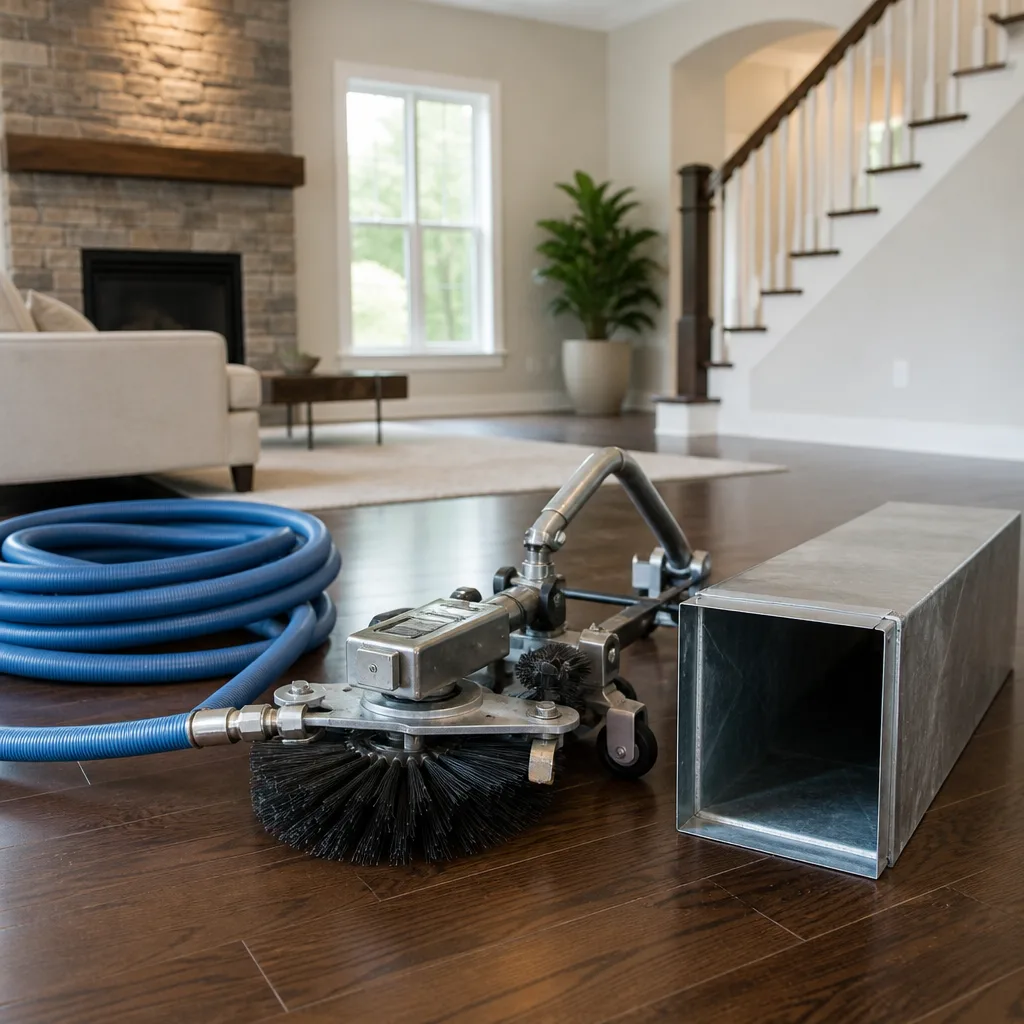 Whole-home duct cleaning
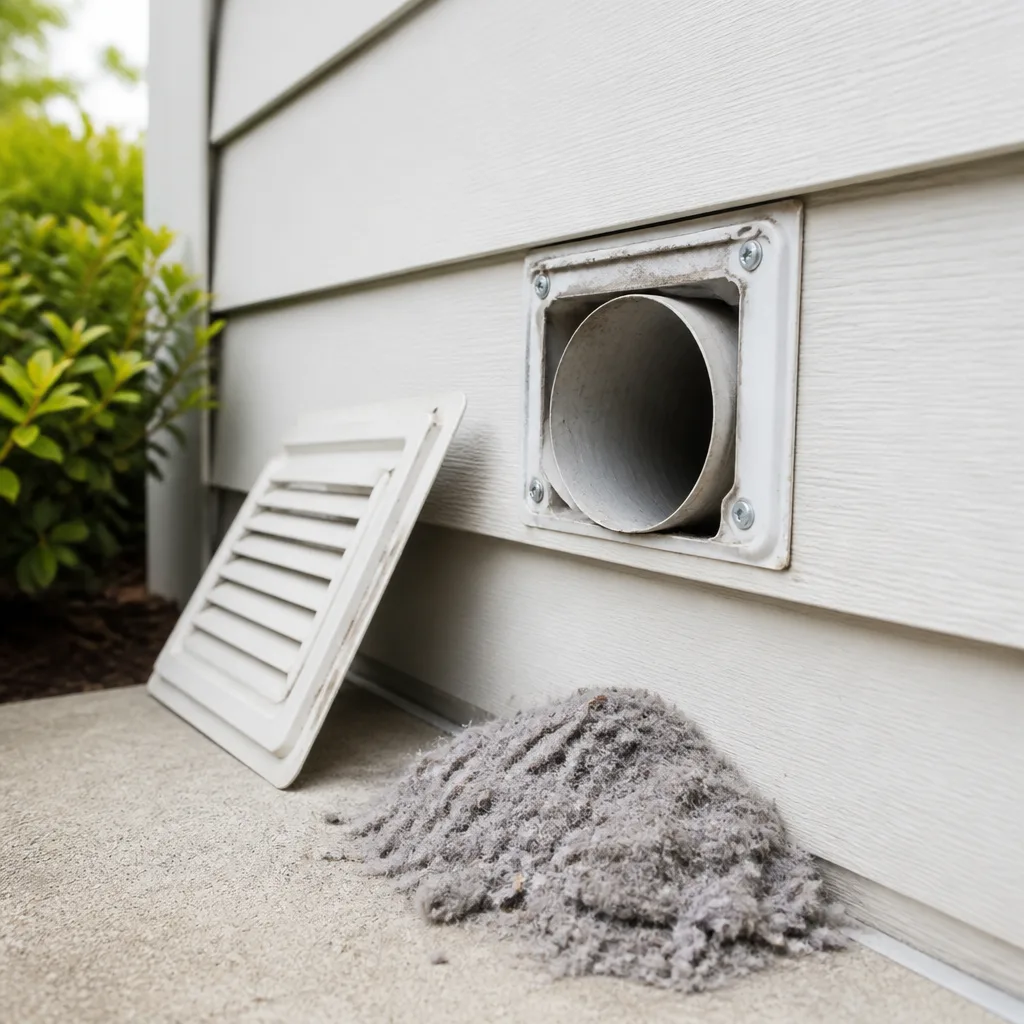 Dryer vent cleaning
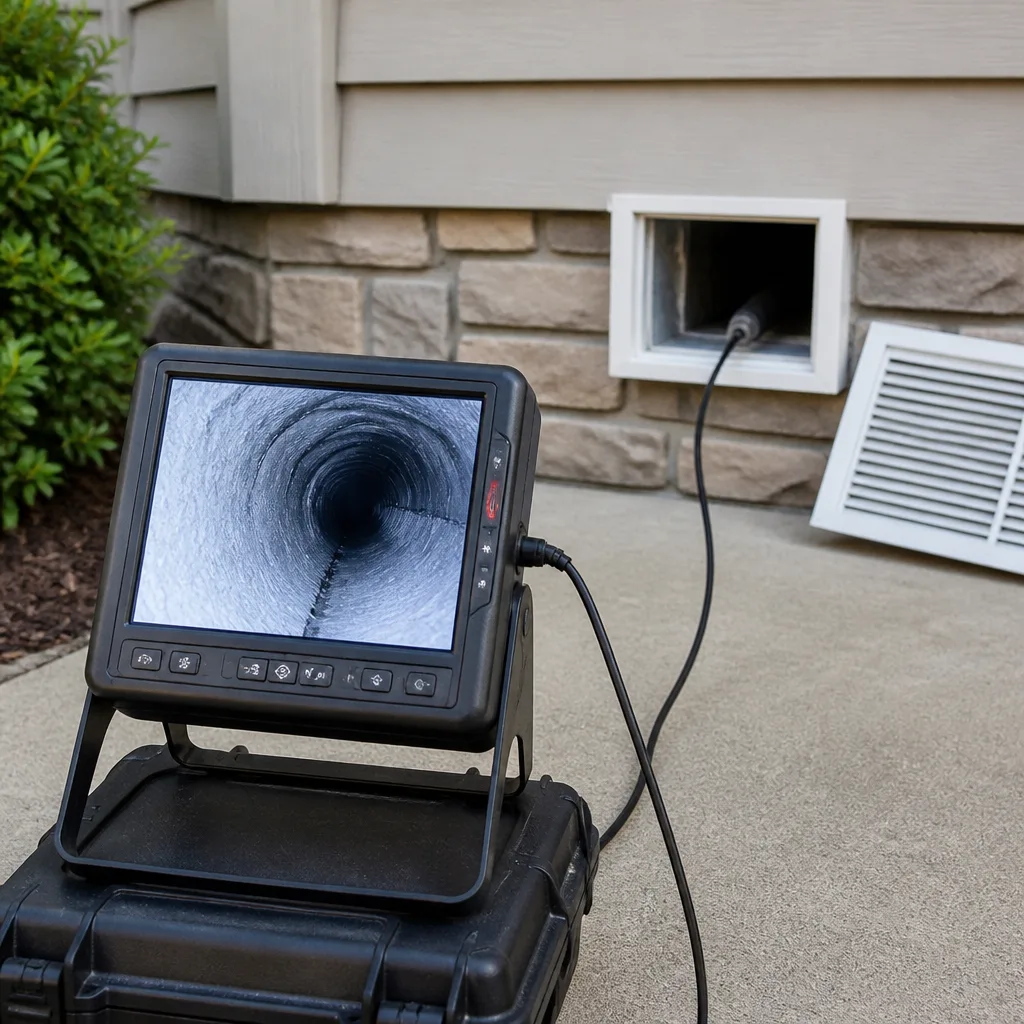 Camera inspection
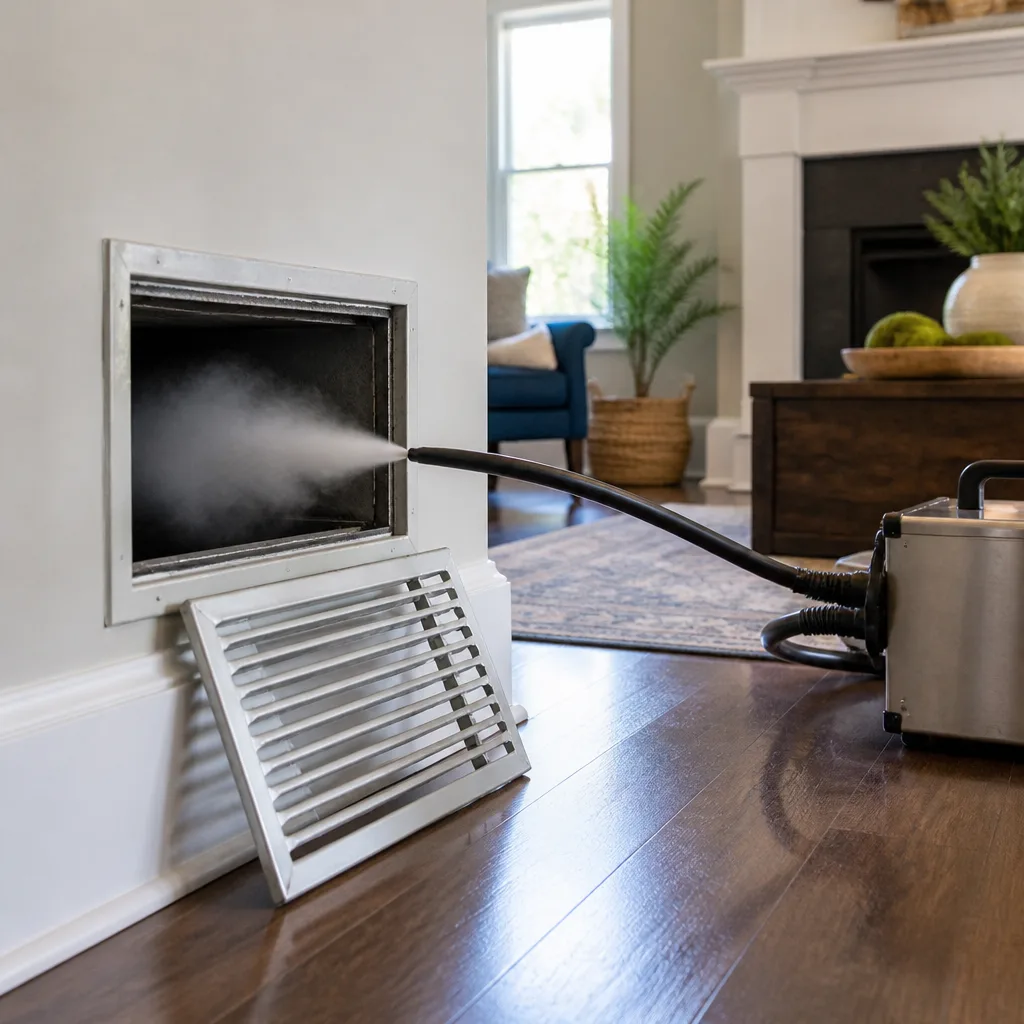 Sanitizing & deodorizing
Whole-system duct and dryer vent check with before-and-after photos - you see exactly what came out of your vents
That "$99 whole-house special" is a bait ad - the real number appears once they are in your hallway, or the "clean" is a shop-vac at the register. We photograph the inside of your ducts before and after instead.
DIY vs Professional Air Duct Cleaning: The McAllen Homeowner’s Decision Guide
A shop vacuum attached to a dryer vent brush can clean the first 18 inches of a supply duct reasonably well. Beyond that reach, something changes. Without negative pressure pulling toward a central collection point, you’re not removing debris from the system; you’re relocating it somewhere you can’t see. That’s the part most homeowners miss when they look at a $40 vacuum attachment and wonder why anyone would pay for the job. This guide draws the technical line between what DIY duct maintenance actually accomplishes in McAllen homes and where consumer equipment physically stops working. You’ll learn the physics behind the process, what you can legitimately do yourself, when DIY is contraindicated regardless of effort, and how to decide honestly whether to call someone.
Quick Answer
DIY air duct cleaning can handle surface-level maintenance inside McAllen homes: register cleaning, filter changes, drip pan checks, and visual inspections through accessible duct openings. It cannot replicate professional results because consumer vacuums can’t generate the negative pressure needed to dislodge and capture contamination from the full duct system. On average, DIY makes sense as interim maintenance between professional service intervals – not as a replacement for full-system cleaning when contamination is established.
Styles & brands we work with
- Whole-home duct cleaning
- Dryer vent cleaning
- Camera inspection
- Sanitizing & deodorizing
Table of Contents
- The Physics of Duct Cleaning: Why Pressure Differential Matters
- What DIY Air Duct Cleaning Actually Accomplishes
- When DIY Is Contraindicated: Four Conditions That Change the Decision
- What Professional Equipment Does That Consumer Equipment Cannot
- The Honest Cost-Benefit Comparison for McAllen Homes
- A Step-by-Step DIY Maintenance Routine That Actually Helps
- McAllen Climate, Construction Dust, and Duct Contamination
- Common Mistakes to Avoid
- When to Call a Professional
The Physics of Duct Cleaning: Why Pressure Differential Matters
Duct cleaning isn’t scrubbing. It’s a two-part mechanical process: dislodging contamination from interior duct surfaces, then capturing that contamination at a collection point before it re-settles. Both parts have to happen at the same time, and the second part depends entirely on pressure.
A vacuum works by creating a pressure differential between one space and another. Your home’s central HVAC blower moves air at low static pressure – typically measured in fractions of an inch of water column. A truck-mounted or industrial-grade duct vacuum pulls several inches of water column of negative pressure through a sealed system. That’s the difference between a fan blowing on a dusty shelf and a sealed system pulling air toward a filter. Consumer equipment simply cannot create that differential across hundreds of feet of ductwork.
When you push a brush into a supply duct attached to a shop vacuum, three things happen at once, and only one of them helps:
- Loose surface dust near the register gets captured – this is real and worth doing.
- Deeper debris gets agitated and re-suspended – it enters the airstream and lands somewhere else in the system.
- No full-system extraction occurs – because there’s no sealed connection at a central collection point pulling that suspended debris out.
That third point is where DIY stops. The dust hasn’t been removed; it’s been redistributed. In a McAllen home running air conditioning most of the year, dust that settles inside the return side and the trunk lines will get pushed back into the living space through supply registers within days. The room smells faintly of dust, the filter loads faster, and the cycle starts again.
Professional equipment solves this by doing two things at once. Rotobrush contact cleaning systems use rotating brushes with an integrated vacuum line that agitates and captures at the cleaning head itself. Nikro industrial HVAC vacuums connected at a main trunk line pull negative pressure through the entire system while the brush works. The debris never has a chance to settle back where it started.
What DIY Air Duct Cleaning Actually Accomplishes
We want to be direct here because it matters: DIY duct maintenance is not wasted effort. It’s just narrower than homeowners think. There are four things you can legitimately accomplish without professional equipment, and all four are worth doing regularly.
- Clean the supply and return registers. Pop the grill off, wipe the slats, vacuum the visible throat of the duct where it meets the register boot. This is the area most dust settles in and most visible contamination lives. A vacuum with a brush attachment and warm soapy water on the grills themselves removes years of buildup.
- Upgrade and replace the filter on schedule. A MERV 8 to MERV 11 filter is the single highest-value air quality item in most McAllen homes. Cheap fiberglass filters trap almost nothing. Check the filter monthly during heavy AC season and change it when it looks gray – usually every 60 to 90 days for most households, more often if pets or construction dust are present.
- Inspect and clean the condensate drip pan. The air handler’s drip pan can develop standing water and algae growth that gets drawn into the return airstream. If the pan has standing water, wipe it out and check the drain line for a clog. If it has visible biological growth, that’s a professional service call.
- Check accessible duct openings and boots for damage. Look for disconnected joints, crushed flex duct, torn insulation, and gaps between the register boot and drywall. You can seal small gaps with mastic or foil tape. Larger damage needs proper repair.
What DIY does not accomplish: cleaning the interior trunk lines, cleaning the return ducts beyond the register, removing debris that has settled on the bottom surface of horizontal runs, removing biological growth, or restoring airflow that has dropped because of systemic contamination. Those all require the mechanical process described in the previous section.
If you want a broader baseline on what professional cleaning includes, our air duct cleaning page walks through the full service scope.
When DIY Is Contraindicated: Four Conditions That Change the Decision
There are conditions where DIY duct work is not just ineffective – it can be actively harmful to your home and your health. If any of the following applies, stop and call a professional.
1. Visible mold inside the duct system
Mold growth inside ductwork is common in McAllen because the system runs cold air through warm, humid spaces for most of the year. Condensation forms on duct surfaces, particularly in unconditioned attic runs and near air handlers. If you see fuzzy growth, dark staining, or smell a persistent musty odor that doesn’t clear after filter changes, that’s not a cleaning problem – it’s a moisture control and remediation problem. Agitating that material with a consumer brush aerosolizes spores through the whole system.
2. Pest activity
Rodents and insects use duct systems in South Texas homes as runways and nesting sites. If you’ve seen droppings, heard scratching, or found nesting material near a register, DIY cleaning won’t fix it – the contamination is concentrated and concentrated disturbance spreads it. Professional cleaning with containment filtration is the right approach.
3. Construction or renovation contamination
If your McAllen home has been through drywall work, flooring replacement, or a remodel in the last 12 months, drywall dust has entered the system through returns. That dust is fine, abrasive, and settles deeply. It coats blower wheels, clogs evaporator coils, and cuts airflow. Only full-system negative-pressure extraction removes it completely.
4. Post-flood or water intrusion
Any duct system that has been exposed to standing water or high humidity from a flood or roof leak should be treated as contaminated until inspected. Duct board and flex duct that have absorbed moisture rarely dry out in McAllen’s climate. Cleaning alone often isn’t the answer; duct cleaning McAllen should be paired with inspection and, where needed, duct repair or replacement.
In all four cases, the size of the problem matters less than its nature. These aren’t surface issues that respond to more aggressive DIY effort.
What Professional Equipment Does That Consumer Equipment Cannot
Professional duct cleaning equipment is built around three capabilities consumer equipment doesn’t have: sustained negative pressure, simultaneous mechanical agitation, and containment filtration of the exhaust air. Each one matters on its own, and together they’re what makes the process work.
Negative pressure across the full system
A Nikro industrial HVAC vacuum connects to the main trunk line through a sealed port. Once connected, it pulls sustained negative pressure through every branch of the duct system. Every register becomes an intake point. When the technician opens a register to clean, air is already moving toward the vacuum, not back into the room. That’s the whole ballgame. A shop vacuum connected to a register can’t do this because it’s working against the system’s own resistance rather than sealing it off.
Contact cleaning that agitates and captures simultaneously
Rotobrush contact cleaning systems use a rotating brush head with a vacuum line running through the whip. The brush loosens contamination from the duct wall at the exact point where the vacuum captures it. There’s no gap where debris can re-suspend. This is the mechanical equivalent of pressure washing a driveway with a recovery nozzle attached – loosening and removing happen in one motion.
Containment-grade filtration
Abatement Technologies air filtration systems are the third piece, and it’s the one most DIY setups don’t even consider. During cleaning, exhaust air from the vacuum has to go somewhere. Without filtration, that exhaust returns fine particulate matter into the living space – the exact problem you’re trying to solve. Abatement Technologies units use HEPA-grade filtration to capture that particulate before it releases back into the room. This is a standard in remediation work that most routine duct cleaning services skip.
What the combination delivers
The reason these three systems are used together is that each compensates for the limits of the others. Negative pressure alone won’t lift stuck debris from the duct wall. Contact cleaning alone would re-suspend everything it loosens. Containment alone doesn’t dislodge anything. Run all three at once and you get what a proper cleaning actually is: full-system removal of contamination with no recontamination of the living space.
We also work with McAllen homeowners on duct repair when damage is found during cleaning. Rotobrush and Nikro are favored by commercial HVAC contractors for the same reasons we use them residentially – they hold up under sustained use and deliver the pressure the job actually requires.
The Honest Cost-Benefit Comparison for McAllen Homes
The right question isn’t “which is cheaper” – obviously DIY costs less upfront. The right question is what each option actually delivers per dollar in your specific situation. Here’s how we think about it.
When DIY is the right call
DIY duct maintenance makes sense for households with a clean system, a well-maintained filter schedule, no pets or smokers, no recent renovations, and no obvious symptoms like musty odors or persistent dust. In those homes, register cleaning, filter replacement, and drip pan checks are the entire job. Professional cleaning every few years is reasonable preventative care, not urgent.
When DIY becomes false economy
DIY becomes a losing proposition when the system is already contaminated. A homeowner who cleans registers weekly but never addresses loaded return ducts is spending time on symptom management. Meanwhile the blower motor works harder, the evaporator coil accumulates dust, and the unit’s run time stretches – which shows up on the electric bill. In McAllen, where the cooling season dominates the year, HVAC efficiency drops hit harder and faster than in climates with shorter cooling loads.
A realistic service interval
For most McAllen homes, professional duct cleaning every three to five years is a reasonable interval. Move to every two years if you have pets, smokers in the home, recent renovation, or a household member with respiratory sensitivities. Between professional cleanings, DIY maintenance – filter changes, register cleaning, drip pan checks – is the work that keeps the system in reasonably good shape.
What professional cleaning includes beyond air quality
The service scope also covers dryer vent cleaning as a separate safety service. We treat dryer vents the same way we treat supply ducts mechanically, but the reason is different: dryer vents are a leading cause of residential fires because lint accumulation restricts airflow and creates heat. If you’ve never had your dryer vent cleaned, that’s not a comfort item on the list – it’s a safety one. Our dryer vent cleaning page covers that service in detail.
A Step-by-Step DIY Maintenance Routine That Actually Helps
This is what we’d tell a homeowner who wants to do the meaningful DIY work between professional service intervals. It takes about 30 minutes and you’ll need a vacuum with a brush attachment, a screwdriver, replacement filters, and a flashlight.
- Turn the HVAC system off at the thermostat. Not just to standby – off. You don’t want the blower running while you’re working at a register.
- Change the filter first. Do this before you clean anything else so the system restarts on a clean filter. Note the size and MERV rating and write it on the air handler or return plenum with a marker.
- Remove each return grill and vacuum the visible throat of the duct. Reach as far as the brush attachment allows. Wipe the grill slats with warm soapy water and let them dry completely before reinstalling.
- Do the same at each supply register. Vacuum the register boot and visible duct throat. If the grill has a diffuser with adjustable vanes, wipe those too – they collect dust quickly.
- Inspect the air handler drip pan. No standing water, no visible growth, no debris. If the pan is wet, find out why before you put everything back together.
- Check accessible duct connections. Look in the attic or wherever duct runs are visible. Gaps at joints and boot connections can be sealed with mastic or foil-backed tape. Torn or crushed flex duct should be flagged for repair.
- Turn the system back on and listen. Any new whistling, rattling, or airflow change means something didn’t seal properly – go back and check the register you worked on last.
That list is what DIY duct cleaning actually is for most households: maintenance, not cleaning the system. If you can’t reach a surface with a brush and a vacuum, that surface isn’t getting cleaned until professional equipment is involved.
McAllen Climate, Construction Dust, and Duct Contamination
Duct contamination rates in McAllen homes tend to run higher than in cooler climates for a simple reason: the HVAC system runs nearly year-round. Every hour of blower operation pushes air through a filter and back through the ducts, and every filter that’s past its change date is letting more particulate through to the system behind it.
South Texas homes also sit in a dusty environment with prolonged dry periods and seasonal wind events. Dust that enters through return air intakes – particularly in homes with return grills close to floor level – accumulates faster than homeowners expect. Newer construction and recent renovations add a second layer of fine drywall and masonry dust that settles deeply and doesn’t come up with surface vacuuming.
Horizontal duct runs and low spots in flex duct collect this contamination first. In a McAllen home with a long attic run, the return trunk often has measurable dust load while supply ducts look visibly fine at the registers. That’s the nature of the physics we’ve been describing: contamination concentrates where airflow slows, not where airflow ends.
Common Mistakes to Avoid
- Attacking deep contamination with consumer equipment. Pushing a shop vacuum brush deep into a supply run doesn’t remove the debris – it lifts it into the airstream where it settles elsewhere. If the system is loaded, DIY makes the distribution worse, not better.
- Skipping filter changes during heavy AC season. A single fiberglass filter left in place for a full summer in a McAllen home can let through more particulate than the next two years of proper filter changes will fix. Change it on schedule, not when it looks bad.
- Confusing a coupon quote with a full-system cleaning. When a quote is dramatically lower than others, the scope is usually a blower and register wipe-down rather than full-system extraction. Ask which equipment will be used and whether the trunk lines, return ducts, and air handler are all included.
- Ignoring a musty smell as a filter problem. Odor that returns within a week of a filter change is usually biological growth on duct surfaces or in the drip pan, and it won’t clear with more filter changes. That’s a professional inspection.
- Treating dryer vent cleaning as optional. Lint accumulation in the dryer vent is a documented fire risk, not a comfort issue. If you’ve lived in the same McAllen home for several years without a vent cleaning, add it to the list.
- Not documenting the work. Take before-and-after photos when a technician cleans the system. Photos of your own ducts, taken before and after, are the only reliable way to verify the work happened.
- Assuming newer construction means cleaner ducts. Construction debris – drywall dust, sawdust, insulation fibers, tile adhesive particulate – often enters a new home’s duct system during the build and stays for years. New builds frequently need cleaning sooner than older homes.
When to Call a Professional
Call a professional when the answer to any of the following is yes:
- You see visible mold growth inside ductwork, at registers, or on the air handler.
- There’s persistent musty odor in one or more rooms that doesn’t clear after filter changes.
- You’ve had pest activity in the home or seen droppings near duct openings.
- The home has been renovated in the last 12 months.
- You’ve had water intrusion or a roof leak that exposed ducts to moisture.
- Airflow has dropped noticeably at multiple registers, and a filter change didn’t fix it.
- Someone in the home has respiratory symptoms that worsen when the AC runs.
- You can’t remember the last time the system was professionally cleaned.
Duct Cleaning McAllen offers free estimates in McAllen – call (888) 971-5813. We answer 24/7. Fast dispatch from 7am to 7pm, Sunday through Friday. Our technicians have up to 12 years of experience, and we come with before-and-after photos so you can verify what was actually removed.
See the difference
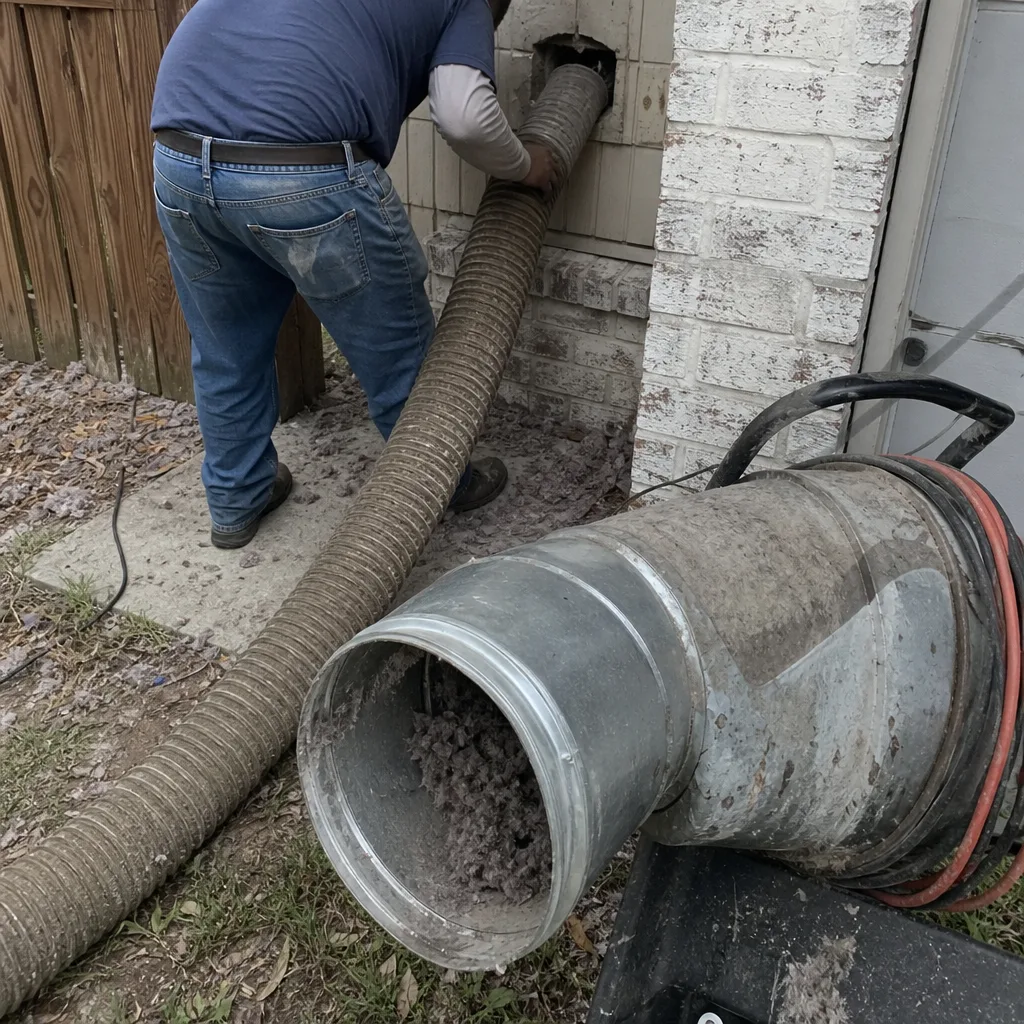 Before
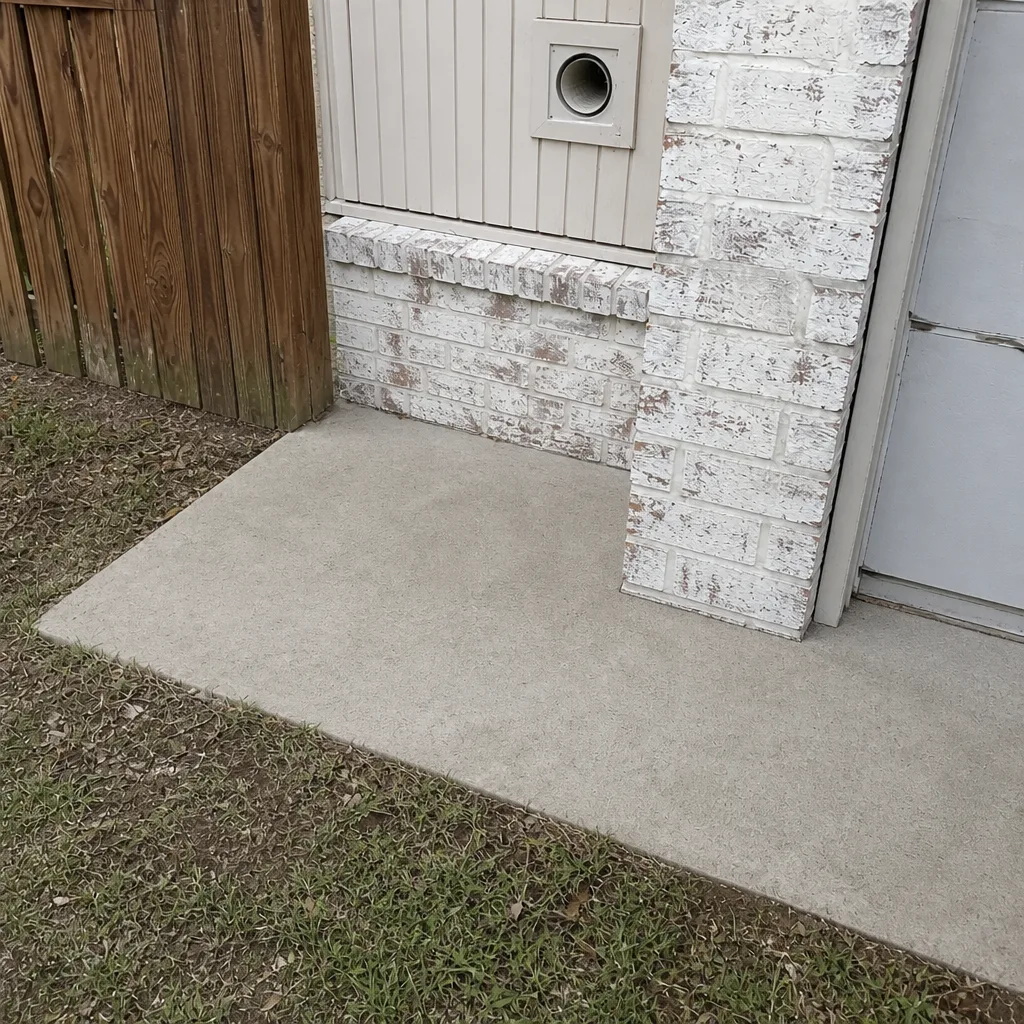 After
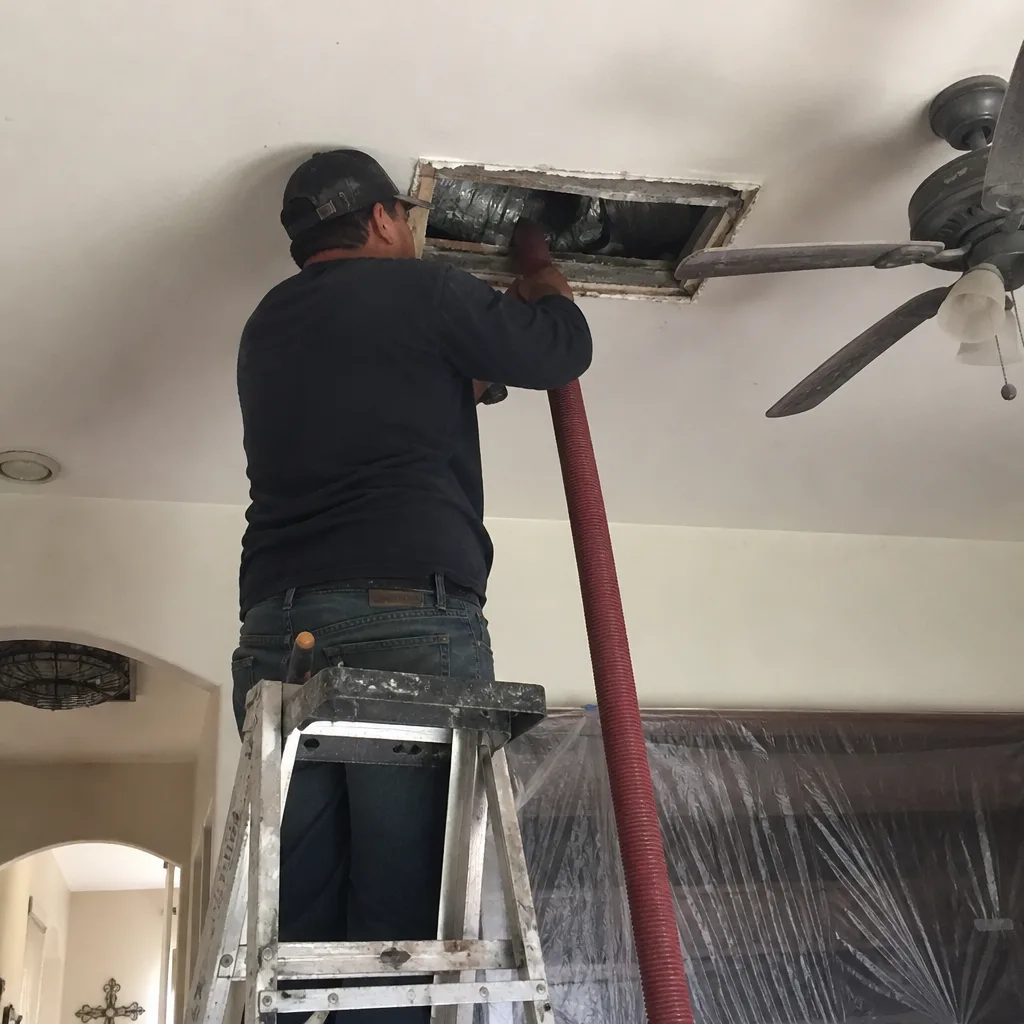 Before
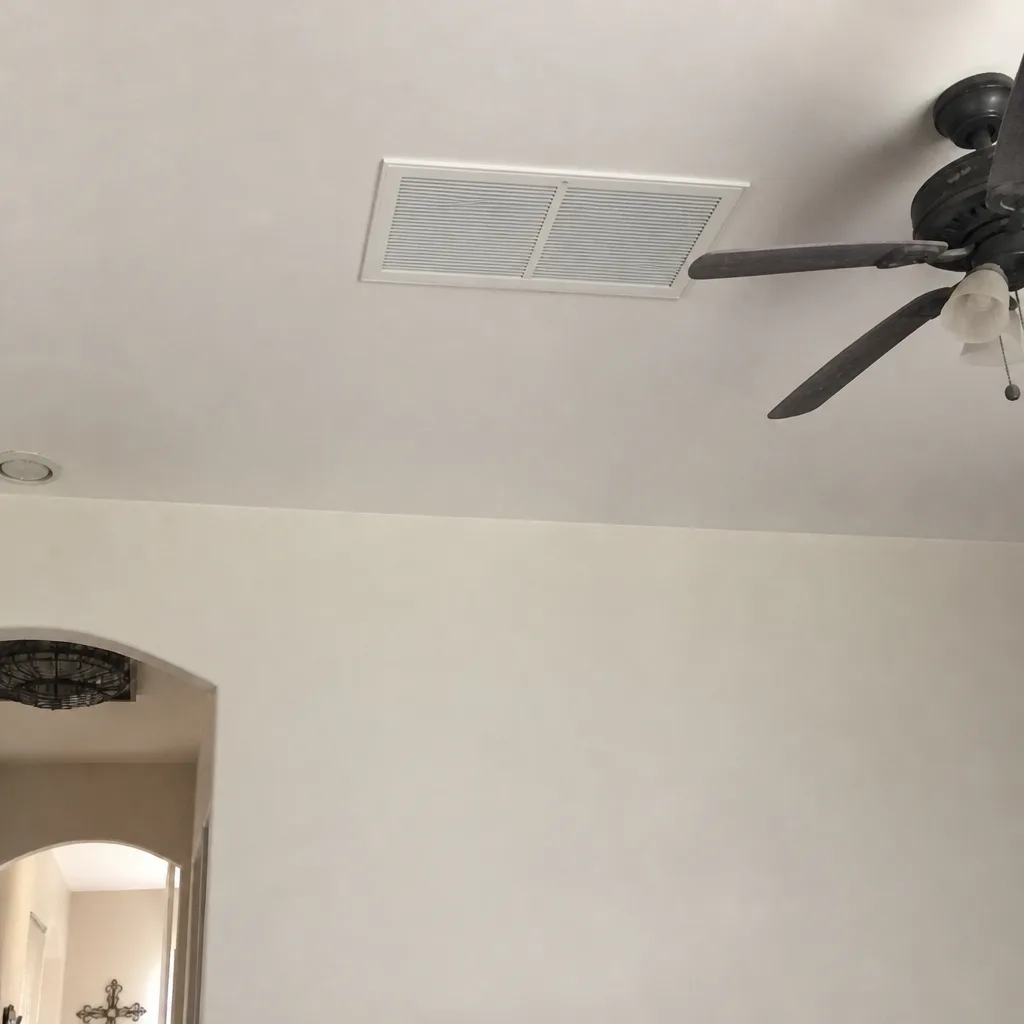 After
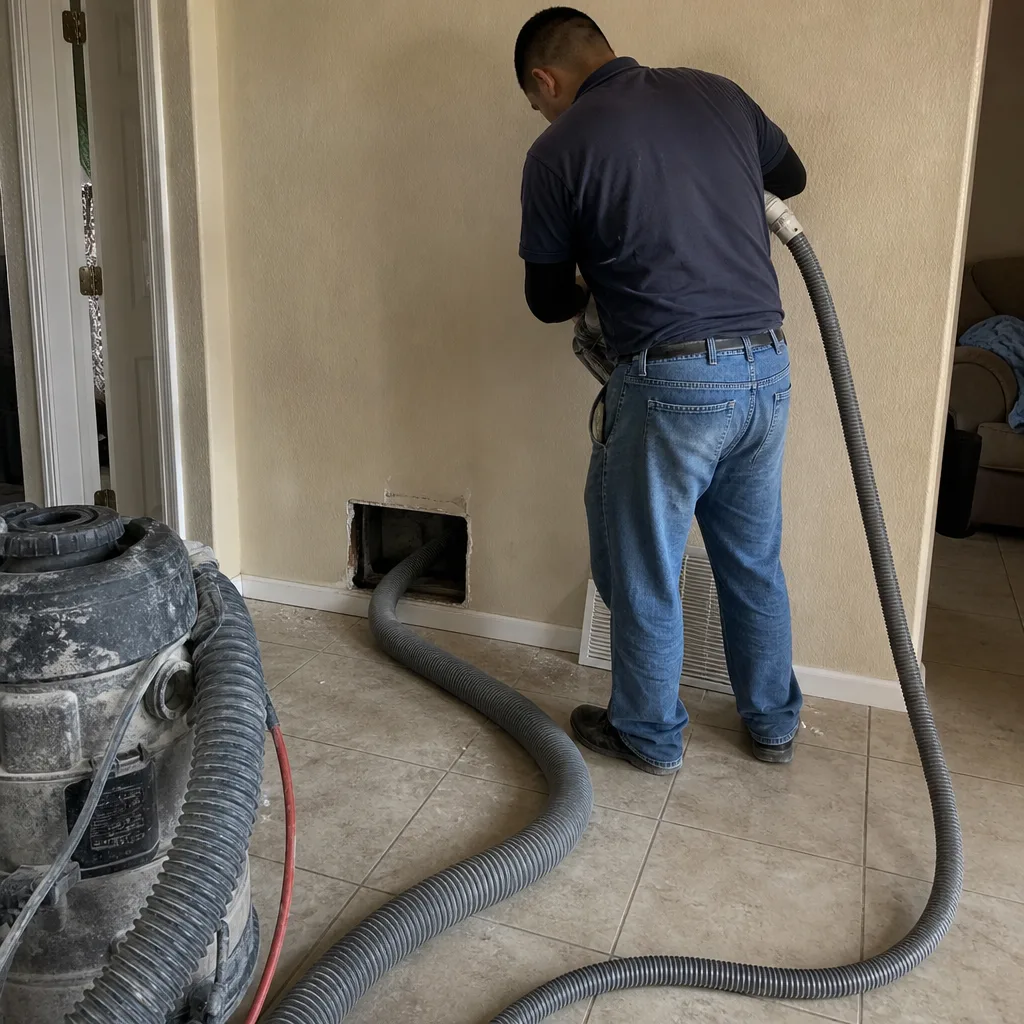 Before
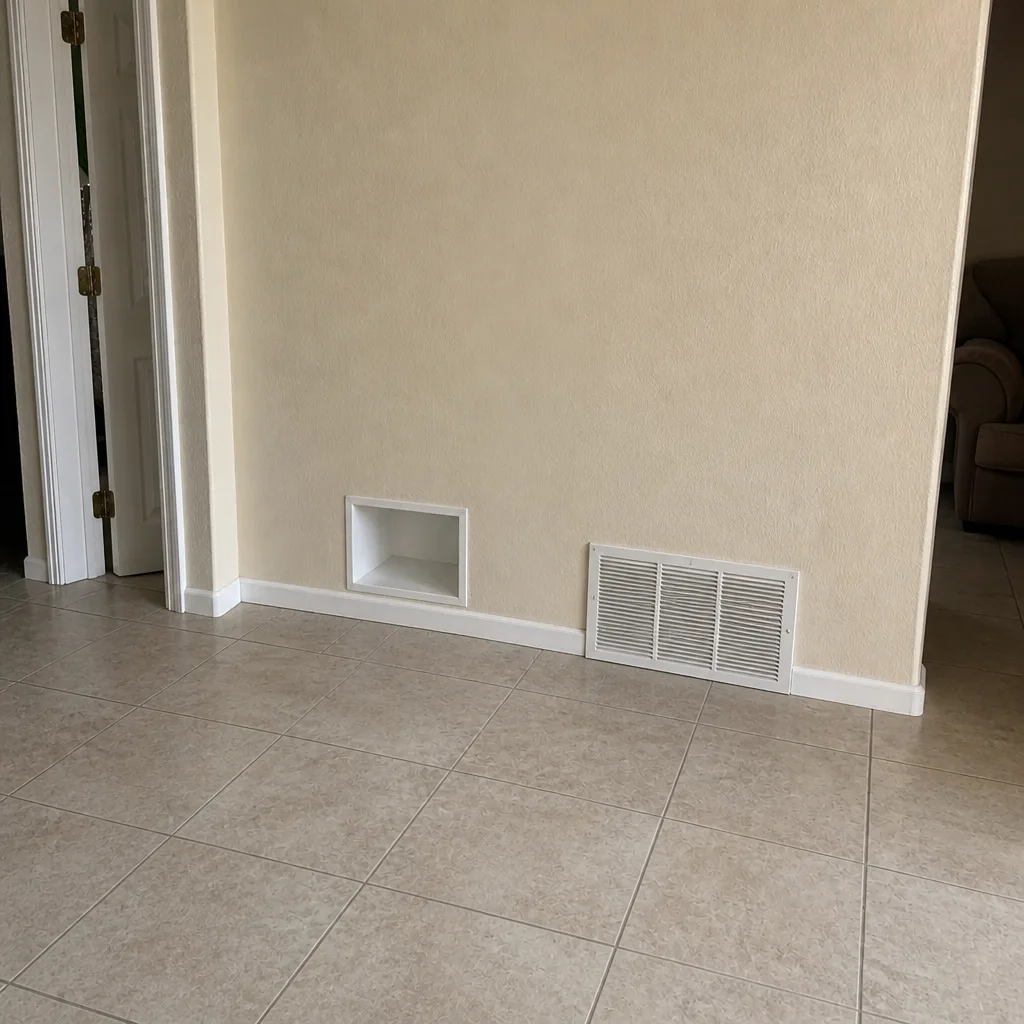 After
Frequently Asked Questions
A shop vacuum cleans registers, visible duct throats, and the first foot or two of supply runs effectively, but it cannot clean the full duct system. Without negative-pressure extraction across the trunk lines and return ducts, a shop vacuum redistributes contamination rather than removing it. Use DIY for surface maintenance, not for system cleaning.
Full-system cleaning in McAllen typically runs on a per-job estimate based on system size, contamination level, and any duct repair needed. We give one flat price per system agreed before work starts, with no per-vent pricing, and before-and-after photos so you can confirm the scope of work. Call (888) 971-5813 for an exact quote – estimates are free.
Low quotes usually cover a blower wipe-down and register vacuum, not full-system cleaning with industrial negative pressure. They also skip containment filtration, which means the cleaning process itself can put particulate back into your air. If a quote is dramatically lower than others, ask which equipment will be used and whether the trunk lines are included before you commit. Call (888) 971-5813 to talk through what full-system cleaning actually involves.
The most reliable verification is before-and-after photos of your own ducts, taken during the service. A technician with the right equipment can photograph the interior of the return trunk, the air handler, and supply runs before and after cleaning. Ask for those photos as part of the job and don’t accept a verbal confirmation as proof of work. Call (888) 971-5813 if you want a free estimate with a clear scope.
Every three to five years is a reasonable interval for most McAllen homes, tightening to every two years if you have pets, smokers, recent renovations, or anyone in the home with respiratory sensitivities. Between professional cleanings, regular filter changes and register cleaning extend the interval. Call (888) 971-5813 to talk through your specific situation.
Dryer vent cleaning is a separate service from air duct cleaning, but the two are usually scheduled together because both involve the same equipment and process. Dryer vent cleaning matters for fire safety, not just airflow – lint buildup is a documented cause of residential fires. If you can’t remember the last vent cleaning, add it to the list and call (888) 971-5813 for an estimate.
DIY cleaning done carefully inside accessible registers and boots rarely causes damage, but pushing aggressive brushes deep into flex duct can tear the liner or disconnect joints. On older flex duct, the inner liner is thin and easy to puncture – once torn, it becomes a debris trap and needs replacement. Stick to the register throat and leave the deep runs to equipment designed for them.
The Bottom Line
DIY duct maintenance has a real place in McAllen homes – filter changes, register cleaning, drip pan checks, and visual inspections extend the life of your HVAC system and legitimately reduce what ends up in the air you breathe. What DIY can’t do is remove established contamination from the full duct system, because the mechanical process requires negative pressure, simultaneous contact cleaning, and containment filtration that consumer equipment doesn’t generate. Drink the distinction: maintenance is DIY, cleaning is professional. If you’re unsure which category your home falls into, a free estimate settles it faster than guessing. Call (888) 971-5813 and we’ll walk through your system with you.
Written by the team at Duct Cleaning McAllen.