
Last updated November 15, 2026
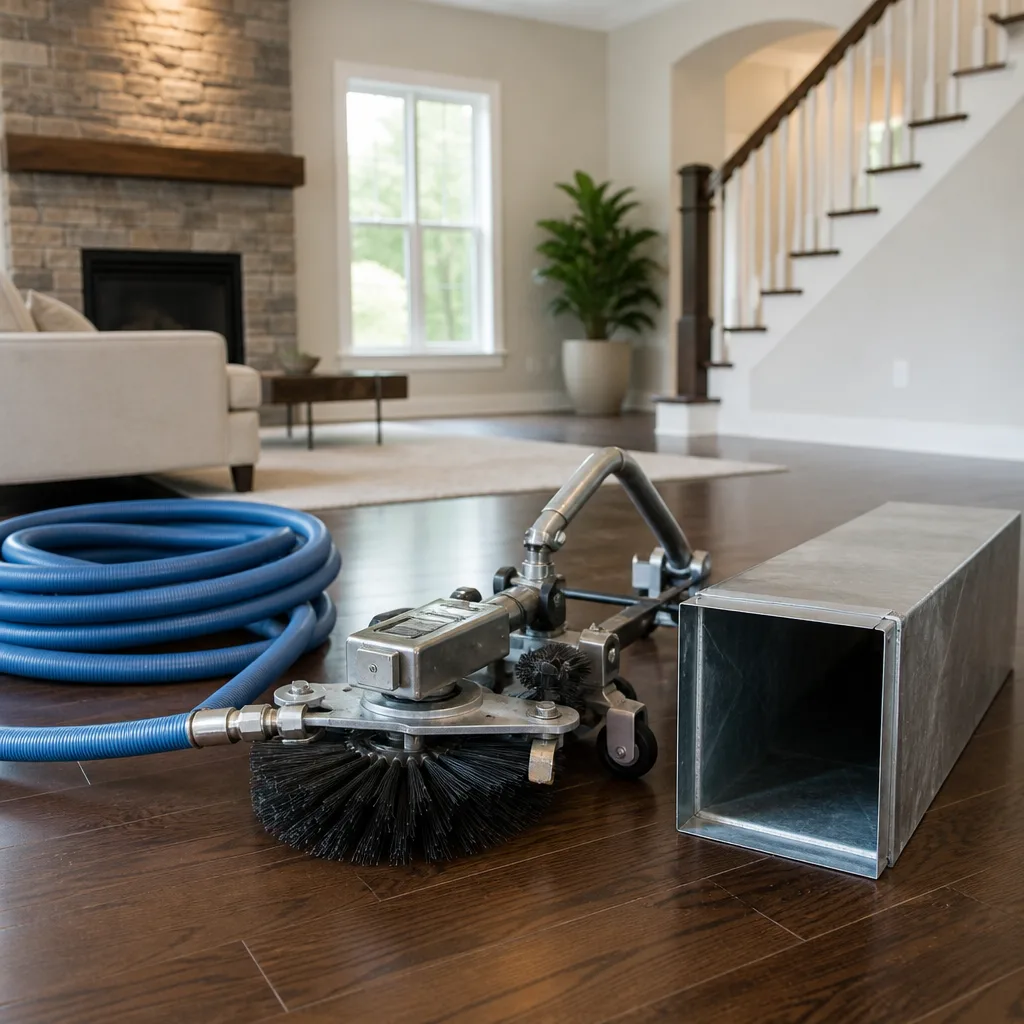 Whole-home duct cleaning
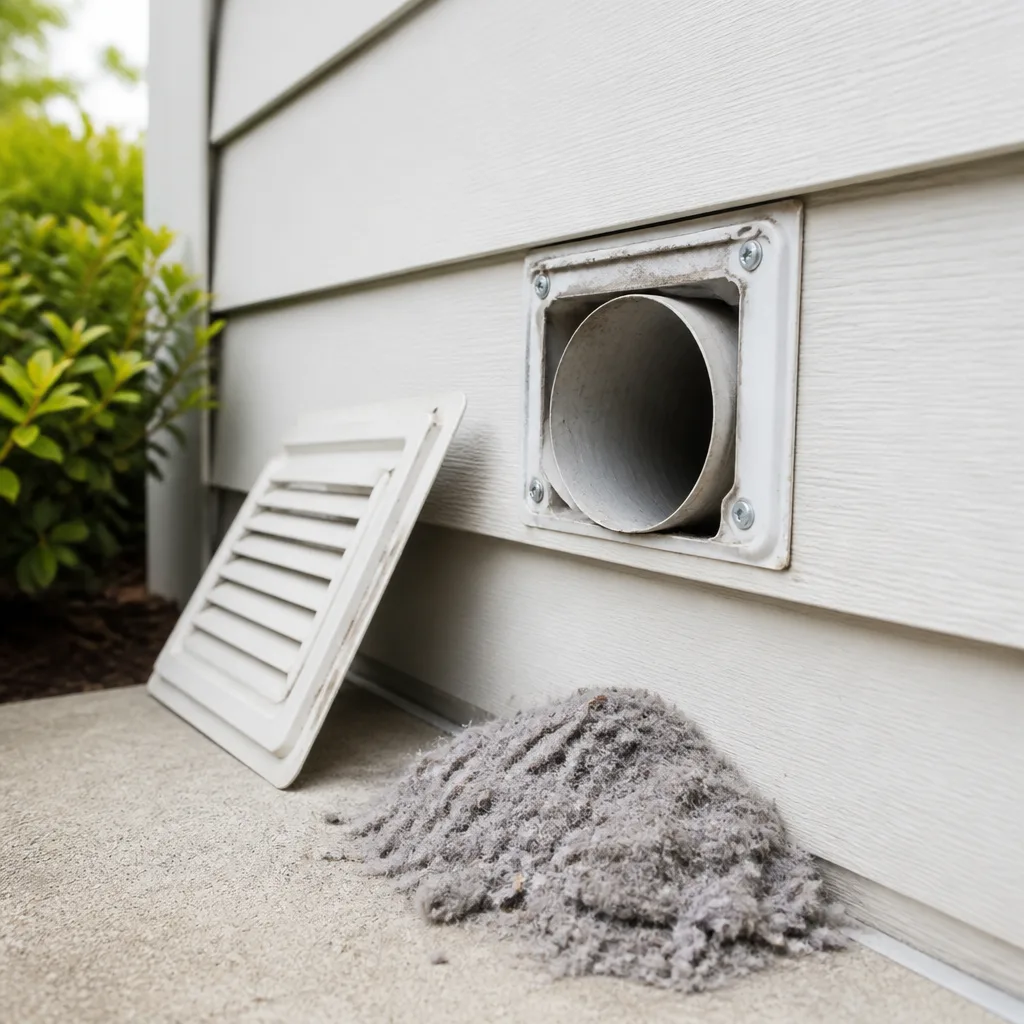 Dryer vent cleaning
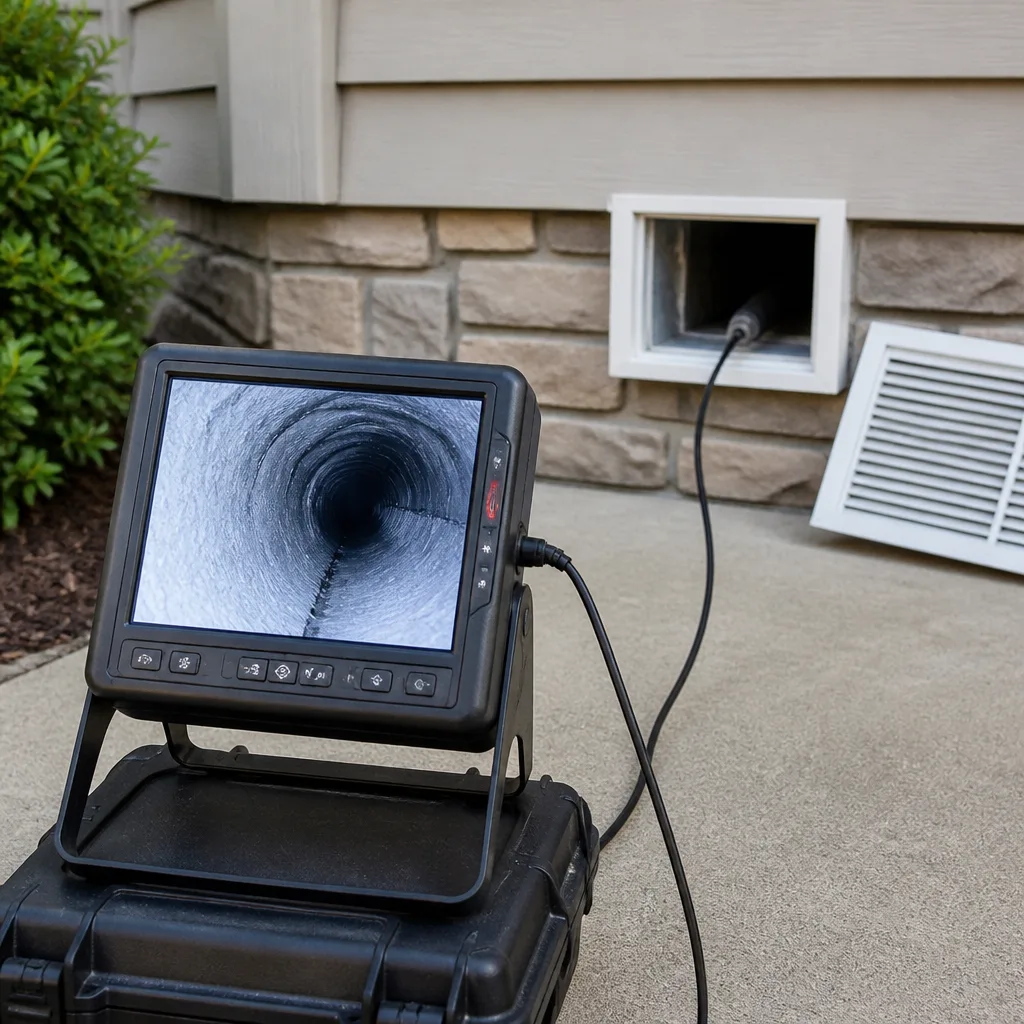 Camera inspection
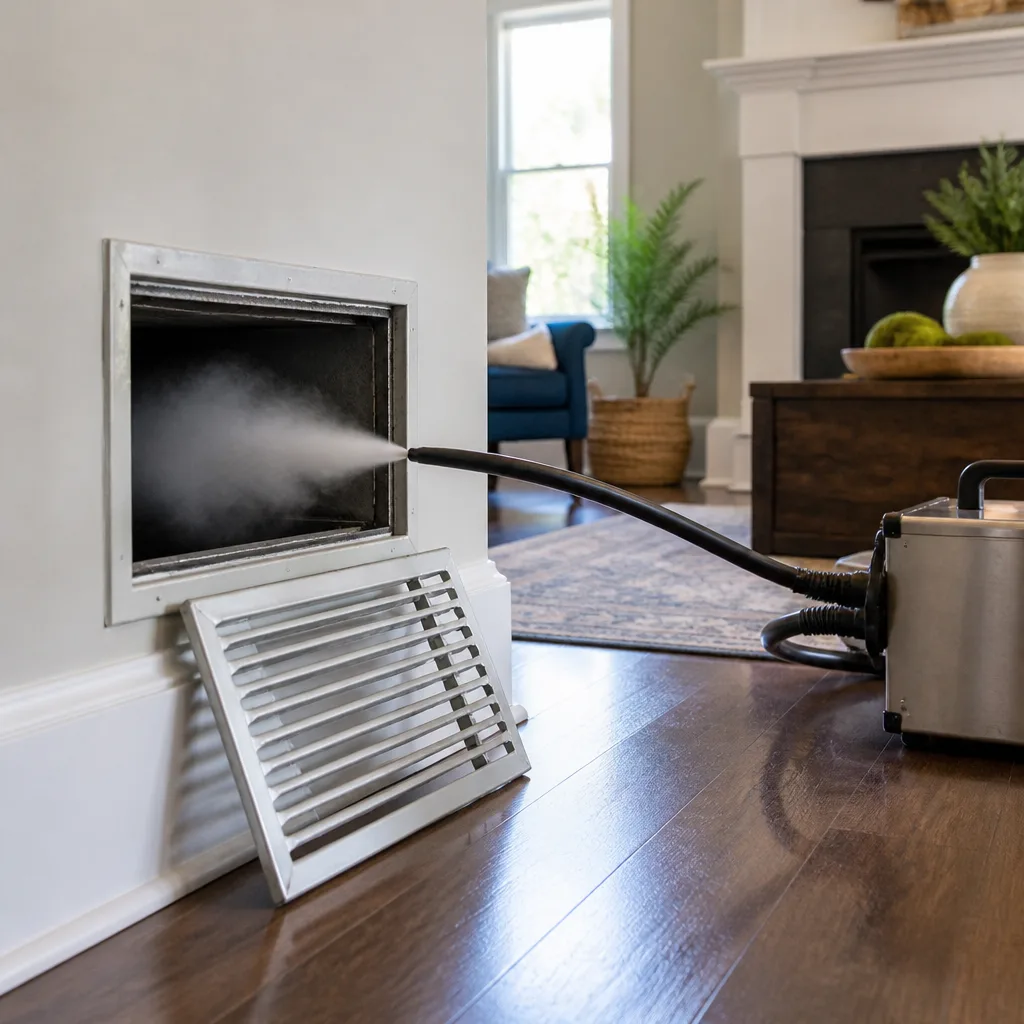 Sanitizing & deodorizing
Whole-system duct and dryer vent check with before-and-after photos - you see exactly what came out of your vents
That "$99 whole-house special" is a bait ad - the real number appears once they are in your hallway, or the "clean" is a shop-vac at the register. We photograph the inside of your ducts before and after instead.
Air Duct Cleaning Maintenance Checklist for McAllen Homeowners
A freshly cleaned duct system in McAllen can start rebuilding particulate within about 90 days, and the fastest path back to a dirty system usually has nothing to do with the ducts themselves. Filters left in too long, a damp drain pan, and gaps in the building envelope push dust and moisture back into the air stream long before the ductwork itself fails. That’s why we treat professional cleaning as a periodic reset rather than a maintenance program: what you do between visits decides how long the reset holds. This guide gives you the tasks, the intervals, and the inspection points that make each cleaning last, all calibrated to how homes here actually run.
Quick Answer
The core maintenance checklist for McAllen homeowners is: change the filter on a schedule tied to your HVAC runtime, inspect supply registers and return grilles every month for dust streaks and darkening, keep the condensate drain and drip pan dry and flowing, and seal the envelope gaps (door sweeps, attic hatch gaskets) that feed particulate into the return. Do those four things consistently and a professional cleaning will hold far longer than it would otherwise. Skip them and the same dust load returns quickly, no matter how thorough the cleaning was.
Styles & brands we work with
- Whole-home duct cleaning
- Dryer vent cleaning
- Camera inspection
- Sanitizing & deodorizing
Table of Contents
- Why Cleaning Is a Reset, Not a Program
- Filter Selection and Replacement Intervals for McAllen
- How to Inspect Registers and Grilles for Recontamination
- Condensate Drain and Drip Pan Checks
- Envelope Tasks That Keep Particulate Out of the Ducts
- Heating Season Tasks for a Mild-Winter Climate
- Month-by-Month Task Calendar
- What a Professional Cleaning Should Include
Why Cleaning Is a Reset, Not a Program
Most homeowners picture duct cleaning as something that gets done once and then quietly keeps working in the background. In practice it’s closer to a reset button. Your system’s contamination level is a running balance between what enters the ducts and what leaves them, and the cleaning sets that balance back near zero. Everything after the cleaning either keeps it low or pushes it back up.
That distinction matters more in McAllen than in most places because the system here runs so much of the year. Long cooling seasons mean long runtime hours, and runtime is the engine that moves air, dust, and moisture through the system. A filtration setup that works fine in a climate with a short cooling season can fall behind here without anyone noticing until the registers start showing it.
Three maintenance failures drive most of the rebound we see:
- Filtration that’s mismatched to runtime. A filter rated for a lighter duty cycle loads up faster than the homeowner expects, and once it’s loaded, dust bypasses or backs up into the return.
- Moisture that never fully dries. A condensate pan that stays damp becomes a growth surface sitting right next to the air stream.
- An envelope that leaks. Every gap around a door or attic hatch is an open invitation for outside particulate to ride the return air into the system.
None of those are duct problems. All of them determine how fast the ducts get dirty again. If you’ve recently had air duct cleaning done and the system already looks tired, one of these three is usually the reason.
The checklist below is built around fixing those three failures first, then handling the duct-specific tasks that follow. If you want the full reset before you start the maintenance routine, that’s the right sequence: clean first, then maintain.
Filter Selection and Replacement Intervals for McAllen
The filter is the single highest-leverage maintenance item on this list, and in McAllen it’s also the one most often set on the wrong schedule. The general rule of “change it every three months” was written for a national average. McAllen’s cooling season runs longer, which means more runtime hours, which means more air passing through the filter before the calendar says it’s time.
Here’s how we think about interval selection:
- Confirm the MERV rating your system can handle. A higher MERV rating catches finer particles, but a filter that’s too restrictive for your blower can reduce airflow and strain the system. Check the equipment spec or ask your HVAC technician what your system was designed for.
- Set a starting interval based on rating and season. A standard pleated filter in the mid-MERV range typically needs attention every 1 to 3 months during heavy cooling months.
- Inspect at the halfway point of your interval. Hold the filter up to a light. If you can’t see light through it evenly, it’s done, regardless of what the calendar says.
- Shorten the interval if you have pets, carpet, or nearby construction. All three load a filter faster.
- Log the date every time you change it. A date written on the filter edge with a marker removes all guesswork.
Filter selection matters too. A filter that’s too restrictive is a real problem in a system running long hours. A filter that’s too loose catches almost nothing. The right answer is usually a middle rating matched to your equipment, changed on a schedule driven by runtime rather than the calendar.
One more thing worth checking: filter fit. A filter that’s the wrong size, or that sits loosely in its slot, lets air bypass around the edges. That bypassed air carries dust straight into the return and past the filter entirely. If the filter rattles or slides, it’s not doing its job, no matter how clean it looks.
How to Inspect Registers and Grilles for Recontamination
Your supply registers and return grilles are the easiest early warning system you have, and they cost nothing to check. A register that starts showing a fresh dust ring or a dark streak near the vanes is telling you that contamination is building somewhere upstream. Catching that early saves a lot of money and a lot of time.
Here’s a simple monthly walkthrough:
- Look at each supply register with a flashlight at an angle. Angled light shows the fine dust film that a straight-on look hides.
- Check for streaking around the edges. Dust streaks at the perimeter of a register usually mean air is escaping around a poor seal, carrying dust with it.
- Look inside the return grille and behind the filter. If the return plenum is visibly coated, the filter isn’t keeping up.
- Note any grille that’s darkening faster than the others. One grille dirtying faster than its neighbors can point to a local leak or a branch of ductwork that needs attention.
- Sniff near the return. A musty or stale smell at the return, not just at one register, means moisture is somewhere in the system.
What you’re looking for is consistency. If every register shows the same light film, you’re on schedule. If one or two are clearly worse, something specific is going on, and it’s worth having it looked at rather than waiting for the next scheduled cleaning.
The return grille deserves special attention because it’s the widest path into the system. A warped or unseated return grille frame can pull air from a wall cavity or attic space instead of the living area. That’s a slow, quiet source of particulate that no amount of filter changing will fix.
We’ve seen plenty of homes in McAllen where the return grille was the whole story. When you call for a professional assessment, a technician can check the return plenum and the branch connections to see whether the issue is filtration, sealing, or the ductwork itself.
Condensate Drain and Drip Pan Checks
Moisture is the maintenance item that does the most hidden damage, because it’s the one homeowners can’t see. An air conditioning system in McAllen pulls a lot of water out of the air during the cooling season, and that water has to leave cleanly. When it doesn’t, the drip pan and drain become a damp, dark surface sitting right next to the air stream.
A simple monthly check:
- Look at the drip pan. It should be dry outside of active cooling. Standing water, a slimy film, or a mineral ring around the drain outlet all mean something is off.
- Check the drain line for flow. A drain line that’s slow or clogged can back water into the pan. Find out where the line discharges and confirm it’s flowing freely.
- Inspect the pan for cracks or rust. A cracked pan can leak water into the surrounding structure, and that’s a bigger problem than air quality.
- Smell the pan and the air handler area. A musty smell near the indoor unit is the clearest sign of moisture buildup.
If the pan is holding water when the system isn’t running, that’s worth a closer look. A clogged drain line is a common cause and a fixable one, but leaving it alone risks water damage and a moisture source feeding the ducts. The safe move is to have it checked rather than tapping at the drain with a wire yourself, since a drain pan sits near electrical components and moving parts.
Aside from the drain, keep the area around the indoor unit clear of stored boxes and clutter. Airflow around the unit matters, and clutter traps dust right where it can get pulled in.
Envelope Tasks That Keep Particulate Out of the Ducts
Your ductwork doesn’t create dust. It moves whatever the building lets in. That’s why the envelope tasks on this checklist often have more effect on duct cleanliness than anything you do to the ducts themselves.
The envelope is everything between the outside air and your living space: exterior doors, windows, attic hatches, garage walls, and penetrations for pipes and wiring. Every gap in that envelope is a path for outside particulate to enter the home, and once it’s indoors, the return grille pulls it toward the ducts.
Start with the most impactful items:
- Replace worn door sweeps and weatherstripping. Exterior doors in McAllen see heavy use, and a worn sweep lets in dust from walkways, driveways, and landscaping. It’s a cheap, high-return fix.
- Check the attic hatch gasket. An attic hatch without a good gasket is a direct path for attic dust into the return air. Attic dust is often finer and more irritating than household dust.
- Seal obvious penetrations. Look at where pipes, cables, and vent lines pass through the envelope. Gaps around these are common and easy to address.
- Look at the return grille’s backside. If the return plenum is drawing from a wall cavity or attic, that’s a problem for a professional to correct.
Window seals and thresholds matter too. Older windows in McAllen face a lot of thermal and wind pressure, and a seal that’s broken lets in both heat and particulate. Keeping them closed and sealed reduces the load on your system.
You don’t need to make the house airtight, just reduce the constant inflow. Even a modest reduction in envelope leakage translates to meaningfully less dust reaching the filter, which in turn extends the useful life of both the filter and the duct cleaning.
Heating Season Tasks for a Mild-Winter Climate
McAllen’s winters are mild, but that doesn’t mean heating season gets skipped. The heater still runs, just less. That downtime is actually useful: it’s the window to handle the tasks that are awkward during peak cooling.
What to do during the cooler months:
- Clean and inspect the heat exchanger area. Dust that settles on heating components during the summer produces that burnt-dust smell on first use. A vacuum around accessible areas and a register-cleaning pass helps.
- Replace the filter at the start of heating season. Even if the filter still has life left, starting the heating season with a fresh filter gives the best baseline.
- Run the system and check each register for balanced airflow. With the fan-only or heat setting, feel each register and note any that are noticeably weaker. Weak registers can indicate a duct issue.
- Recheck the envelope while heating runs. Cooler outside air makes drafts easier to find, so it’s a good time to spot envelope leaks.
It’s also a good time to have any pending duct cleaning McAllen work assessed. Because the heating season is shorter and less demanding, scheduling around it means the system is ready before the cooling season picks up again.
Cold snaps in this climate come on quickly, and homes here aren’t always well-prepped for them. Having the system clean and the filter fresh before a cold spell means the heater can run without pushing accumulated dust back into the living space.
Month-by-Month Task Calendar
Here’s a working calendar built around the seasonal rhythm of a McAllen home. Adjust the exact months to your system’s runtime, but the sequence holds.
January – February (cool season)
- Fresh filter at the start of the season
- Register inspection with a flashlight
- Envelope draft check while it’s cool outside
- Drip pan inspection before heavy cooling returns
March – April (transition)
- Filter check at the halfway point
- Condensate drain flow test as air conditioning starts cycling
- Register walkthrough and note any that are darkening faster
- Attic hatch and door sweep check
May – August (peak cooling)
- Filter replacements at the shortest interval of the year
- Monthly drip pan and drain checks
- Register inspection at the first sign of deposit
- Seasonal professional assessment if registers darken early
September – October (late cooling)
- Full register walkthrough and comparison between rooms
- Filter replacement before the longest stretch of runtime eases
- Envelope check for gaps that opened over the summer
November – December (cooling season ends)
- Final register check of the year
- Filter replacement and date logged
- Schedule a professional cleaning assessment if it’s due
The point of the calendar isn’t to be rigid. It’s to make the checks automatic so the reset from a professional cleaning holds. If you’re in the McAllen area, the seasonal peaks here are long and predictable, so the calendar is genuinely reliable.
What a Professional Cleaning Should Include
Maintenance between visits is half the equation. The other half is what happens when the system is actually reset, and not every cleaning service produces the same reset. The difference usually comes down to equipment and process.
Here’s what we do, and what we think a serious cleaning should look like:
- Contact cleaning with Rotobrush. Rotobrush is a contact-cleaning system that mechanically agitates the interior duct surfaces. Many residential cleanings skip this step and rely on air movement alone.
- High-powered extraction with Nikro. Nikro industrial vacuums pull out what the agitation loosens, so the debris actually leaves the system rather than settling back into it.
- Containment-grade filtration during the work. We use Abatement Technologies air filtration equipment so the cleaning itself doesn’t put debris into your living space. It’s a standard from remediation work, and it’s rare in routine duct cleaning.
- Compatibility with your air quality equipment. If you have Honeywell or Aprilaire components, cleaning should account for them.
- Repair where the inspection finds it. A damaged or leaking joint just re-contaminates a clean system. That’s why we offer air duct cleaning alongside repair rather than treating them as separate jobs.
Dryer vent cleaning rounds out the picture and belongs on the same maintenance calendar. A clogged dryer vent is a fire risk, not just an airflow problem. It’s worth scheduling separately from the duct cleaning.
None of that is about having more gadgets. It’s about producing a real reset that holds. A blower with no agitation and no extraction doesn’t reset anything; it just moves dust around.
Common Mistakes to Avoid
- Setting the filter interval by the calendar instead of by runtime. A filter that gets changed every three months on schedule can still be badly overloaded if the system runs constantly.
- Ignoring the return grille because it’s hard to see. The return is the widest entry into the system, and a warped frame or unseated grille pulls air from cavities and attic spaces.
- Letting the condensate pan stay damp. A pan with standing water is a moisture source near the air stream, and it’s easy to overlook because it’s under the indoor unit.
- Assuming “clean the ducts” means the whole system. Cleaning without addressing envelope leaks and filtration just pushes the same dust back in faster, which usually shows up within a few months.
- Skipping the attic hatch gasket. Attic dust is often finer and more irritating than household dust, and an unsealed hatch sends it straight into the return air.
- Using a filter too restrictive for the blower. A higher MERV rating isn’t automatically better if the system wasn’t designed for it.
- Scheduling dryer vent cleaning as an afterthought. The dryer vent is a fire safety item with a recommended cleaning interval, not a convenience.
See the difference
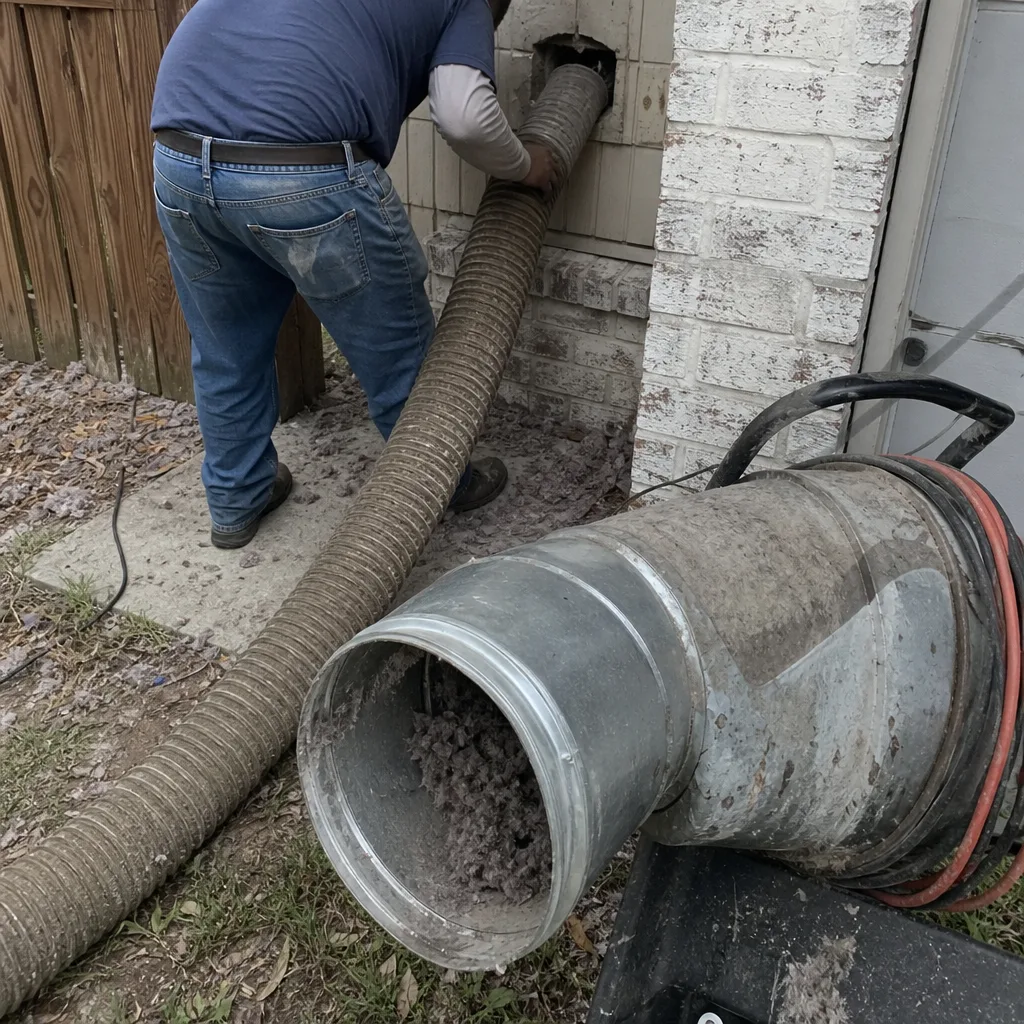 Before
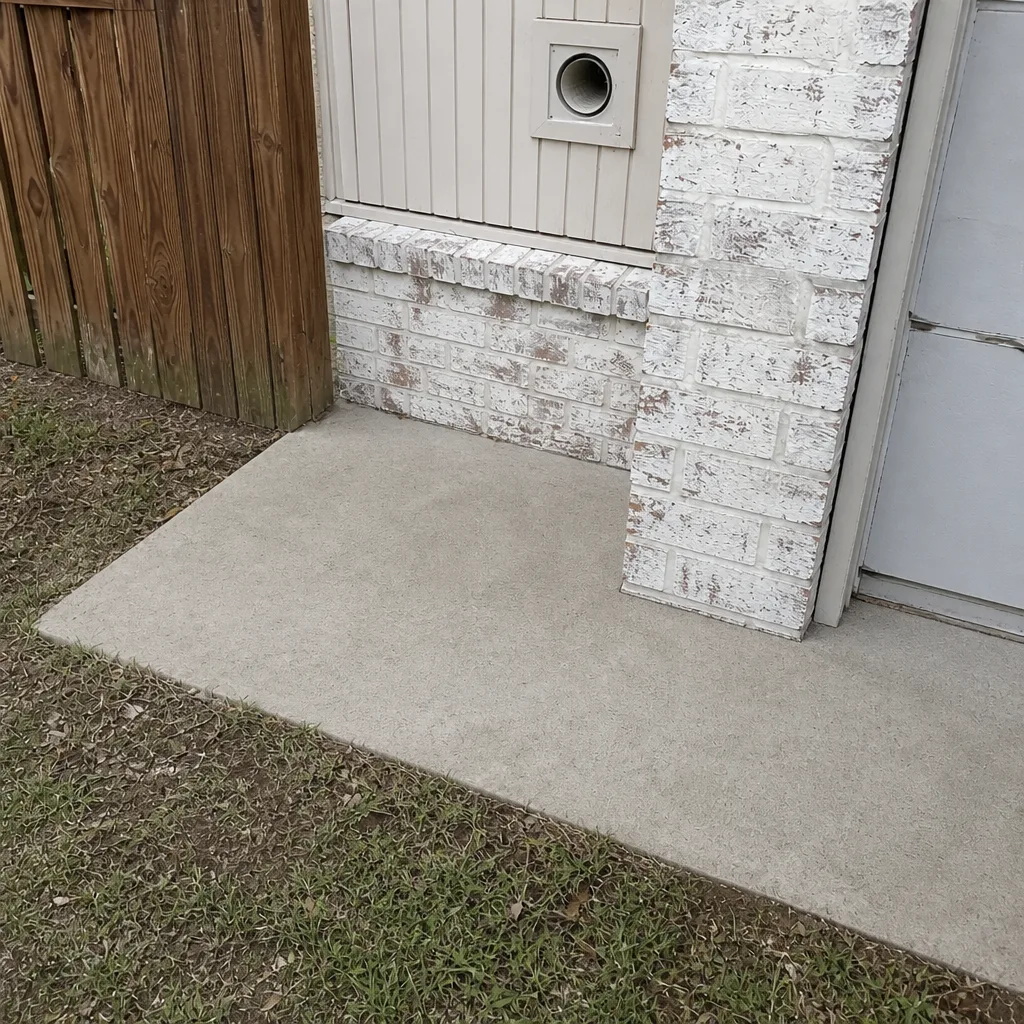 After
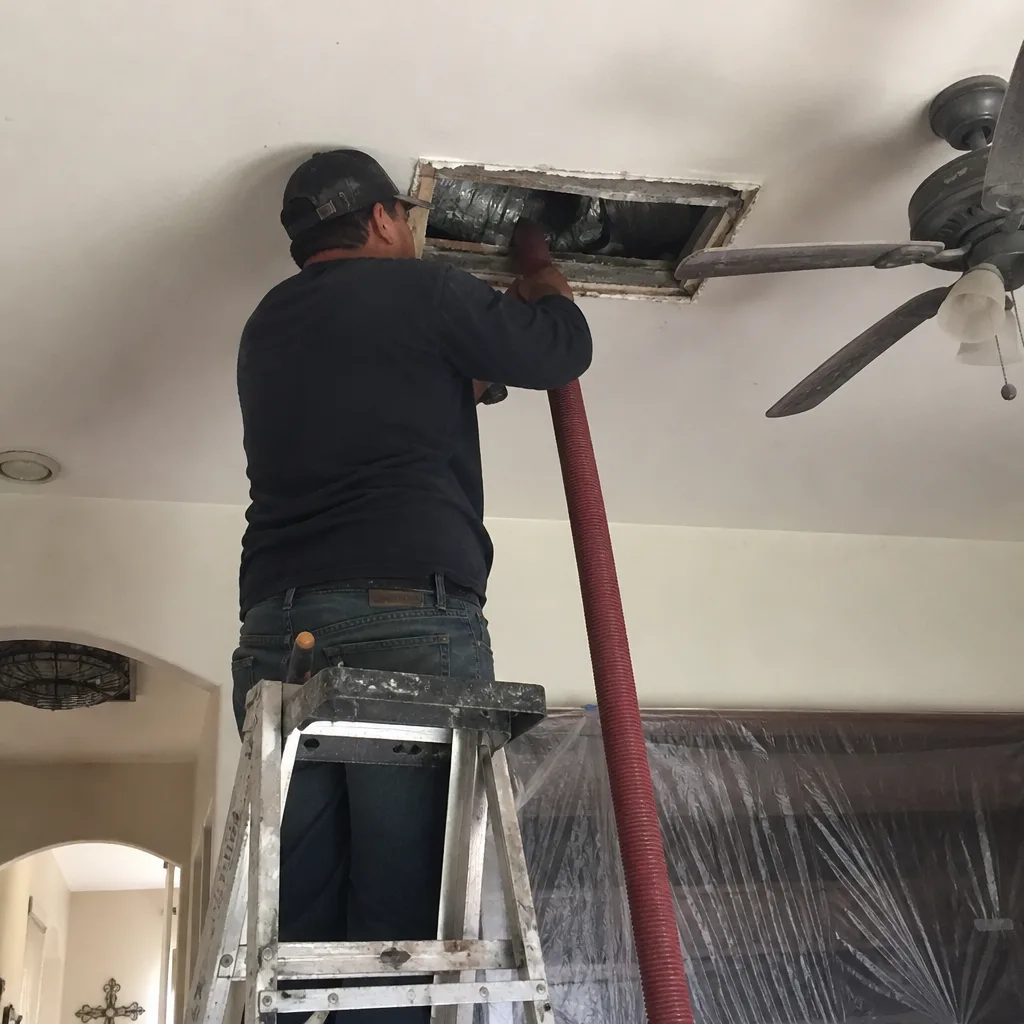 Before
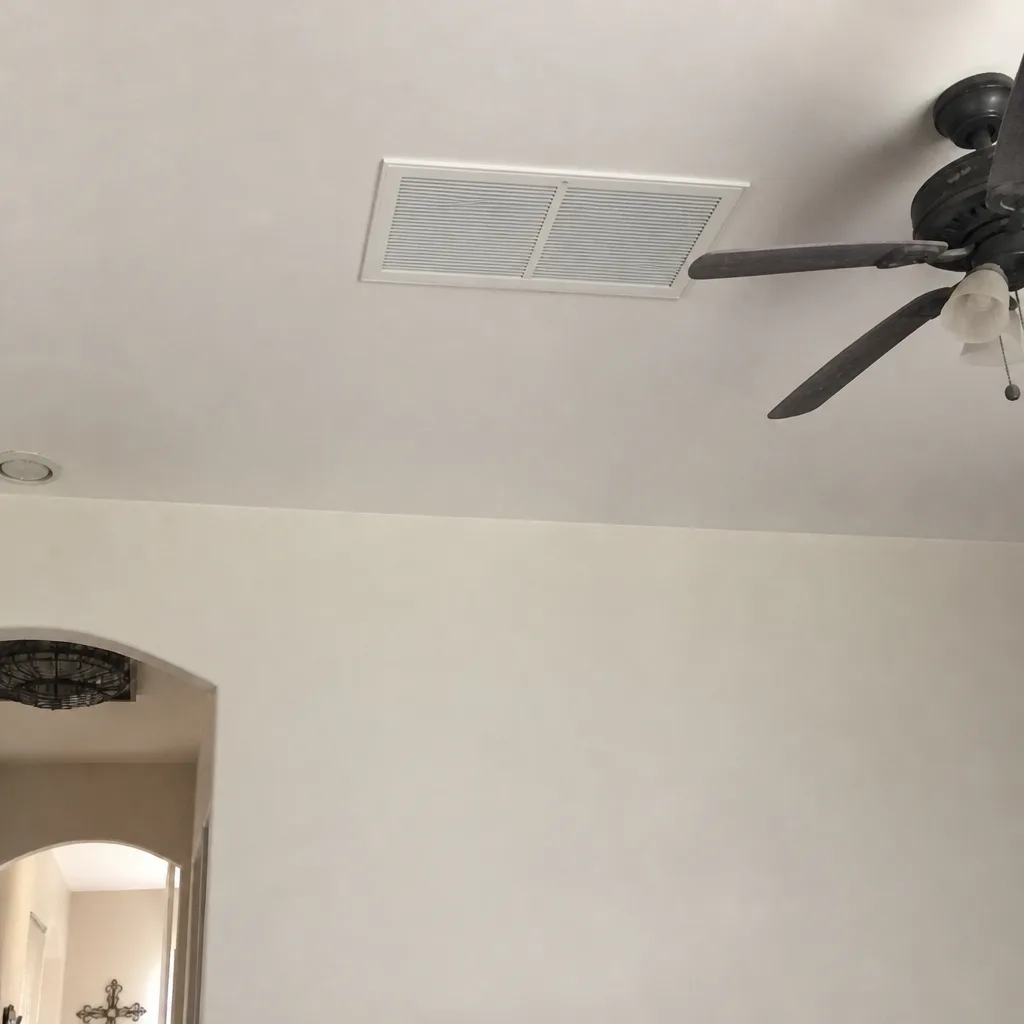 After
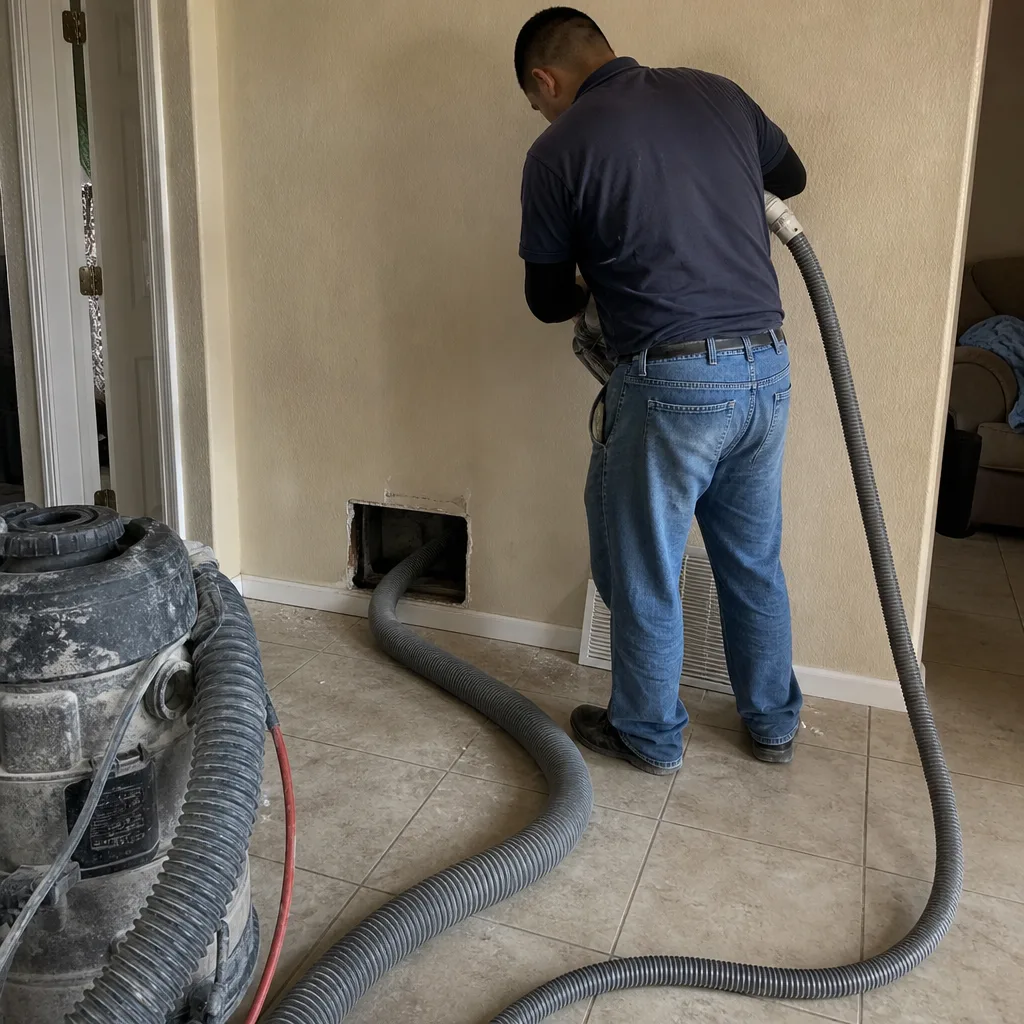 Before
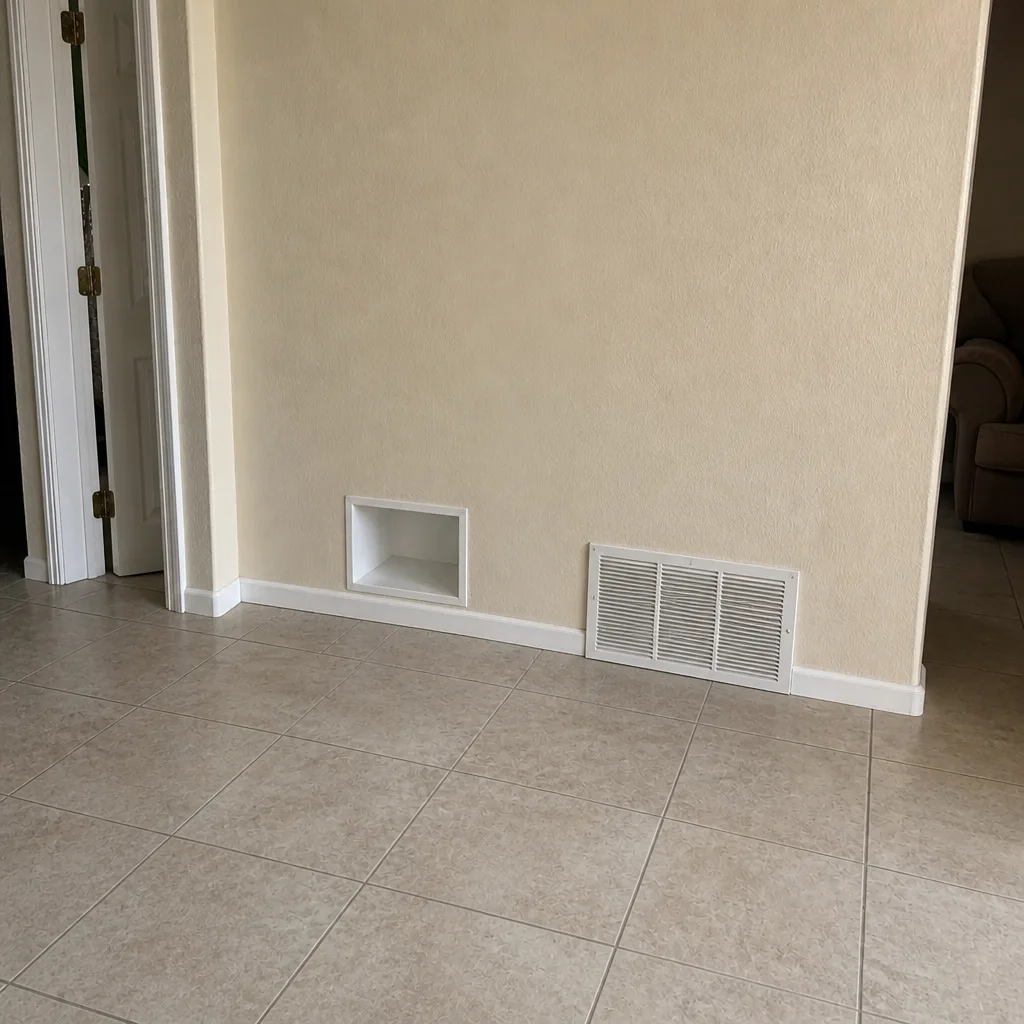 After
When to Call a Professional
Between-visit maintenance handles the routine. Some situations call for a professional reset rather than more checklist work. If registers darken within weeks of a cleaning, if a musty smell lingers at the return grille, or if the condensate pan keeps filling even after a drain check, it’s worth having the system looked at. A register that stays visibly dirty after a professional cleaning is usually a sign of a leaking joint or an envelope problem that needs to be found at the source. If you’re moving into a new home or managing a property, a baseline inspection before the cooling season starts gives you a clean reference point. Duct Cleaning McAllen offers free estimates in McAllen. Call (888) 971-5813 to schedule one. We answer 24/7. Fast dispatch, 7am-7pm, Sunday through Friday.
Frequently Asked Questions
Most homes in McAllen benefit from a professional cleaning every 3 to 5 years, but the right interval depends on your filtration and envelope maintenance. Homes with pets, carpet, or heavy cooling-season runtime often benefit from a shorter interval. If register deposits return quickly after a cleaning, address the filtration and envelope first, then reassess.
Change the filter on a runtime-driven schedule, inspect registers monthly for early recontamination, keep the condensate pan and drain clean and flowing, and seal envelope gaps like door sweeps and attic hatch gaskets. Those four tasks do most of the work of making each professional cleaning last.
Fast recontamination almost always points to a filtration or envelope failure rather than a cleaning that didn’t work. A filter that’s too loose or bypassing air, a return grille drawing from a cavity, or a leaking attic hatch all push particulate back in quickly. Having the system inspected as a whole is the way to find the real cause.
Start with the filter. It’s the highest-leverage item and the easiest to get right. Changing it on a runtime-driven schedule and checking it at the halfway point gives you the most return for the least effort.
Contact cleaning uses equipment like Rotobrush to mechanically agitate the inside surfaces of the ducts. Air-only cleaning just pushes air through. Contact cleaning loosens more of what’s stuck to the duct walls, and high-powered extraction with Nikro then removes it.
Yes. We’re familiar with Honeywell and Aprilaire components, so cleaning and repair account for those systems rather than treating the ducts in isolation. If your setup includes them, let us know when you schedule.
The Bottom Line
Professional duct cleaning resets your system. The maintenance checklist in between decides how long the reset lasts. In McAllen, that comes down to four things done consistently: runtime-driven filter changes, monthly register inspections, a dry condensate pan, and a sealed building envelope. The month-by-month calendar makes the checks routine. When a system needs more than maintenance, an assessment from a specialist finds the source instead of just cleaning around it. Industrial equipment, residential pricing, and a full-system approach: that’s what makes the reset worth it. Ready to schedule a cleaning assessment in McAllen? Call (888) 971-5813 for a free estimate. We answer 24/7. Fast dispatch, 7am-7pm, Sunday through Friday.
Written by the team at Duct Cleaning McAllen.