
Last updated November 15, 2026
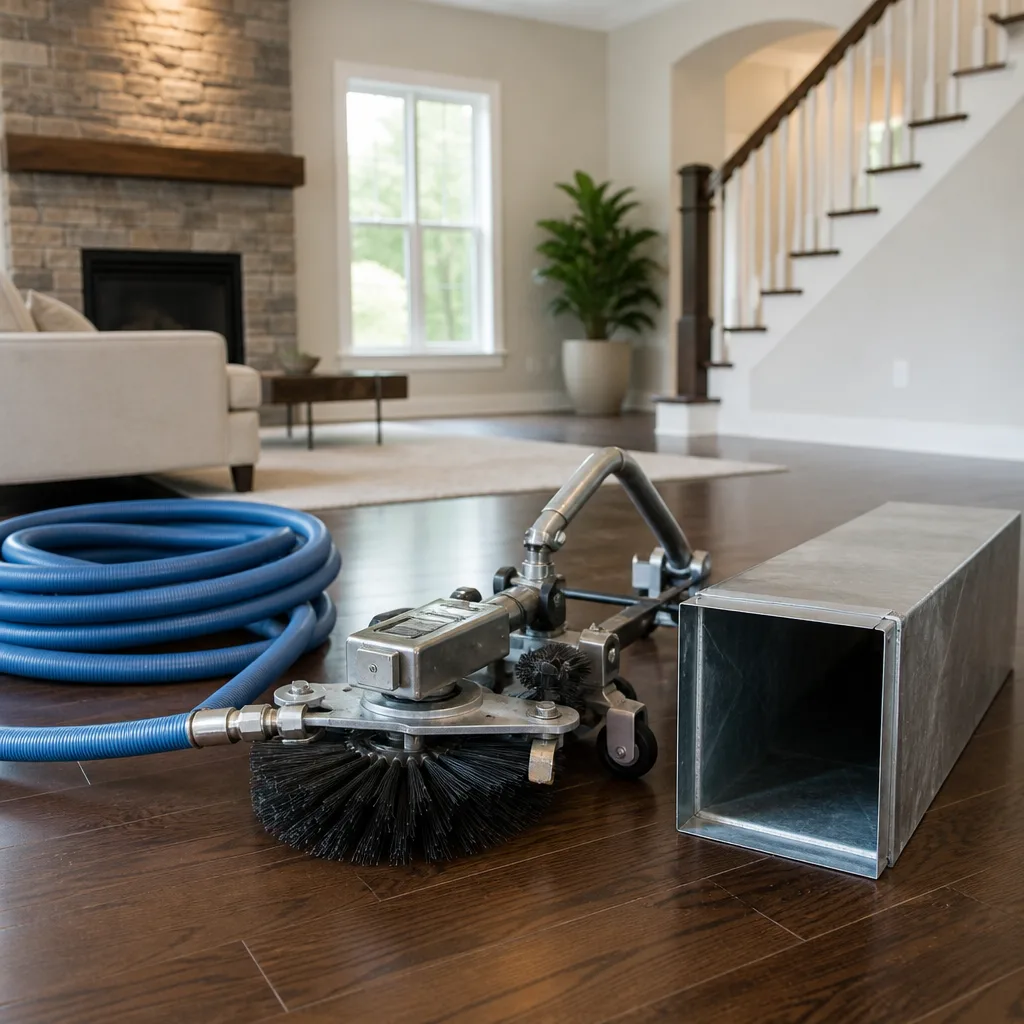 Whole-home duct cleaning
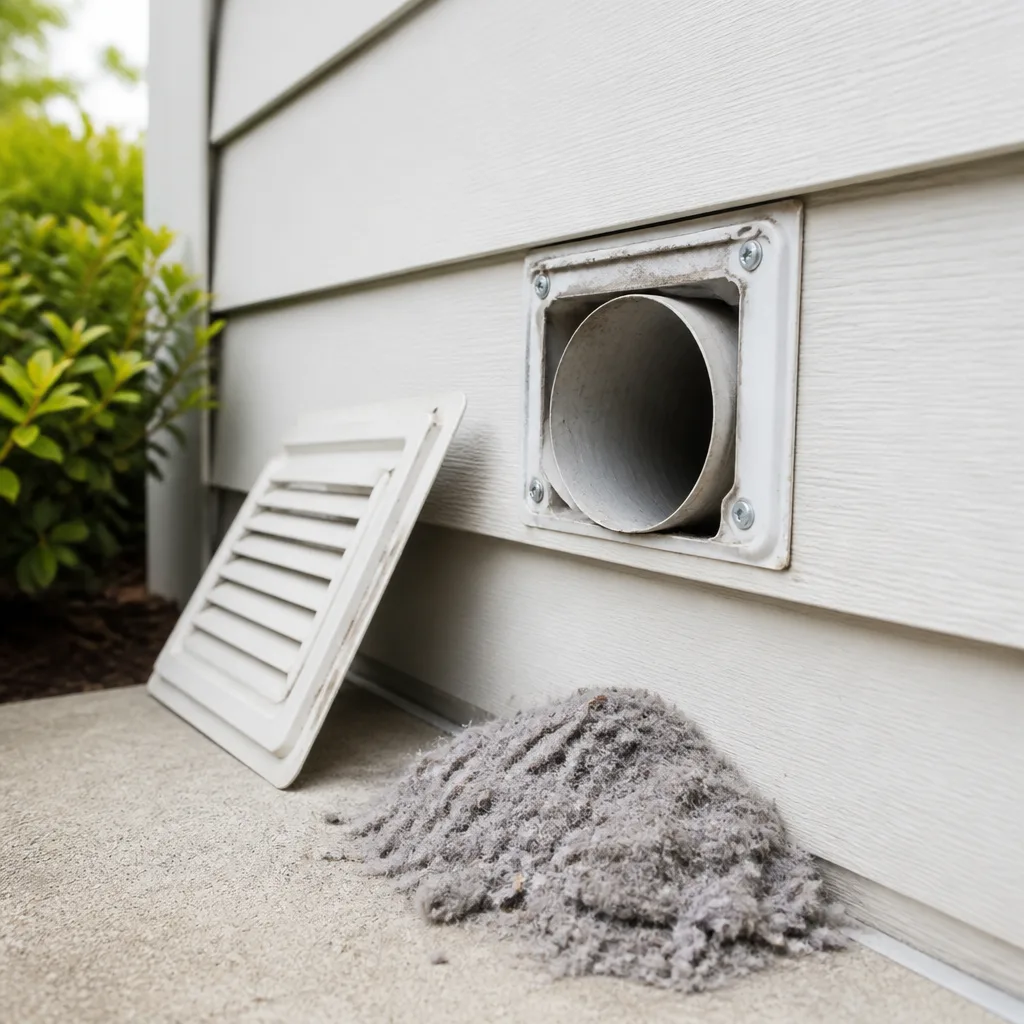 Dryer vent cleaning
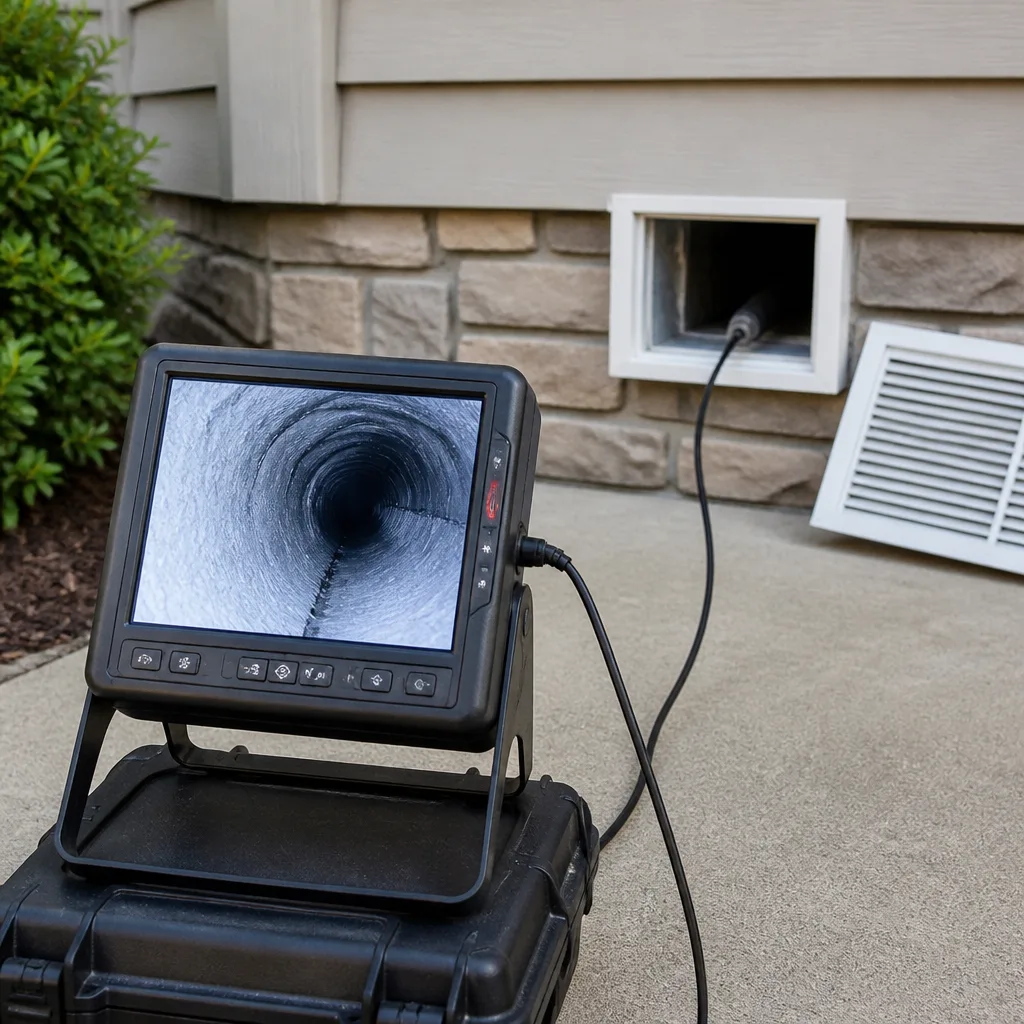 Camera inspection
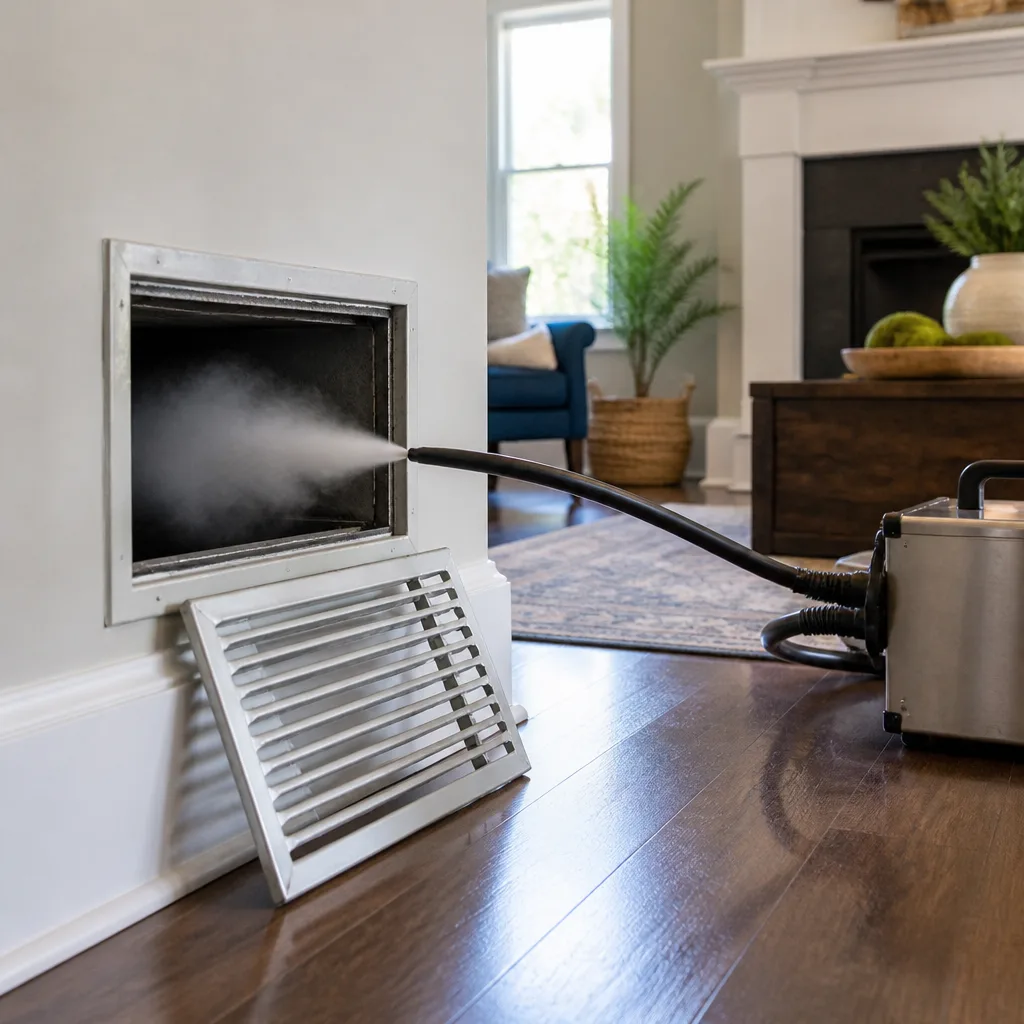 Sanitizing & deodorizing
Whole-system duct and dryer vent check with before-and-after photos - you see exactly what came out of your vents
That "$99 whole-house special" is a bait ad - the real number appears once they are in your hallway, or the "clean" is a shop-vac at the register. We photograph the inside of your ducts before and after instead.
Air Duct Cleaning Maintenance Schedule: What to Do and When
The most common piece of duct cleaning advice in circulation is the EPA’s “every 3 to 5 years” guideline. That number is useful, but it wasn’t written with 90% summer humidity and a system that runs nearly every day of the year. In McAllen, the HVAC system isn’t a seasonal appliance; it’s a year-round workhorse, and the ducts attached to it collect dust, pollen, and biological material faster than the national timeline assumes. This guide gives you a realistic, month-by-month maintenance schedule calibrated to McAllen’s climate, tells you which tasks you can handle yourself and which require real equipment, and shows you how to log duct condition so a technician can spot trends instead of snapshot problems.
Quick Answer
Air ducts in McAllen should be inspected once a year and professionally cleaned every 2 to 4 years for most homes, more often for households with pets, recent renovations, or occupants with respiratory conditions. The best schedule is seasonal rather than a single interval: a pre-summer inspection before heavy runtime begins, filter checks through allergy season, and a post-summer review. Homes running continuous airflow from April through October often need cleaning closer to the 2-year mark.
Styles & brands we work with
- Whole-home duct cleaning
- Dryer vent cleaning
- Camera inspection
- Sanitizing & deodorizing
Table of Contents
- Why the National Duct Cleaning Interval Doesn’t Fit McAllen
- A Month-by-Month Schedule for McAllen Homes
- How Continuous HVAC Runtime Accelerates Duct Buildup
- What You Can Do Yourself vs. What Needs Equipment
- How to Log Duct Condition Over Time
- Intervals That Change: Pets, Renovation, Respiratory Conditions
- Your Dryer Vent Is Part of the Maintenance Schedule
- Signs It’s Time to Move the Cleaning Date Up
Why the National Duct Cleaning Interval Doesn’t Fit McAllen
Most duct cleaning advice is written for a climate with four distinct seasons and a heating season that idles the system for months. That description doesn’t fit McAllen. Here, the air handler runs from spring through late fall without meaningful downtime, and even in the cooler months the system cycles regularly. Air that never stops moving never stops depositing what it carries: dust, pollen, and whatever the return air pulls off carpet, furniture, and clothing.
Add the humidity. McAllen’s summer air is wet, and any home with a slightly undersized dehumidification setup or minor duct leakage will see condensation form on cool interior duct surfaces. That moisture turns into organic growth conditions – not mold remediation territory, but a reason for biological material to build up on duct walls faster than in a dry climate. It’s the combination that matters: continuous airflow moving material into the ducts, plus enough humidity to make it stick.
There’s also the pollen load. McAllen’s growing season is long, and the spring bloom delivers a heavy particulate spike into return air. Homes that rely on a basic 1-inch filter through that period collect material in the ducts that a northern home never sees during the same interval.
The practical result: treat the national “3 to 5 years” number as the ceiling, not the target. For most McAllen homes, 2 to 4 years is realistic, and the schedule below explains how to dial that in based on what your house actually tells you.
A Month-by-Month Schedule for McAllen Homes
Duct maintenance isn’t a single event; it’s a rhythm. Here’s a schedule calibrated to how McAllen’s year actually unfolds.
- January: Change the filter. Do a visual check of accessible registers for dust streaks and dark edges. Note anything unusual in your log (more on logging below).
- February: Pull a register cover and look inside with a flashlight. If the duct interior shows visible dust buildup on the walls or a musty smell is present, schedule an inspection.
- March: Pre-allergy-season filter check. If you’re using a 1-inch fiberglass filter, this is the month to consider upgrading to a pleated filter with a higher dust-holding capacity.
- April: Pre-summer startup inspection. This is the big one in McAllen. Before the system starts running continuously, have the ducts and air handler checked so you’re going into peak season with clean equipment.
- May: First filter change of the heavy-runtime period. Note the color and weight of the filter in your log – it’s a good indicator of duct load.
- June: Mid-season filter change. Check return-air grilles for visible dust accumulation.
- July: Mid-season check. Listen for airflow changes or whistling at registers, which can signal partial blockage or a leaking duct joint.
- August: Filter change. If you have pets, this is the month to book a professional cleaning if you skipped spring.
- September: Post-allergy-season filter check and register cleaning. Wipe down grilles; you’ll be surprised how much material collects during peak season.
- October: End-of-summer review. Note any musty odors, dust patterns, or airflow changes you observed across the season and add them to your log.
- November: Filter change. Visual inspection of ducts in accessible areas.
- December: Yearly review. Compare your log entries to prior years. If it’s been more than 2 to 3 years since a professional cleaning, book it.
This schedule is a starting point, not a law. Homes with pets or heavy foot traffic should tighten the filter-change cadence to every 30 to 45 days during peak season.
How Continuous HVAC Runtime Accelerates Duct Buildup
Think of your HVAC system as a very slow vacuum that never turns off. Every hour of runtime pulls air through the return ducts and pushes it through the supply ducts. In a climate that runs the system intermittently, that vacuum pauses for most of the year. In McAllen, it doesn’t. From April through October, many homes run the air handler 8 to 14 hours a day or more, and some run it continuously.
The math is straightforward: a home that runs its system 3,000 hours a year accumulates duct deposits roughly twice as fast as a home that runs 1,500 hours. Apply that to the national 3-to-5-year interval and you get 1.5 to 2.5 years as the McAllen equivalent. That’s the core reason this guide’s recommendation of 2 to 4 years is tighter than what you’ll read on generic HVAC sites.
It’s worth understanding what builds up:
- Dust and lint drawn in through the return, especially from carpet and upholstery.
- Pollen and other plant material, heaviest during spring bloom.
- Pet dander, which accumulates faster than dust because it bonds to surfaces.
- Construction debris from any recent renovation – drywall dust is fine enough to travel deep into the supply side.
- Biology on surfaces that stay damp from condensate in humid months.
The consequences aren’t dramatic, but they’re real: reduced airflow, higher energy use, more dust settling on furniture after the system has run, and a musty smell that becomes more noticeable each season.
What You Can Do Yourself vs. What Needs Equipment
The single biggest mistake homeowners make with duct maintenance is treating a filter change as a full solution. It isn’t. Here’s a clear breakdown of what actually belongs in your hands and what doesn’t.
Tasks you can handle yourself
- Filter changes. Every 30 to 90 days depending on filter type, pets, and season. This is the highest-leverage task on the entire list.
- Register cleaning. Remove the grilles, wash them in warm soapy water, dry fully, and reinstall. Use a vacuum with a brush attachment to remove loose dust from the surface just inside the register.
- Return-air grille inspection. Check for visible dust buildup, dark streaks, and any sign of moisture.
- Visual inspection of accessible ductwork. In most homes, a length of flex duct or supply trunk is visible in a closet or mechanical room. Look for loose insulation, disconnected joints, or accumulation on the interior walls.
- Duct joint check. Look for tape that has dried out or joints that have separated. This matters because leaking joints draw unconditioned air – including attic dust – directly into the system.
- Moisture check. Look for condensation on the outside of ducts or water stains below them, especially in summer.
Tasks that need professional equipment
- Contact cleaning inside ducts. Reaching and agitating material on interior duct walls requires a rotation brush system like Rotobrush, which is the standard tool for the job.
- High-volume extraction. Removing what the brush loosens requires a truck-mounted or portable HEPA unit with enough suction to move air through the whole system at once – Nikro industrial vacuums are built for this tier of work.
- Air handler / plenum cleaning. The interior surfaces of the air handler cabinet, evaporator coil, and plenum are where a lot of buildup hides, and they aren’t homeowner-accessible.
- Repairs to leaking or disconnected ductwork. Once a duct joint or run has failed, cleaning alone doesn’t fix the underlying air quality problem – the duct needs to be repaired first.
- Filtration containment during cleaning. This is what separates a professional job from a blower in a hose. Abatement Technologies air filtration units keep the removal process from putting dust back into your living space, which is a remediation-grade standard.
- Dryer vent cleaning. Accessing and clearing the full dryer vent run requires equipment most homeowners don’t own, and it’s a fire-safety service, not a cosmetic one.
If you’re not sure whether your system needs cleaning or just a filter change, we can look. That’s the honest answer – some homes only need a filter swap, and we’ll tell you so.
How to Log Duct Condition Over Time
The best thing you can do for long-term duct health is also the cheapest: keep a log. The problem with most duct cleaning decisions is that they’re made from a single snapshot – the technician looks inside once and either sees enough buildup to clean or doesn’t. That’s not enough information to identify a trend. If the ducts are sticking more each spring, or the filter keeps darkening sooner every year, that pattern is the real story.
A simple duct log takes five minutes a month:
- Date and season. Note whether the entry is from a heavy-runtime month (April through October) or a lighter month.
- Filter change. Note how long the filter lasted, how dark it was on a 1-5 scale, and whether it weighed noticeably more than usual.
- Register condition. Note whether grilles had visible dust, streaks, or anything unusual.
- Odor. Note any musty or dusty smell, and where it’s strongest.
- Airflow notes. Note whether some rooms seem weaker than others, or whether you’ve had to lower the thermostat just to feel cool air.
- Visual check inside a register. A simple photo taken in the same spot each month is remarkably useful over time.
- Any events that matter. Renovation, a new pet, a new furnace filter brand – these are the things that shift your interval.
When a technician can see two or three years of consistent logs, the recommendation isn’t “the ducts look dirty.” It’s “here’s what changed and when, and here’s the cleaning schedule that fits the pattern.” That’s a much better place to make a decision from.
Intervals That Change: Pets, Renovation, Respiratory Conditions
The standard 2-to-4-year interval is a baseline. Several factors will legitimately move it in one direction or the other.
Homes with pets
Pet dander and hair are heavier and bond to duct surfaces more readily than ordinary dust. For homes with one or more indoor pets, shift the cleaning interval to 2 to 3 years and increase filter changes to every 30 to 45 days during peak season. Homes with multiple pets shedding year-round should be closer to the 18-to-24-month end.
Recent renovation
Drywall dust is fine enough to travel through the entire duct system and settle deep in the supply runs. If you’ve had any drywall work, painting prep, or a flooring project, schedule professional cleaning within 60 to 90 days of completion, regardless of when the last cleaning was. Running the system during heavy dust-generating work without sealing off returns will make this worse, not better.
Respiratory conditions in the household
Homes with occupants who have asthma, allergies, or other respiratory conditions benefit from a tighter schedule. This is where a whole-home air filtration setup – Aprilaire or Honeywell media cabinets, for example – pulls its weight. The right combination of filtration and cleaning interval is different from an average home, and the conversation should start with a professional assessment rather than a standard recommendation.
Smoker households or wood-burning fireplaces
These add particulate beyond what the HVAC filter is designed to catch. Clean on the shorter end of the interval and plan on more frequent filter changes.
Older homes or homes with visible duct damage
If you know from a prior inspection that some duct runs have failing tape or disconnected joints, the repair should come before the next cleaning, not after. Cleaning ducts that leak and then reopening them is wasted effort. Air duct repair as the first step and cleaning as the second is the sequence that actually holds up.
Your Dryer Vent Is Part of the Maintenance Schedule
The dryer vent doesn’t sit next to the ductwork, but it belongs on the same maintenance calendar. A clogged dryer vent forces the dryer to run longer, uses more energy, and creates a fire risk that builds quietly. Year-round heat and heavy dryer use in McAllen homes mean the vent line should be checked once a year and professionally cleaned every 1 to 3 years, more often in a large household or a home with a long or convoluted vent run.
Homeowner-level checks:
- Pull the lint screen and clean it before every load. This one habit prevents half of all vent buildup.
- Check the exterior vent flap to make sure it opens freely when the dryer runs.
- Time a typical cycle. If a load that used to take 45 minutes is now taking 70, the vent line is likely restricted.
- Feel the exterior vent area while the dryer runs. Weak airflow, or none, is a sign the run needs professional cleaning.
What most homeowners miss is the length of the vent run itself. The transition hose behind the dryer is where a lot of buildup starts, but the run inside the wall is where it becomes a hazard. In our experience, homes that haven’t had a dryer vent cleaned often find the deepest accumulation at the far end, out of sight and out of reach. Professional dryer vent cleaning reaches the whole run. It’s a fire-risk reduction service first and an efficiency service second, and it’s the reason we treat it as one of our three core services.
Signs It’s Time to Move the Cleaning Date Up
The monthly schedule and the log are your baseline. But there are times when the schedule should be moved up regardless of what the calendar says. Watch for these:
- Visible dust on surfaces within a day or two of cleaning. That’s a strong sign the ducts are contributing to the dust, not just the furniture.
- Musty smell when the system starts. A persistent musty odor every time the AC comes on usually traces to biological buildup in the ducts or on the evaporator coil.
- Increased dust at registers. Dark streaks or dust blowing out of a supply register after filter changes is a sign the cleaning interval is done.
- Airflow that’s dropped noticeably. Reduced airflow in specific rooms, without a clear cause, is often partial duct blockage or a failing joint.
- Allergy symptoms that get worse indoors. Especially during allergy season, if symptoms track with HVAC runtime, the ducts are a variable worth addressing.
- Recent renovation or water damage. These force the cleaning date up regardless of interval.
- A new pet or a growing family. Pet dander, changing filter loads, and higher foot traffic all shift the baseline.
If two or more of these are present at once, don’t wait for the next scheduled interval. Have a technician look at the system and the ducts together. Cleaning, and if necessary repairing, in one visit is more efficient than treating the symptoms piecemeal.
Common Mistakes to Avoid
- Treating filter changes as full duct maintenance. The filter catches what it catches; the ducts still hold everything that gets past it. Changing a filter doesn’t clean the ducts, and it doesn’t move them.
- Following the “3 to 5 years” rule literally in McAllen. That number was written for a climate with a long idle season. Homes in McAllen that run the system 10 hours a day all summer are on a different clock.
- Skipping the pre-summer inspection. Going into a continuous-runtime season with dirty ducts and a full system is the single most common scheduling mistake. The pre-summer inspection in April is the best-value appointment on this whole calendar.
- Cleaning ducts but not fixing visible joint damage. Cleaning ducts that leak means the next round of dust comes straight back in through the leak. Repair first, then clean.
- Choosing a cleaning quote based on the lowest price alone. Industrial extraction and containment filtration are expensive equipment for a reason. A service that skips them doesn’t deliver the same result.
- Ignoring the dryer vent because “the ducts got cleaned.” Duct cleaning and dryer vent cleaning are separate services on separate schedules, and the dryer vent is the one with the fire risk.
- Not logging anything. Without a log, every duct cleaning decision is made from one look. A written history lets a technician give you a schedule that fits your house instead of a generic timeline.
See the difference
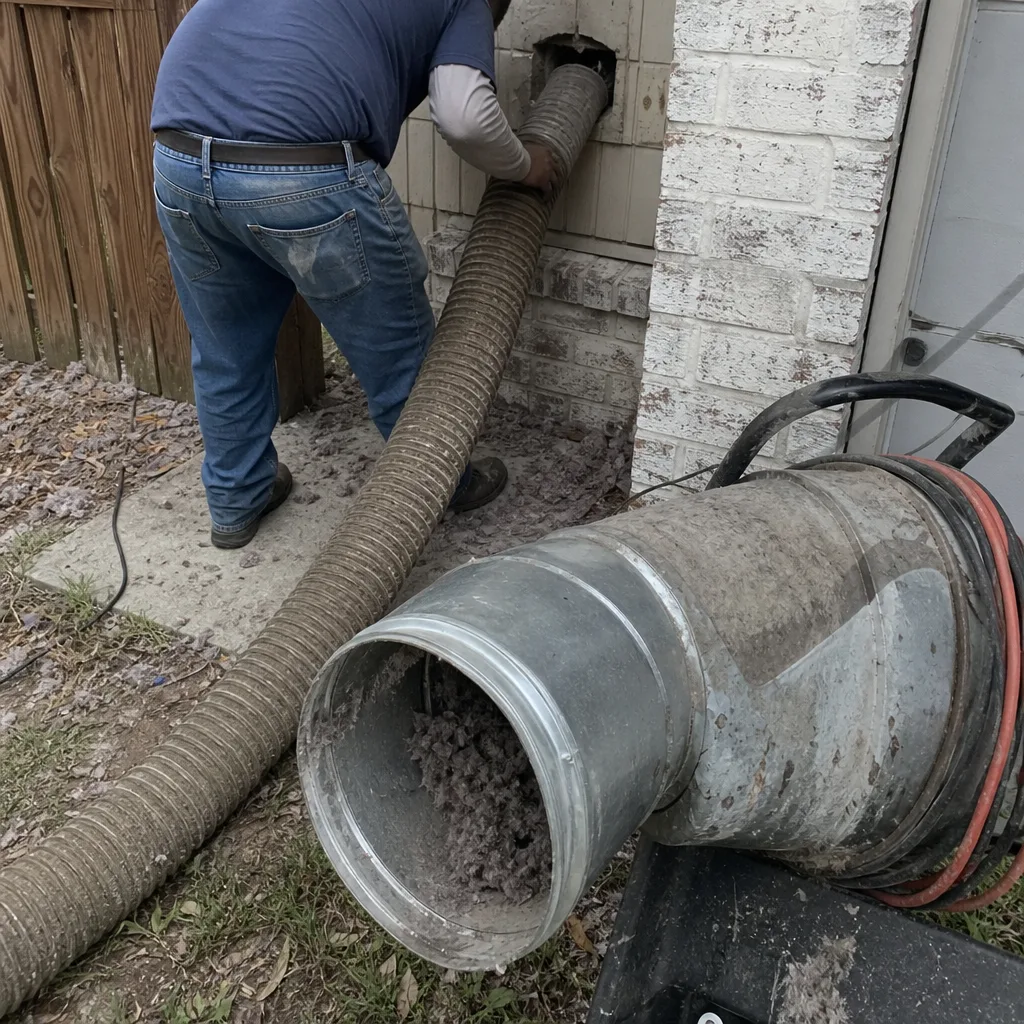 Before
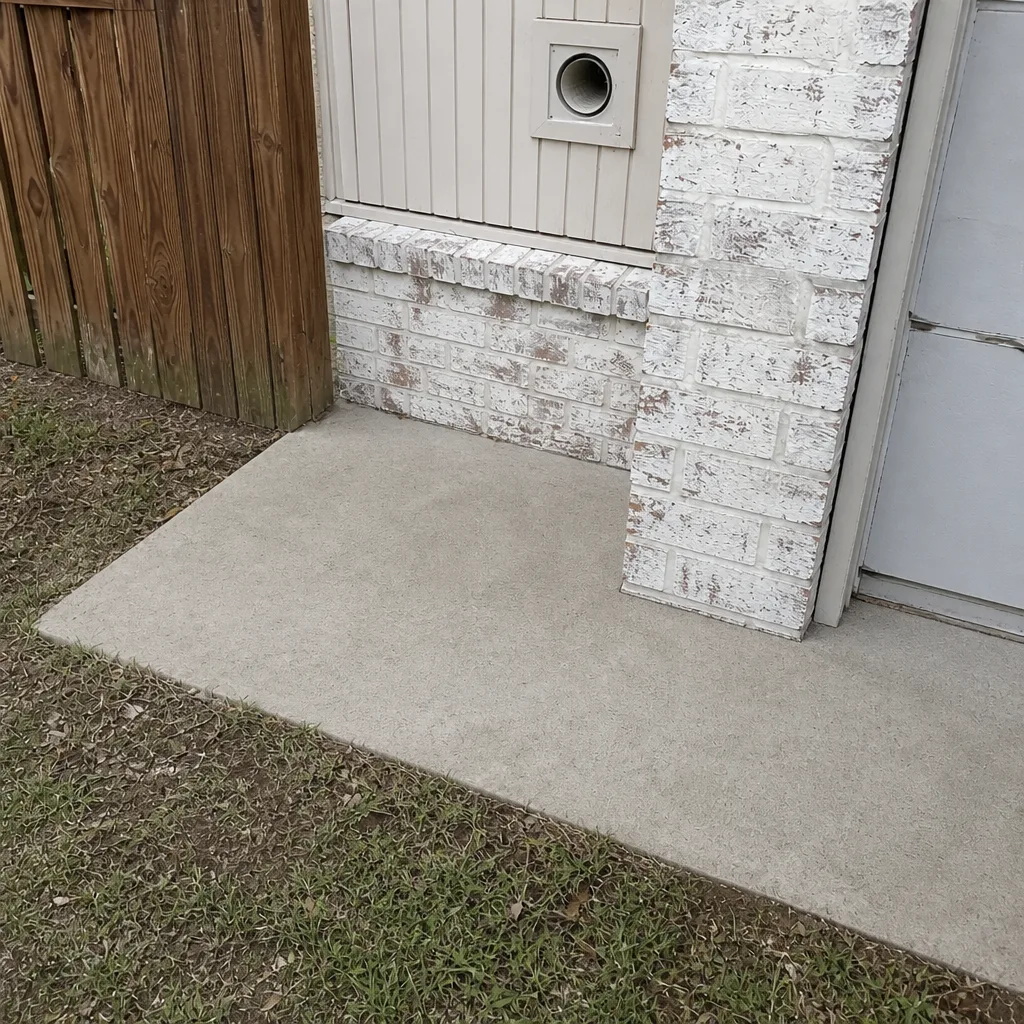 After
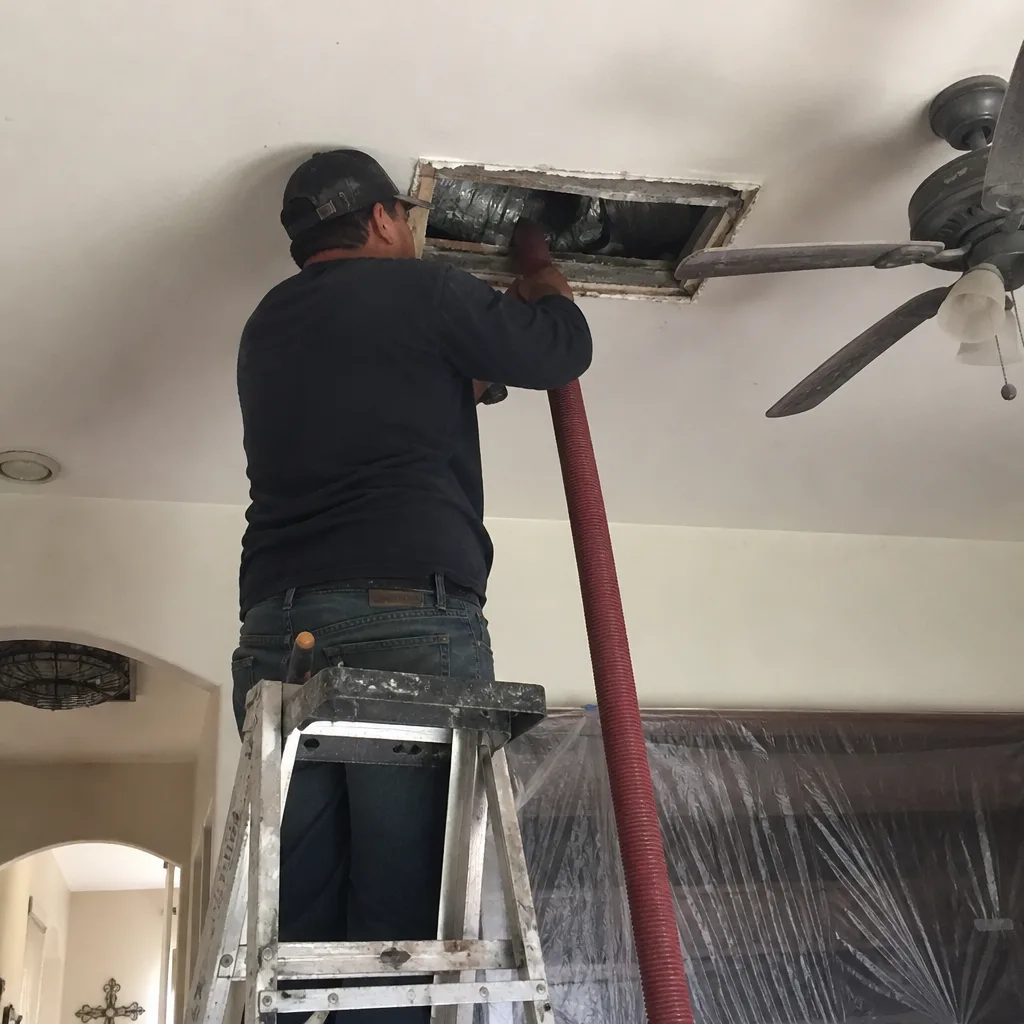 Before
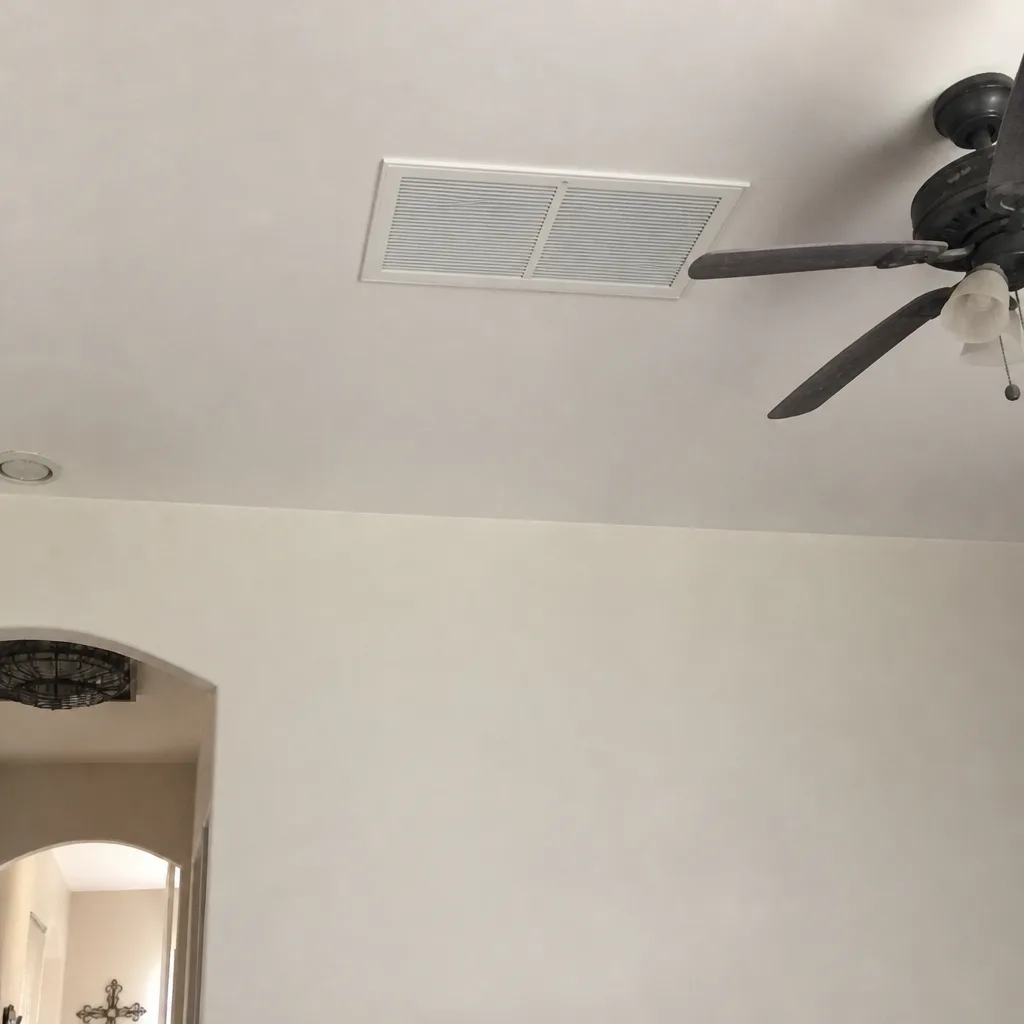 After
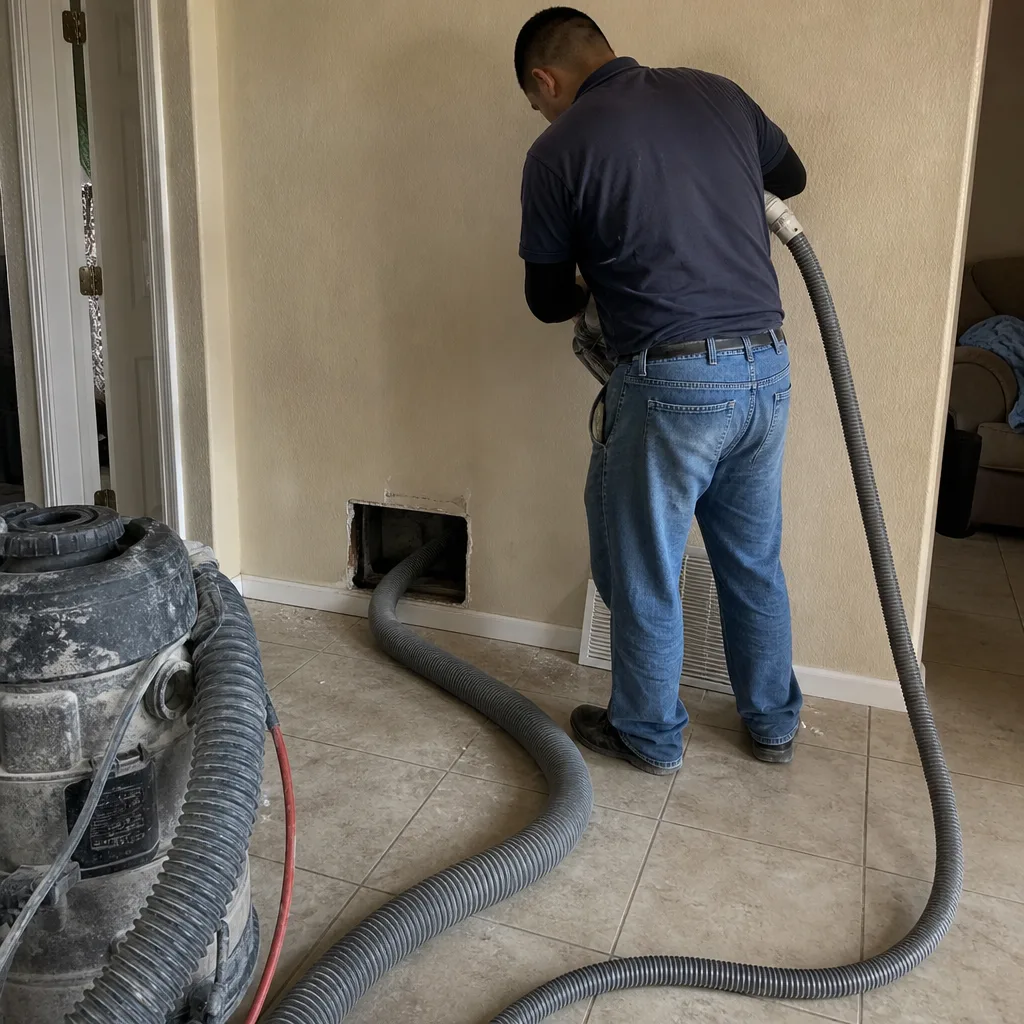 Before
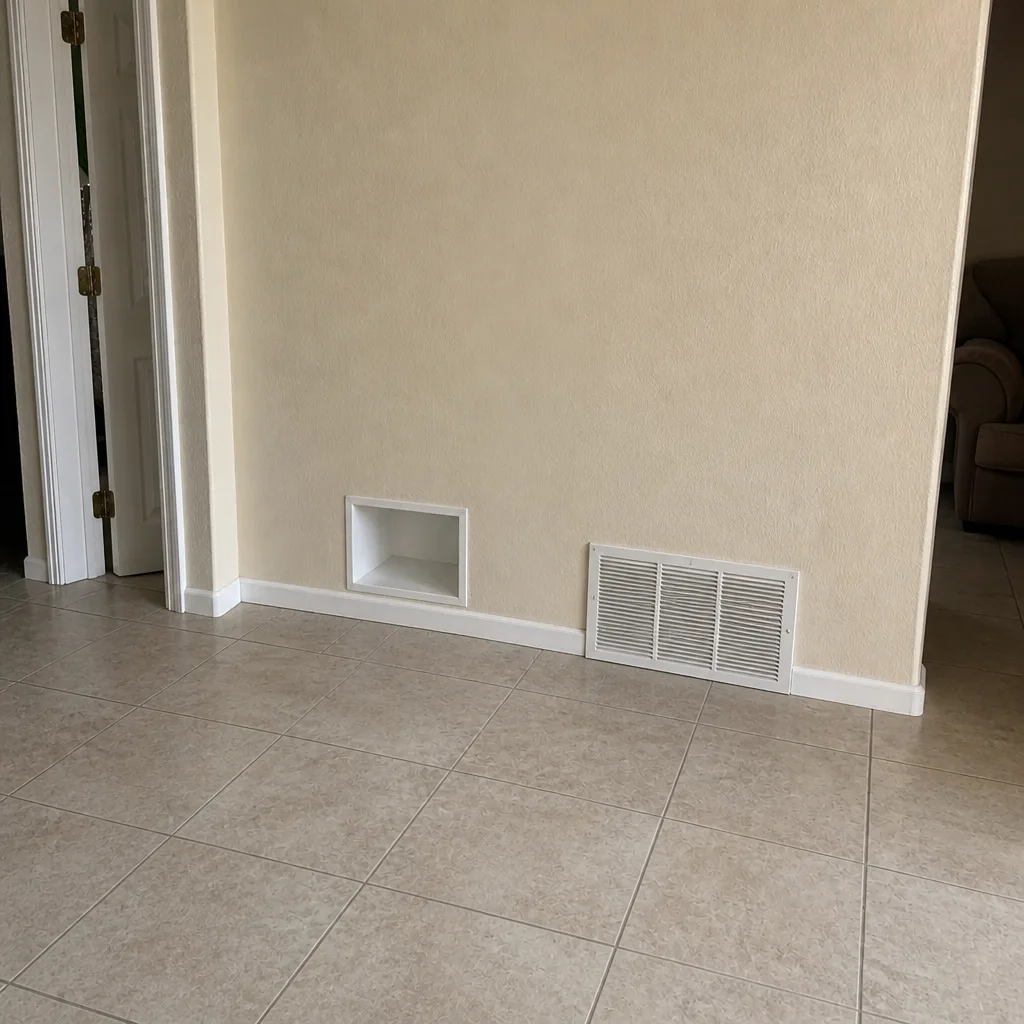 After
When to Call a Professional
Call a professional when you notice visible buildup inside registers, a musty smell that returns shortly after the system starts, dropped airflow in specific rooms, or any evidence of moisture in the ducts. Call after a renovation that generated drywall dust. Call if the ducts have never been looked at and the system has run for years, since a single inspection will tell you exactly what state they’re in. And call about the dryer vent if it’s been more than a year since it was cleaned and the dryer seems slower than it should be. If you have pets, occupants with respiratory conditions, or a house you suspect has leaking duct joints, a professional assessment clears up several questions in one visit.
Duct Cleaning McAllen offers free estimates in McAllen. Call (888) 971-5813. We answer 24/7. Fast dispatch from 7am to 7pm, Sunday through Friday.
Frequently Asked Questions
Most McAllen homes should be professionally cleaned every 2 to 4 years, with an inspection once a year. The tighter interval than the national 3-to-5-year guideline reflects the region’s year-round HVAC runtime, humidity, and long pollen season. Homes with pets, respiratory conditions, or recent renovation should move to the 18-to-24-month end. Call (888) 971-5813 for an exact recommendation based on your system – estimates are free.
The EPA’s 3-to-5-year figure is a widely cited guideline, but it’s a general recommendation, not a rule calibrated to any specific climate. In a place where the system runs almost continuously for most of the year, that interval is optimistic. Use it as a ceiling, not a target.
No. Regular filter changes are the highest-leverage thing you can do, but they don’t clean the ducts. Filters catch some of what passes through, and the rest settles on duct walls, especially in a home where airflow never stops during the hot months. Filter changes and duct cleaning are two different maintenance tasks.
Three reliable signs: visible buildup inside the registers when you look with a flashlight, a musty odor each time the system starts, and dust settling on surfaces faster than usual after a cleaning. Any one of those is enough to justify an inspection. Call (888) 971-5813 and we can talk through what you’re seeing before you schedule anything.
If the ducts have visible joint damage, disconnected runs, or failing tape, repair first. Cleaning a system that leaks means all that work reopens the door for the same dust to come back. Clean, repair, protect is the sequence that holds up.
Once a year is the right cadence for most households, with professional cleaning every 1 to 3 years depending on the size of the household and the length of the vent run. A dryer that takes noticeably longer to dry a load is the most reliable sign the vent line needs attention. Call (888) 971-5813 for dryer vent cleaning estimates. Estimates are free.
The Bottom Line
The national duct cleaning timeline was written for a different climate. In McAllen, the right schedule is seasonal, tied to the system’s nearly year-round runtime, and adjusted for pets, respiratory conditions, and renovation. Inspect once a year. Clean every 2 to 4 years, shorter if any of the conditions above apply. Change filters every 30 to 90 days. Log what you see so trends show up instead of being caught in a single snapshot. And treat the dryer vent as part of the same schedule, because it’s the one piece of the system with a fire-risk stake. Most of this is homeowner work; the cleaning, repair, and dryer vent clearance is where professional equipment earns its place. If you’d like an honest read on your own system, whether it’s filters only or time for a cleaning, we can look at it. Call (888) 971-5813 for a free estimate. We answer 24/7. Fast dispatch from 7am to 7pm, Sunday through Friday.
Written by the team at Duct Cleaning McAllen.