
Last updated November 15, 2026
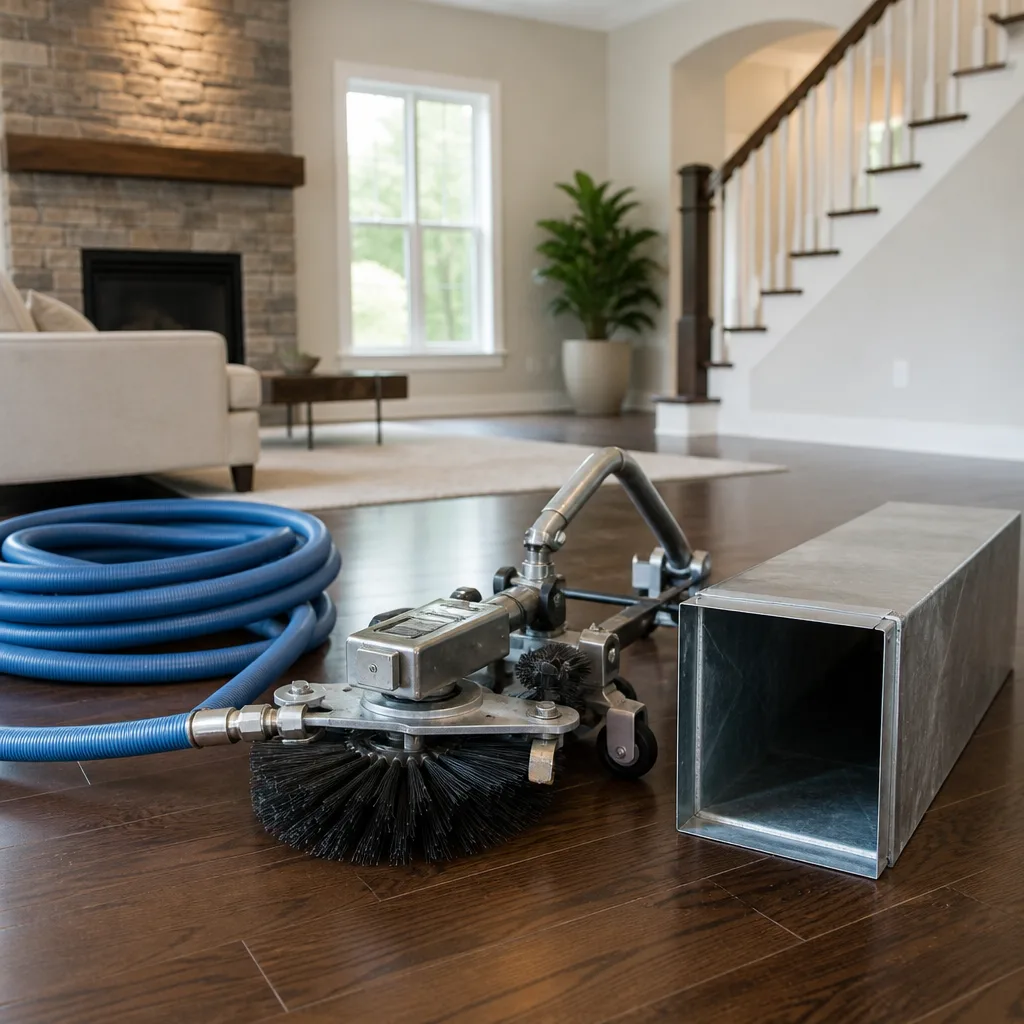 Whole-home duct cleaning
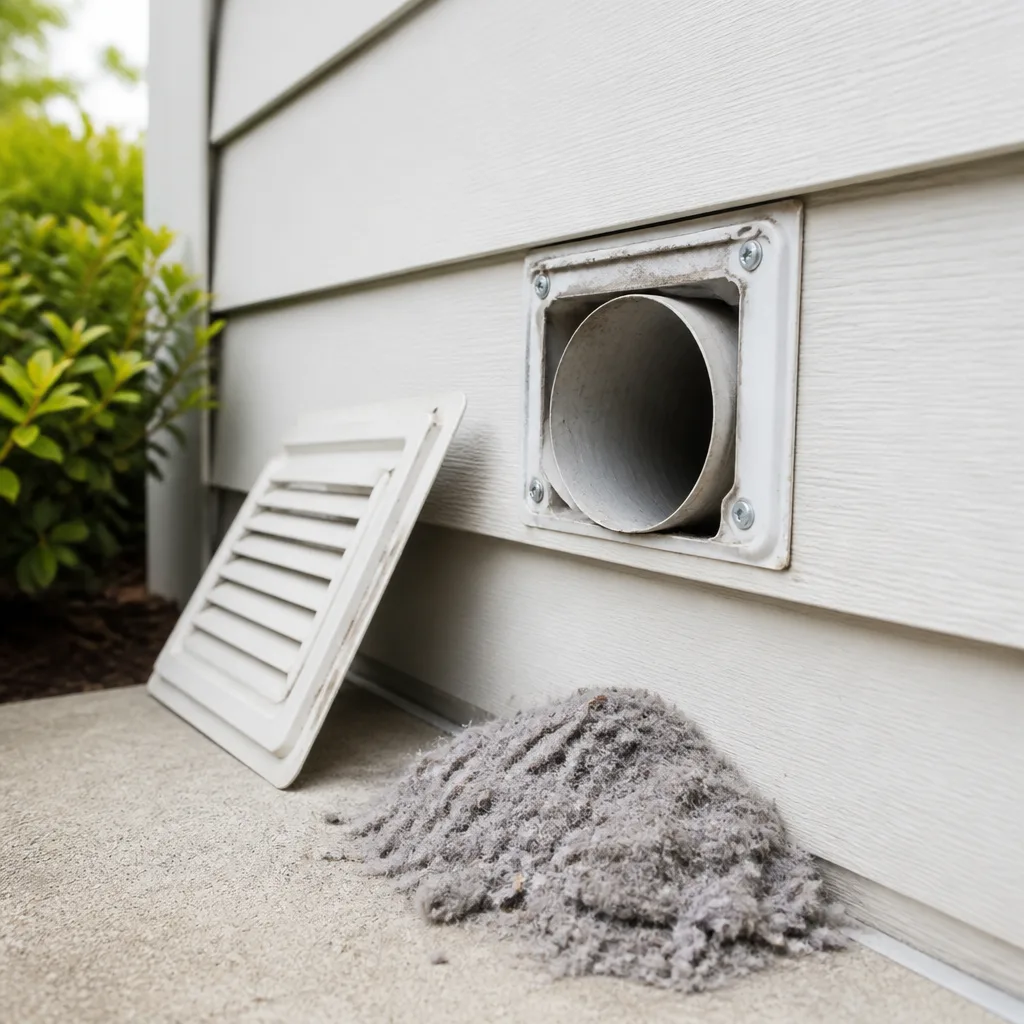 Dryer vent cleaning
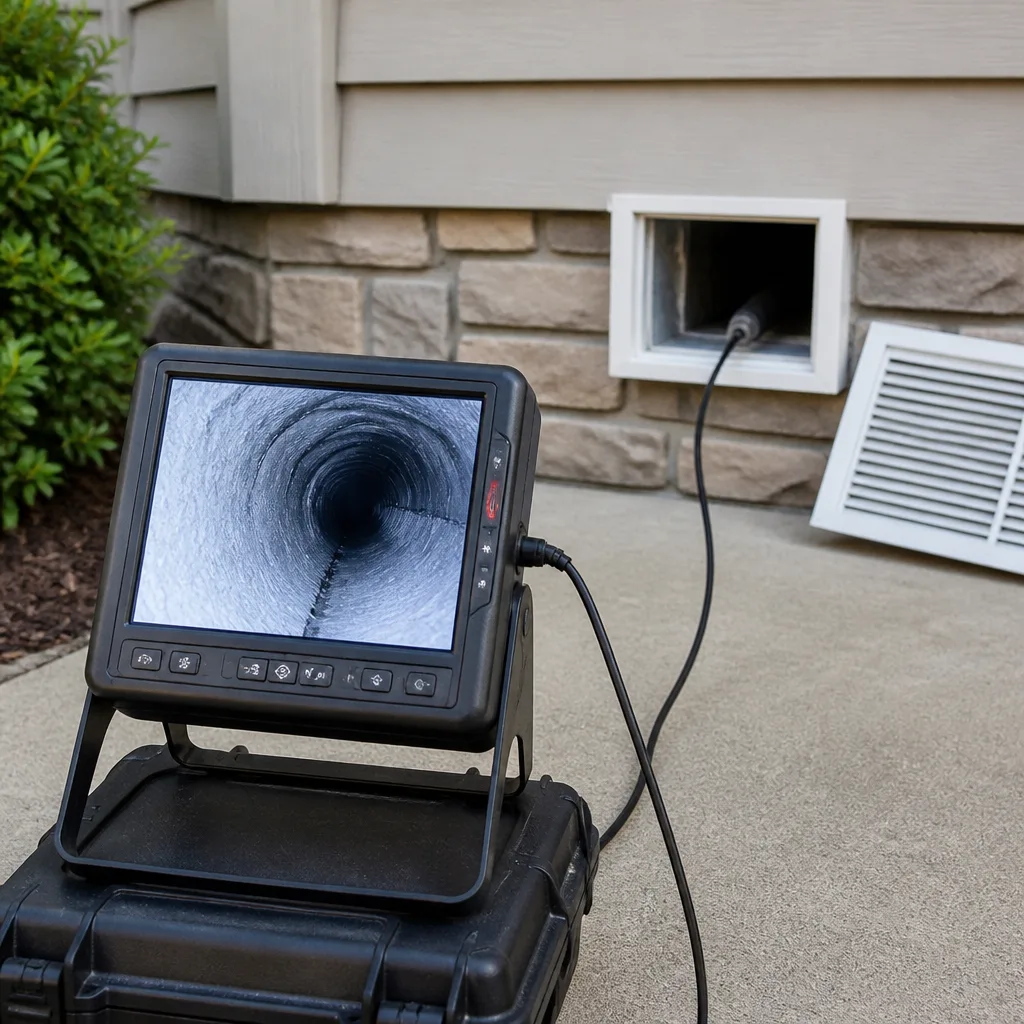 Camera inspection
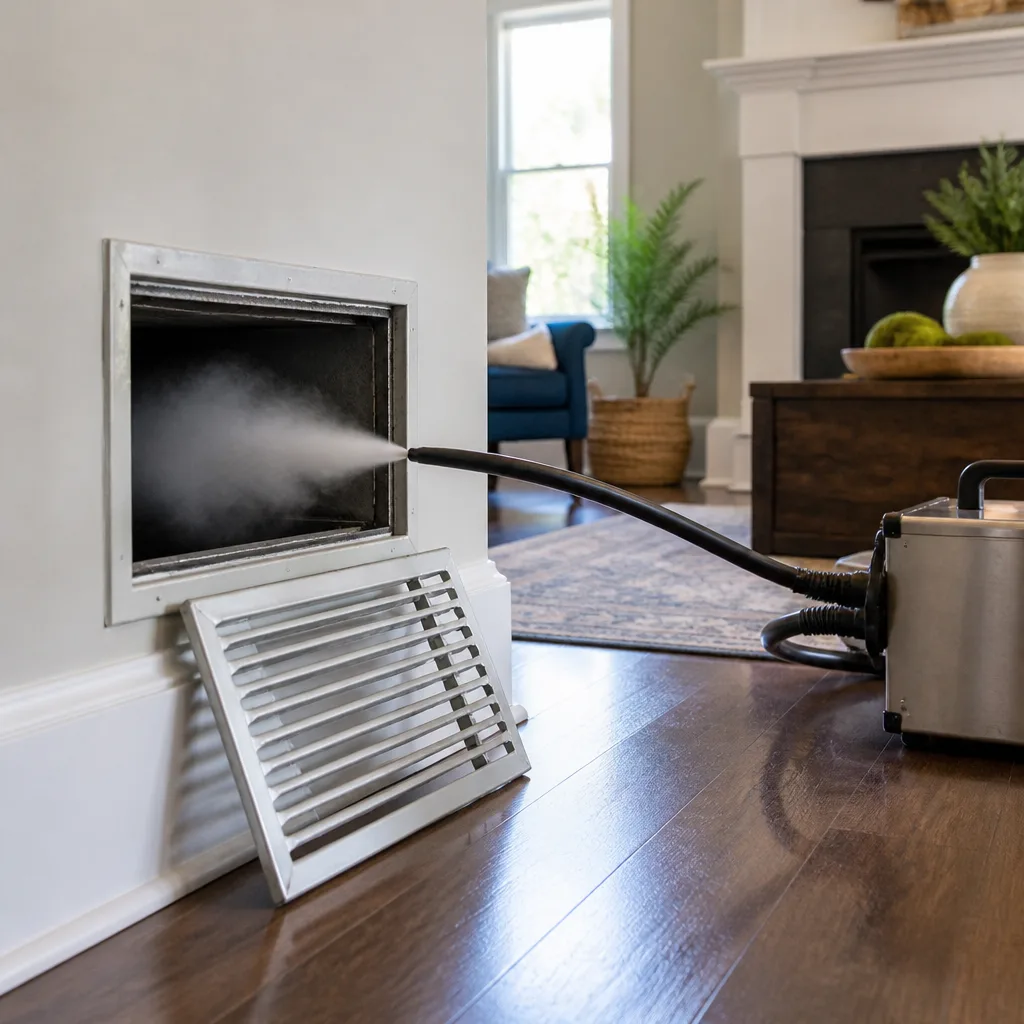 Sanitizing & deodorizing
Whole-system duct and dryer vent check with before-and-after photos - you see exactly what came out of your vents
That "$99 whole-house special" is a bait ad - the real number appears once they are in your hallway, or the "clean" is a shop-vac at the register. We photograph the inside of your ducts before and after instead.
Air Duct Cleaning Permits, Codes & Inspections in McAllen, TX: What You Need to Know
No permit is required to clean your ducts in McAllen. That’s the part everyone gets right and then stops thinking about. The part they miss is what happens next: if the technician finds a collapsed duct section, a disconnected plenum, or a compromised air handler connection, any repair work crosses into Texas HVAC code jurisdiction almost immediately. Cleaning is a maintenance task. Repair is mechanical work. Those two things live under different rules, and the gap between them is where homeowners pick up liability they never saw coming. This guide walks through what Texas code actually covers, which repairs trigger a permit, how to check a contractor’s license, what an inspection looks at, and why unpermitted duct repair can follow a house all the way to closing.
Quick Answer
Cleaning air ducts in McAllen does not require a permit. Repairing, replacing, or reconfiguring ductwork generally does, because that work falls under the Texas Mechanical Code and must be done by a contractor licensed with the Texas Department of Licensing and Regulation (TDLR). A City of McAllen inspection applies to permitted mechanical work on new or altered systems, not to routine cleaning of ductwork that’s already in place.
Styles & brands we work with
- Whole-home duct cleaning
- Dryer vent cleaning
- Camera inspection
- Sanitizing & deodorizing
Table of Contents
- Cleaning vs. Repair: Where the Permit Line Sits
- What the Texas Mechanical Code Covers (and What It Doesn’t)
- Repairs That Trigger a Permit in Hidalgo County
- How to Verify a Contractor Is Licensed with TDLR
- What a City of McAllen Inspection Actually Checks
- Why Unpermitted Duct Repair Hurts Insurance and Resale
- Clean, Repair, Protect: Doing It in the Right Order
Cleaning vs. Repair: Where the Permit Line Sits
The cleanest way to think about it: cleaning removes material from a system that stays exactly as it was built. Repair changes the system. The first is maintenance. The second is construction, even when the change is small enough to fit in one afternoon.
Texas regulates the second category. Ductwork is part of a mechanical system, and mechanical systems in residential structures fall under the Texas Mechanical Code as adopted and amended by the jurisdiction doing the permitting. In McAllen, that jurisdiction is the City of McAllen. A blower pulling loose debris out of a return run doesn’t enter that territory. Cutting out a crushed section of flex duct and splicing in a new one does.
This distinction matters because the two services are frequently sold together, and they shouldn’t be handled the same way. A crew that cleans and then quietly patches something it found is doing mechanical work, whether or not anyone filed for a permit. Whether that work requires a licensed contractor isn’t a gray area. It does.
Why the line gets blurry during a cleaning
Duct cleaning is an inspection by default. To do it properly, the technician has to open the system, run contact cleaning equipment through the branches, and get eyes and a camera into places nobody has looked since the house was built. In older McAllen neighborhoods, that look often turns up something: a duct run that came loose at a collar, a plenum connection that’s been leaking into a closet for years, a section crushed by stored boxes in the garage. Once the problem is visible, the honest conversation is about what fixing it involves. That conversation should include the word “permit” when it applies.
What the Texas Mechanical Code Covers (and What It Doesn’t)
The Texas Mechanical Code regulates the design, installation, maintenance, alteration, and repair of mechanical systems, including the duct distribution system that moves conditioned air through a house. It covers materials, sizing, clearances, connection methods, and support. It does not cover whether the inside of those ducts is clean.
Here’s the split in practical terms:
- Covered by the code: installation of new ductwork, replacement of duct runs, sealing and reconnecting plenums, changes to supply or return layout, penetrations through rated assemblies, and connection of the duct system to the air handler.
- Not covered by the code: source removal of dust, debris, and biological growth from duct surfaces; filter changes; coil cleaning; sanitizing the interior of an existing, intact system.
- Frequently confused: duct sealing. Sealing a joint with mastic or approved tape while restoring the system to its original configuration is one thing. Sealing as part of reconfiguring or resizing the distribution system is another, and the second is mechanical work.
We’ve seen this confusion cut both directions. Homeowners assume a permit is needed just to have the ducts cleaned, which it isn’t. And property managers assume no permit is needed because the repair was “just a small patch,” which is where the trouble starts.
The air handler connection is the usual flashpoint
Most duct problems in McAllen homes trace back to the air handler closet, the garage platform, or the attic transition where the trunk meets the equipment. That connection point sits squarely inside the code’s scope. Anything that modifies it, including re-taping a plenum that’s come apart and adjusting the transition to fit properly, is mechanical work on a mechanical system.
Repairs That Trigger a Permit in Hidalgo County
Permit requirements are set by the local jurisdiction, so the authority to check with is the City of McAllen’s building department for work inside the city, and Hidalgo County for unincorporated areas. The list below reflects the categories of work that generally require a mechanical permit rather than a cleaning invoice. When in doubt, ask the department directly before work begins. It’s a phone call, and it’s free.
Work that typically requires a mechanical permit:
- Replacing a duct run or any section of ductwork with new material.
- Modifying a plenum, including rebuilding the supply or return plenum at the air handler.
- Adding or removing supply or return registers and the branches that feed them.
- Resizing or rerouting any part of the distribution system.
- Replacing ductwork damaged by water intrusion, pest activity, or collapse.
- Any work that changes how the duct system connects to the air handler.
Work that typically does not require a mechanical permit:
- Cleaning the interior of existing ductwork.
- Replacing filters or filter racks in existing openings.
- Sealing a joint or seam to restore an intact system to its original condition.
- Dryer vent cleaning, which is a separate system entirely.
The report-and-repair sequence is where McAllen homeowners get caught. A crew opens the system, finds a disconnected trunk in the attic, and reconnects it on the spot. The reconnect may well be within the code’s technical requirements. The missing permit is what creates the paperwork problem, and the paperwork problem is what surfaces at resale.
How to Verify a Contractor Is Licensed with TDLR
If the work goes beyond cleaning, the contractor performing it must hold the appropriate license from the Texas Department of Licensing and Regulation. Air conditioning and refrigeration contractors, including those who perform ductwork associated with those systems, are licensed at the state level through TDLR. Cleaning-only work sits outside that licensing requirement, which is exactly why the question matters when the scope shifts.
Verification takes a few minutes and doesn’t require the contractor’s cooperation:
- Go to the TDLR license search on the state’s website.
- Search by the company name or the license number the contractor provides.
- Confirm the license is active, not expired or suspended.
- Confirm the license type matches the work being quoted.
- Ask for a certificate of insurance for general liability, and confirm it’s current.
Two things to watch for. First, a company name on an invoice that doesn’t match the licensed name in the TDLR database. Second, a scope of work described as “sealing and minor repairs” with no license number anywhere on the estimate. If the estimate includes anything from the permit-trigger list above, the estimate should carry a TDLR license number. If it doesn’t, ask why.
What to ask before you sign
- “Is the repair portion of this job covered by your TDLR license?”
- “Will you be pulling a mechanical permit, or is this being treated as maintenance?”
- “Who performs the repair work, and are they covered under your liability policy?”
- “Will the final invoice show the permit number if one was pulled?”
A contractor who does this work regularly will answer all four without hesitating. Hesitation is information.
What a City of McAllen Inspection Actually Checks
A City of McAllen mechanical inspection is triggered by permitted work, and it looks at the installation as built, not at how clean the ducts are. The inspector is verifying that the work meets code, that materials are as specified, and that the system is safe and properly connected. Nobody is judging the dust level inside the trunk line.
A typical inspection for new or replacement duct systems covers:
- Duct material and specification match what was permitted.
- Support, spacing, and routing of duct runs.
- Connection methods and sealing at joints, collars, and the plenum.
- Clearances from combustibles and from the air handler.
- Return air pathways and register locations as drawn.
- Access panels where the code requires them.
The key distinction for existing systems is scope. If you’re cleaning ducts that were installed and permitted when the house was built, there is no new inspection, because there is no new work. If the system is being altered, the alteration is what gets inspected. Inspectors aren’t there to evaluate the condition of ductwork that predates the permit and isn’t being changed.
One practical note for McAllen: permit records are public. When buying a house, the mechanical permit history for the address tells you whether previous duct work was done through the proper channel or off the books. That history is worth pulling before closing.
Why Unpermitted Duct Repair Hurts Insurance and Resale
Unpermitted mechanical work creates two separate problems, and they arrive at different times.
Insurance. A homeowner’s policy generally covers sudden and accidental damage. It generally does not cover defects from work that was done improperly or without required permits. If a duct repair done off-permit later contributes to water damage, a mold problem, or a fire, the claim can get contested on the grounds that the work was unpermitted. That’s not a guarantee of denial, but it’s a real exposure, and it’s avoidable.
Resale. Texas sellers are required to disclose known defects and known unpermitted work. A buyer’s inspector who notices fresh duct work with no permit on record will flag it. The buyer then asks for documentation the seller doesn’t have. Depending on the lender and the situation, that can delay closing or require the seller to pay for a retroactive permit, an inspection, or corrective work.
None of this is a reason to avoid repairing ductwork that needs it. It’s a reason to do the repair through the right channel, with a licensed contractor and a permit when one is required. The cost of the permit is a fraction of the cost of explaining an undocumented repair at closing.
Clean, Repair, Protect: Doing It in the Right Order
When a system needs both cleaning and repair, the sequence matters, and doing it out of order wastes money. Cleaning a system with a disconnected plenum means cleaning a system that’s leaking conditioned air into a closet. Repairing first and cleaning second gives you a sealed system that holds the result.
- Inspect first. Camera inspection and a walkthrough of the accessible duct runs, the plenum, and the air handler connection. Any defect goes on a list with a description of the repair and whether it requires a permit.
- Repair the system. Licensed mechanical work, permitted when required, done before any cleaning. Duct sealing and plenum work bring the system back to its intended configuration so cleaning reaches surfaces that actually matter.
- Clean with containment in place. Contact cleaning to loosen material from duct surfaces, high-powered extraction to remove it, and abatement-grade filtration running during the process so the cleaning itself doesn’t redistribute material into the living space.
- Verify with before-and-after documentation. Photos of the ductwork before cleaning and after. This is also the record that shows any repair work was done, which is useful at resale.
We use Rotobrush contact cleaning together with Nikro industrial extraction, with Abatement Technologies filtration running during the service, and we work with Honeywell and Aprilaire air quality equipment when a system includes it. That equipment matters less than the sequence, though. Repair first, clean second, document both.
For homeowners scheduling both services, our Duct Cleaning McAllen page covers what a full-system cleaning involves and how a job is scoped. If the concern is specifically about a system that also needs work beyond maintenance, air duct cleaning lays out the scope discussion in more detail.
Common Mistakes to Avoid
- Assuming no permit is needed for anything because cleaning doesn’t require one. The permit question is about the repair, not the cleaning. Two separate scopes, two separate answers.
- Letting a cleaning crew perform repairs without confirming a TDLR license. Cleaning-only work doesn’t require the license. Duct repair does, and the person holding the vacuum isn’t necessarily the person licensed to do the repair.
- Accepting “we’ll handle the permit” without documentation. Ask for the permit number and confirm it exists with the City of McAllen. A verbal assurance isn’t a permit.
- Skipping the repair to save money and cleaning a leaking system anyway. Cleaning a system with a disconnected plenum means cleaning air that’s leaking out before it reaches your rooms. You pay for a result the ductwork can’t deliver.
- Not asking about permit history before buying a McAllen home. Mechanical permits are public record. Pull them before closing and you’ll know whether prior duct work was done properly.
- Combining cleaning and unpermitted repair into one line item on an invoice. Bundled invoices make it nearly impossible later to show what was maintenance and what was unpermitted mechanical work.
- Treating dryer vent cleaning as a cosmetic add-on. Dryer vents are a separate system, and lint buildup in a vent run is a fire risk. It’s a safety service, not a spruce-up.
See the difference
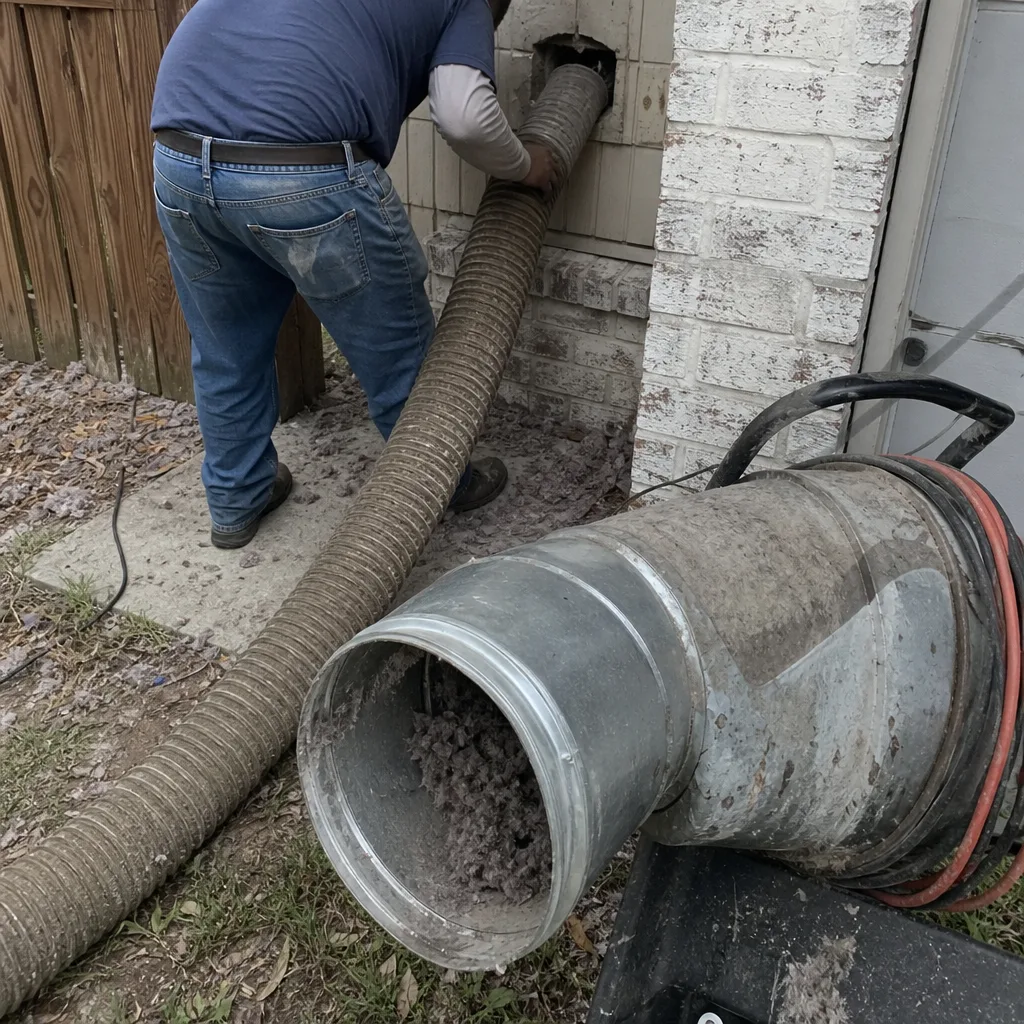 Before
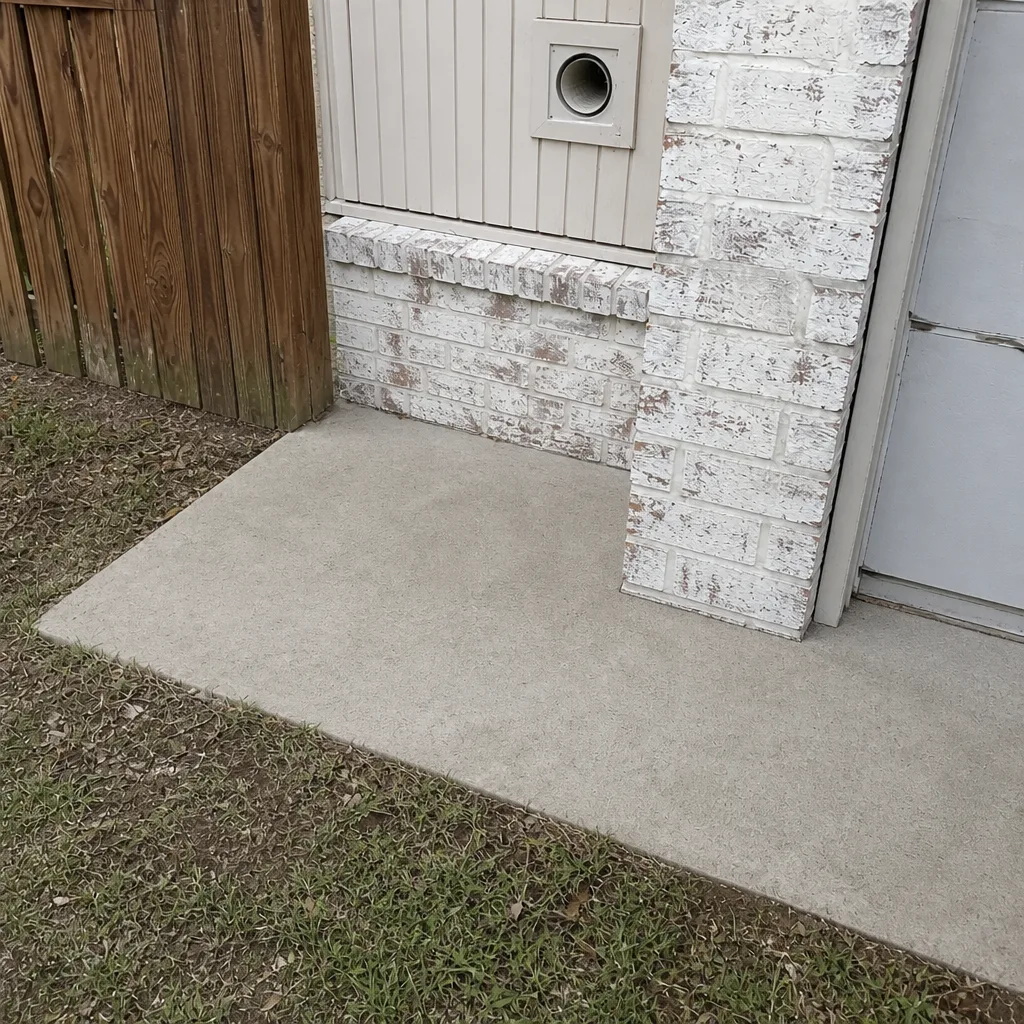 After
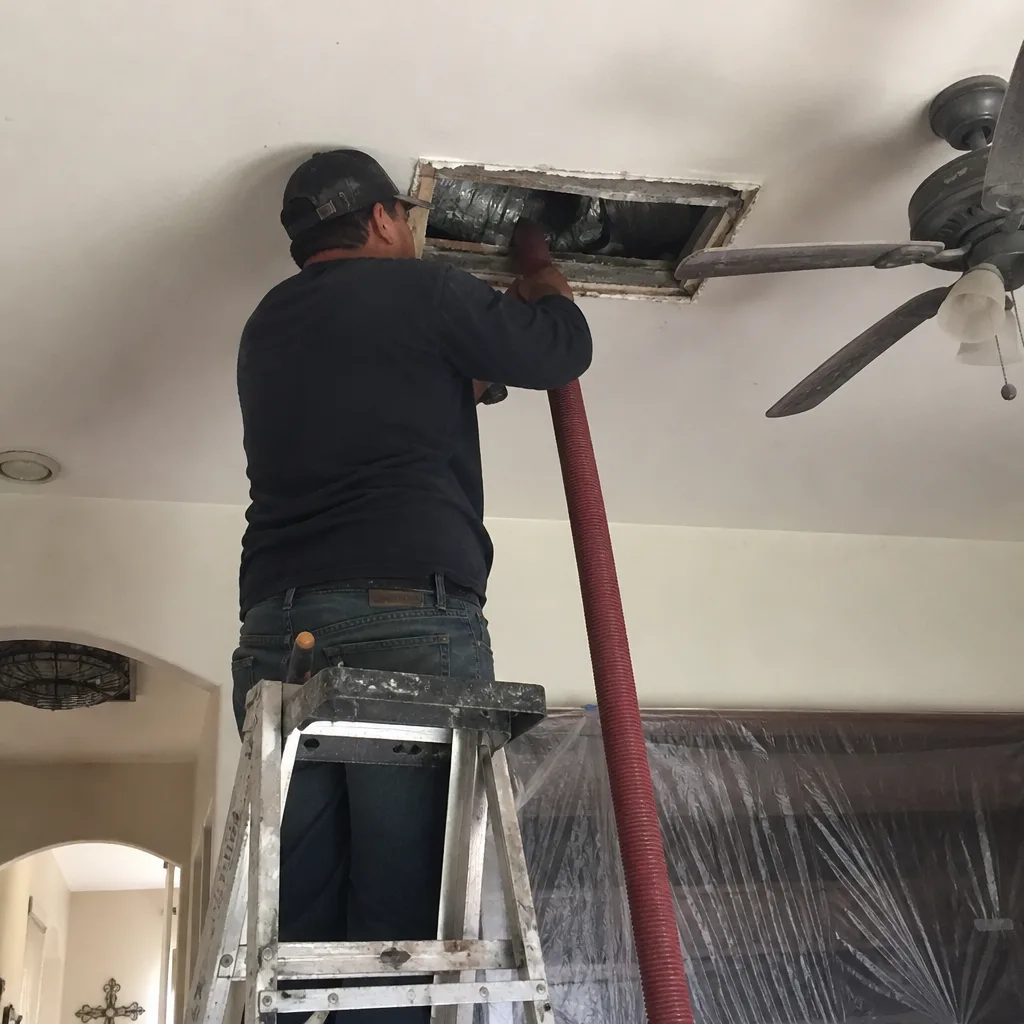 Before
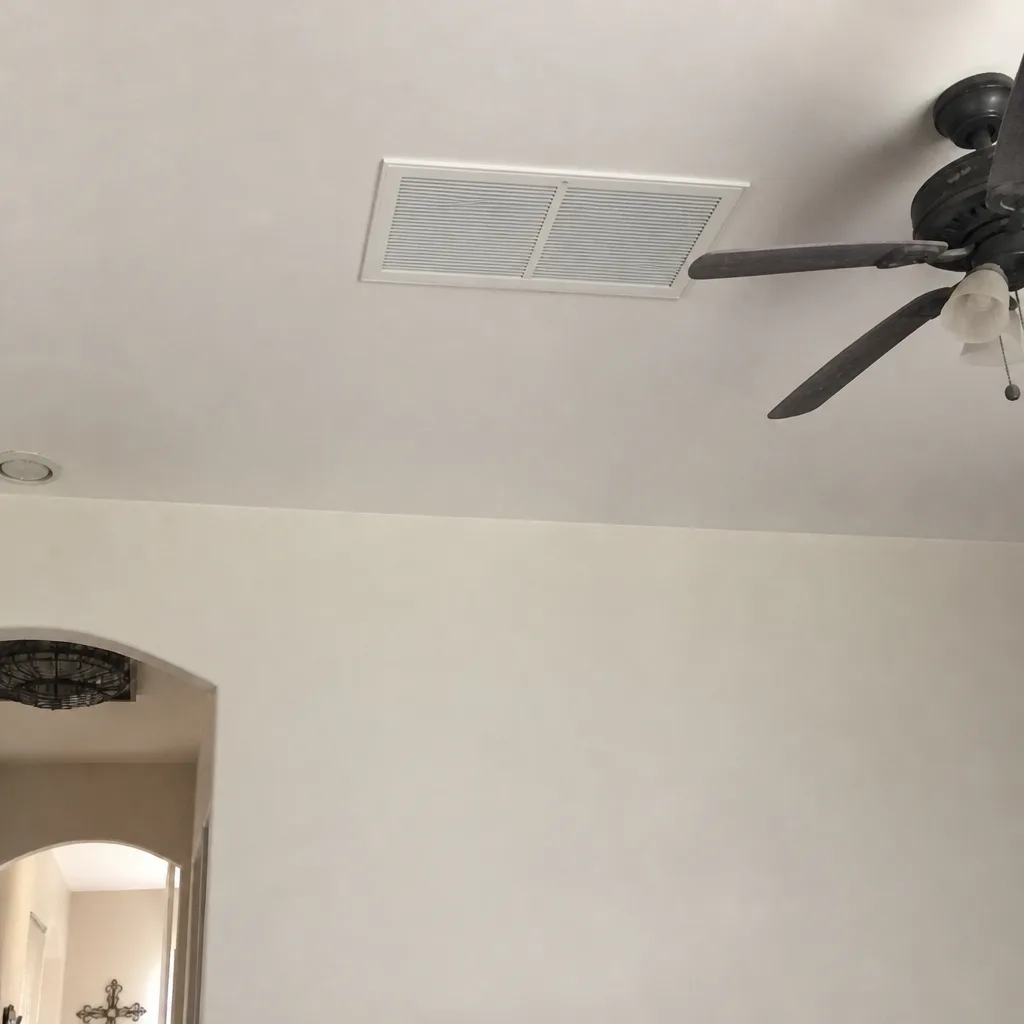 After
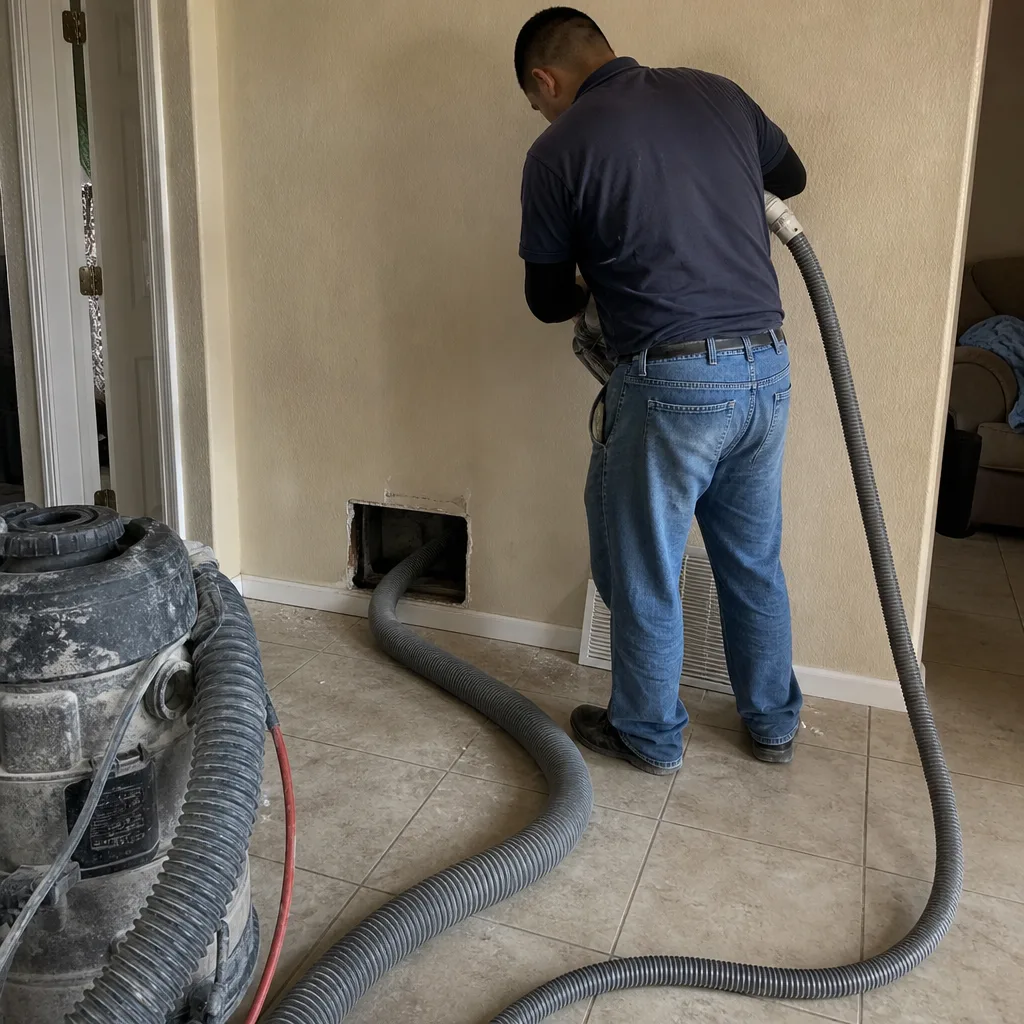 Before
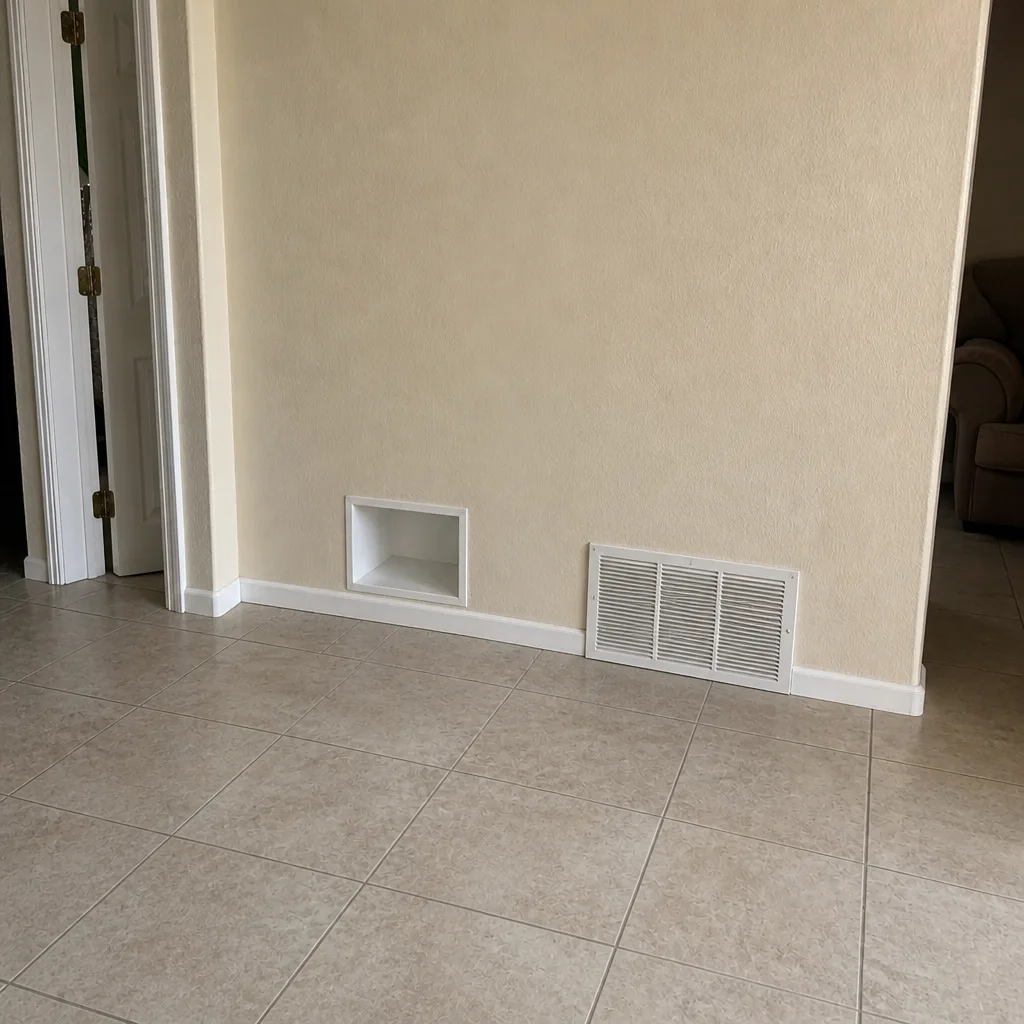 After
When to Call a Professional
Call a professional when the duct system shows signs of physical damage rather than dust buildup. Visible crushed or disconnected ductwork, a plenum that’s come apart at the air handler, whistling or reduced airflow in part of the house, musty odors that return after cleaning, or a system that hasn’t been opened and inspected in years. Those situations involve both cleaning and potentially licensed repair, and the two need to be scoped together. Call a professional before any repair proceeds if the contractor can’t produce a TDLR license number for mechanical work. And call before the repair if the plan includes anything on the permit-trigger list and nobody has mentioned a permit. Duct Cleaning McAllen offers free estimates in McAllen. Call (888) 971-5813.
Frequently Asked Questions
No. Cleaning air ducts in McAllen does not require a permit, because cleaning doesn’t alter the mechanical system. A permit becomes a consideration only when the work involves repairing, replacing, or reconfiguring the ductwork itself. Call (888) 971-5813 for an exact quote; estimates are free.
The Texas Mechanical Code is the state’s adopted model code governing the installation, alteration, repair, and maintenance of mechanical systems, and ductwork is part of that system. It applies to duct installation and repair in McAllen, but not to the cleanliness of the duct interior. Routine cleaning sits outside its scope.
Search the Texas Department of Licensing and Regulation (TDLR) license database by company name or license number, and confirm the license is active and matches the type of work being quoted. Ask for a current certificate of insurance at the same time. Cleaning-only companies aren’t licensed through TDLR, so the check matters when the scope includes repair.
The work exists on your property with no inspection record, which creates disclosure obligations at resale and can complicate an insurance claim if the work later contributes to damage. The remedy is to get the work inspected and permitted retroactively, which usually involves opening the work up for inspection and correcting anything that doesn’t meet code.
No. A mechanical inspection verifies that permitted installation or repair work meets code: materials, connections, support, clearances, and routing. Duct cleanliness is not a code item and isn’t part of the inspection. Cleaning and inspection are unrelated processes that happen to involve the same ductwork.
Often yes, but the repair portion needs to be performed under the appropriate TDLR mechanical license, and a permit should be pulled when the scope requires one. Ask the company to break cleaning and repair into separate line items on the estimate so the scope of each is clear. For a look at what full-system work covers, see dryer vent cleaning for the separate dryer vent system, and explore our full range of McAllen duct services for scope details.
The Bottom Line
Cleaning ducts doesn’t require a permit in McAllen. Repairing them frequently does. The gap between those two facts is where homeowners pick up liability, because a cleaning visit often turns into a repair conversation, and the repair conversation doesn’t always include the word “permit.” Confirm the contractor’s TDLR license whenever the scope includes mechanical work. Pull mechanical permit history before buying a house. Do the repair before the cleaning so the system holds the result. And keep cleaning and repair as separate line items so the record is clear. None of it is complicated. It just has to be deliberate.
Written by the team at Duct Cleaning McAllen.