
Last updated November 15, 2026
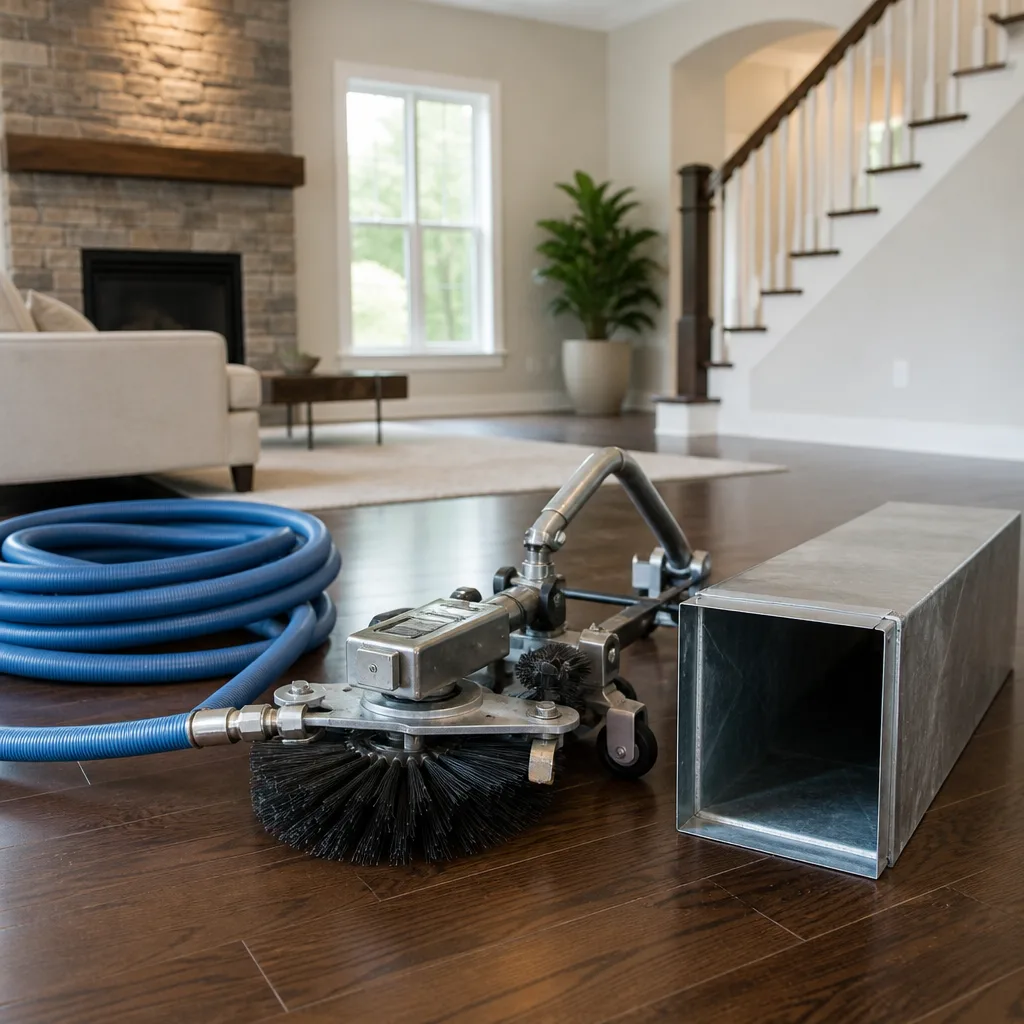 Whole-home duct cleaning
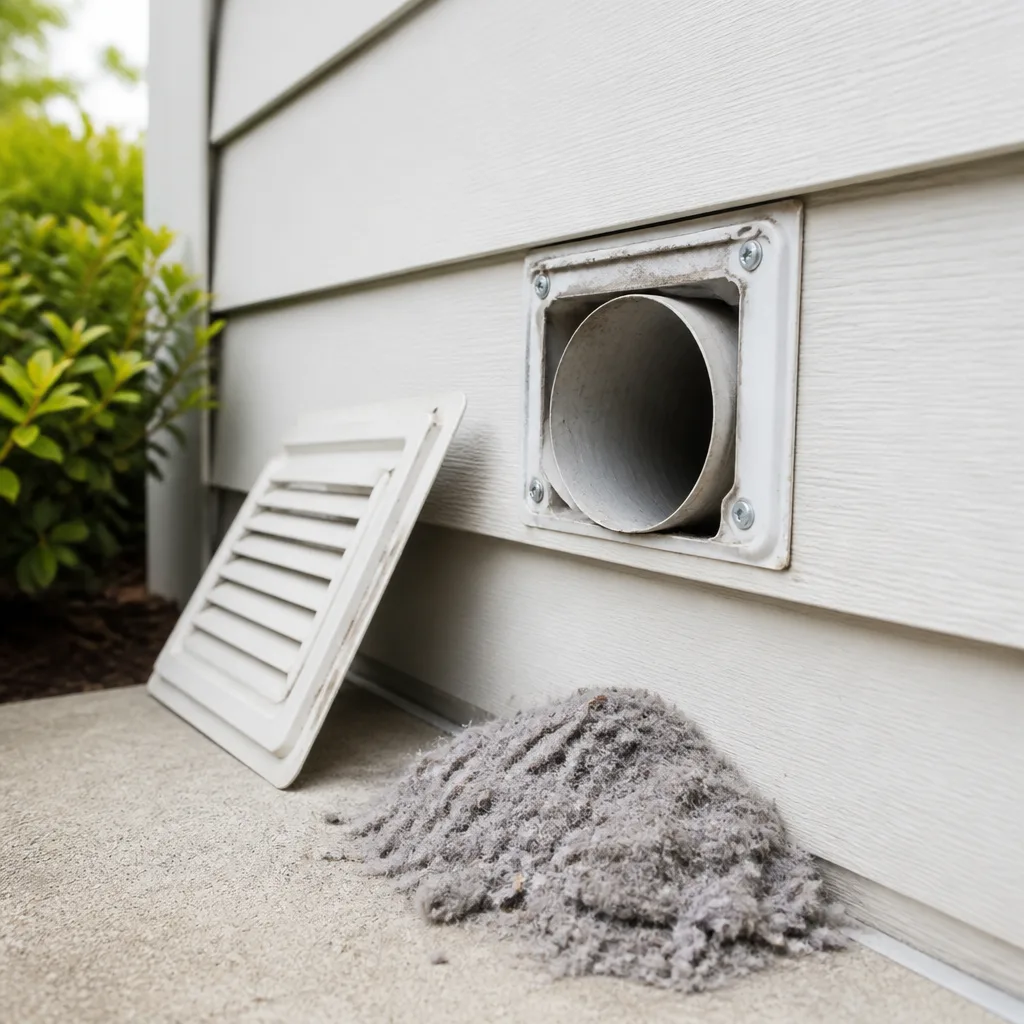 Dryer vent cleaning
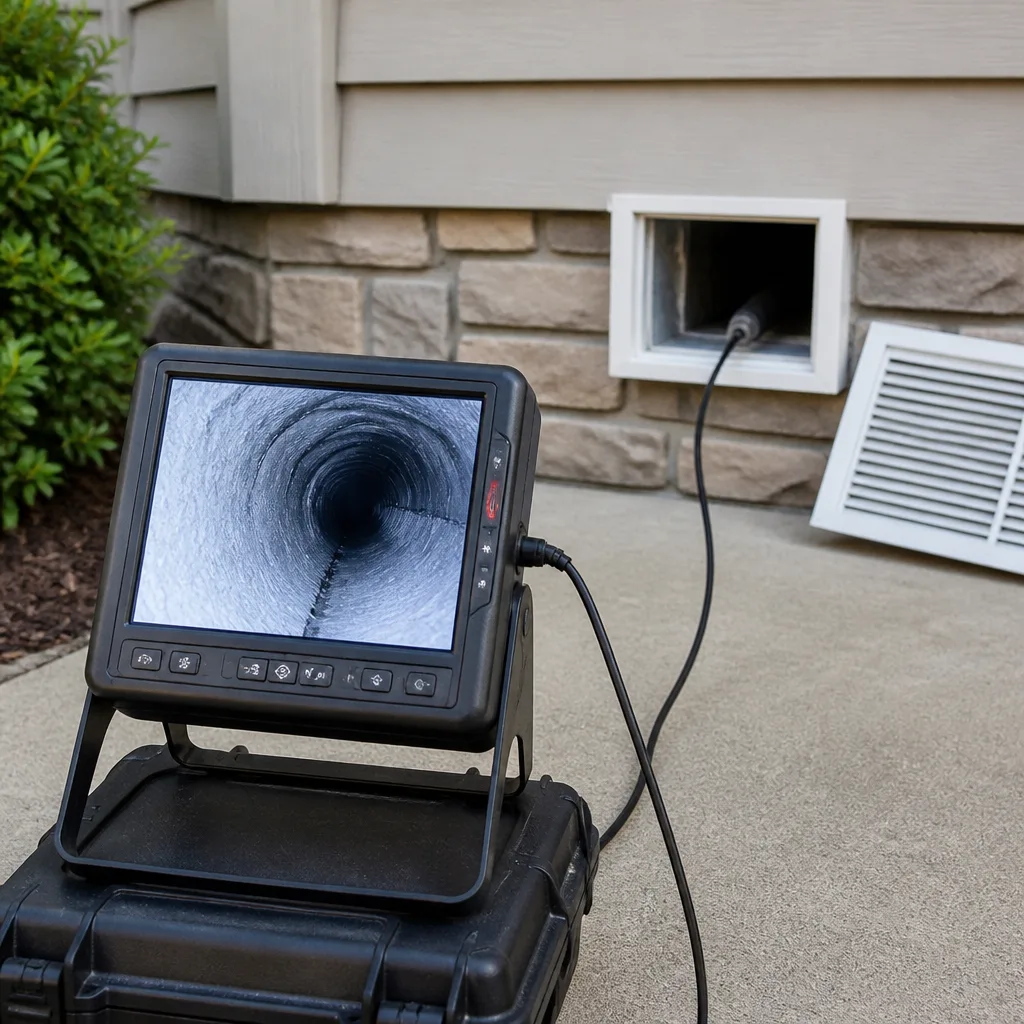 Camera inspection
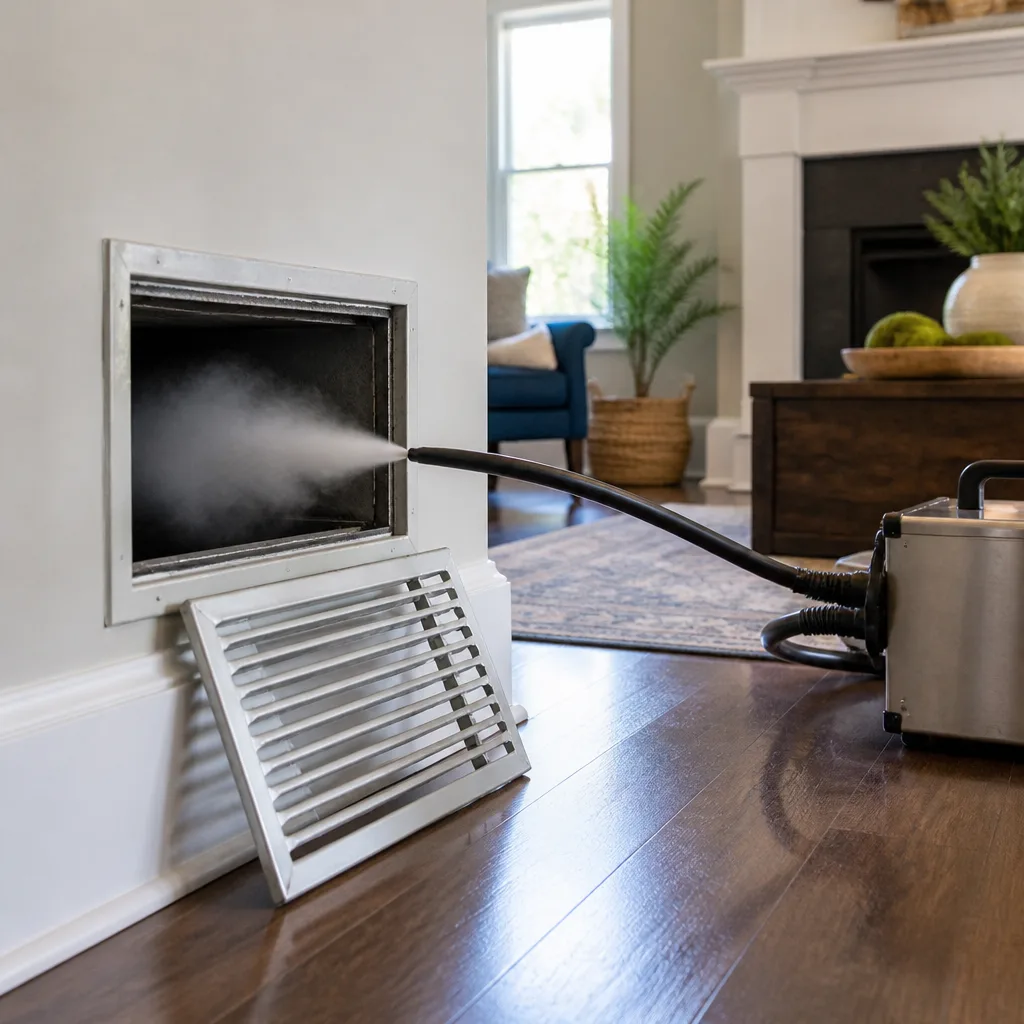 Sanitizing & deodorizing
Whole-system duct and dryer vent check with before-and-after photos - you see exactly what came out of your vents
That "$99 whole-house special" is a bait ad - the real number appears once they are in your hallway, or the "clean" is a shop-vac at the register. We photograph the inside of your ducts before and after instead.
Choosing the Right Air Duct Cleaning Brand: A Buyer’s Guide for McAllen
There’s no rating, badge count or five-star average that tells you whether the company pulling up to your house is running a truck-mounted high-CFM vacuum with mechanical agitation or a portable shop-vac with a spinning brush taped to a drill. That equipment gap matters far more to your results than any review score. In a market like McAllen, most duct cleaning outfits are owner-operators with a van and a basic portable unit, so “brand” here isn’t about name recognition. It’s about equipment investment, a documented process, and credentials you can actually check before you book. This guide shows you how to evaluate those three things instead of marketing language, so you can tell a real contractor from a discount crew before they roll a hose into your hallway.
Quick Answer
The right air duct cleaning brand in McAllen is the one that can show you its equipment, its documentation and its credentials on request, not just its reviews. Look for professional systems such as Rotobrush contact cleaning paired with Nikro industrial extraction, containment filtration like Abatement Technologies during the job, before-and-after photos of the work itself, and credentials tied to recognized standards (NADCA certification, TDLR licensing where mechanical work is involved). Generic star ratings say nothing about any of that. The equipment and the documented process are what protect your indoor air quality.
Styles & brands we work with
- Whole-home duct cleaning
- Dryer vent cleaning
- Camera inspection
- Sanitizing & deodorizing
Table of Contents
- How to Research a Company’s Equipment Before You Book
- Credentialing Signals That Actually Matter in Texas
- Why Local Specialization Beats a National Franchise Brand
- Using Before-and-After Documentation as a Screening Tool
- What a Service Guarantee Should Actually Cover
- The Three Services a Complete Duct Provider Offers
- Dryer Vent Cleaning as a Fire-Safety Standard
- Questions to Ask on the Phone Before You Commit
How to Research a Company’s Equipment Before You Book
The single largest factor separating a thorough job from a cosmetic one is the equipment platform. Every legitimate duct cleaning company in McAllen should be able to name its systems without hesitating. If you ask what they use and the answer is vague (“high-powered equipment,” “industrial-grade”), that’s a warning sign.
Duct cleaning done properly has two components: agitation and extraction. Agitation breaks loose debris clinging to duct walls. Extraction pulls that debris out of the system and captures it in a HEPA or containment filter. Both steps are required. A portable shop-vac does neither well at scale in a whole-house HVAC system.
Here’s what a serious operation looks like in practice:
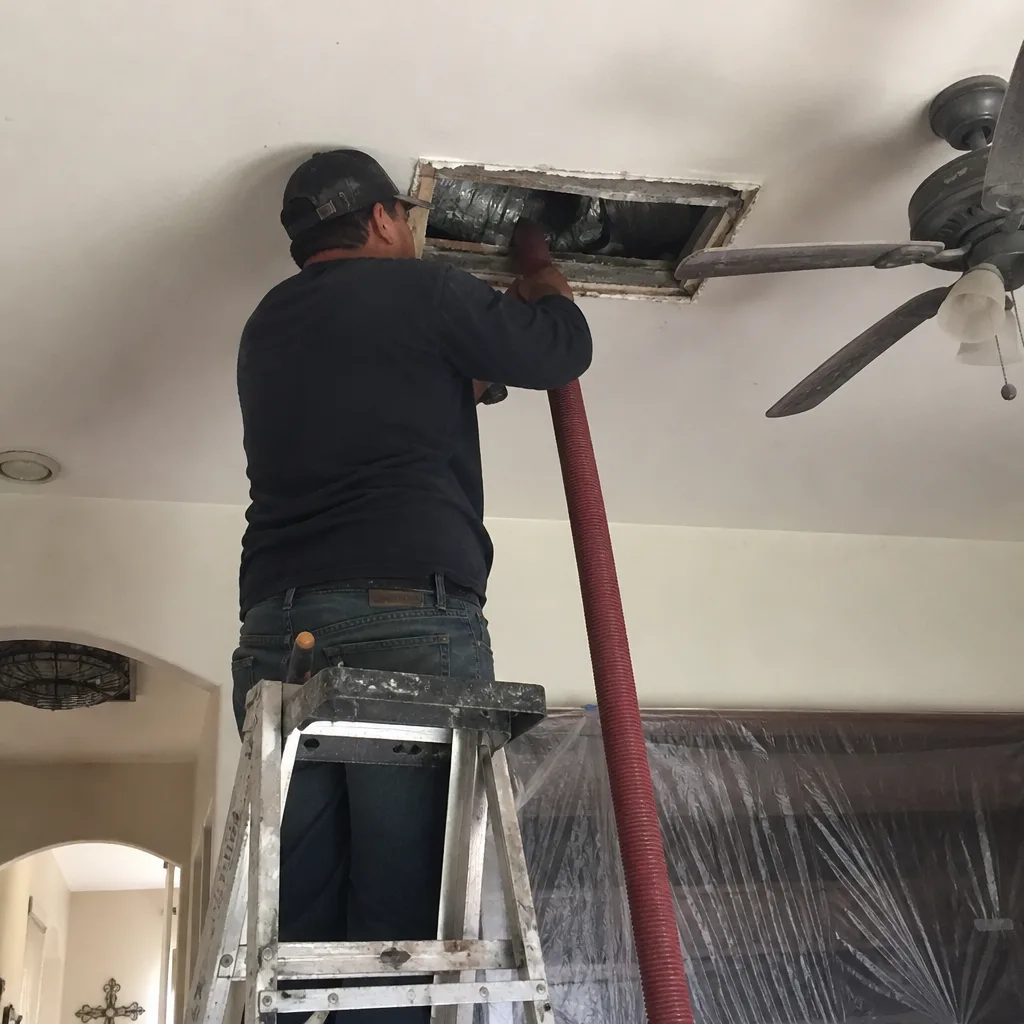
- Contact cleaning with mechanical agitation: Rotobrush systems are the standard for residential duct interiors. They use rotating brush heads and compressed air whips to knock debris from the duct surfaces, not just blow it downstream.
- Industrial negative-pressure extraction: Nikro HVAC vacuums pull the loosened debris out while the system stays under negative pressure, so particles don’t migrate back into living spaces. This is the extraction half that most cheap crews skip or downsize.
- Containment-grade air filtration: Abatement Technologies units filter the airborne particulate generated during the cleaning itself. In remediation work this is routine; in residential duct cleaning it’s comparatively rare.
On the company’s website, look for a specific equipment section. If the site lists a brand name you can search independently (Rotobrush, Nikro, Abatement Technologies), that’s a company willing to be checked. If it only uses stock photography and generic language, ask directly on the phone and note how the person answers. A technician arriving on-site should be able to show you the extraction unit before starting work. If they open a van door and pull out a shop vac, you already have your answer.
Compare how a company describes its hardware to how it describes its service. At Duct Cleaning McAllen, the equipment is the opening pitch, not a footnote, because we’re convinced that’s what protects your indoor air. That’s the pattern you want from any contractor in this trade.
Credentialing Signals That Actually Matter in Texas
Most duct cleaning company websites are covered in logos. Nearly none of those logos tell you whether the company meets any technical standard. Certifications worth checking are specific to this trade, and you should be able to verify them independently.
The two credential categories you should look for:
- NADCA certification. The National Air Duct Cleaners Association maintains the industry’s recognized standard for residential and commercial duct cleaning. A NADCA-certified firm has demonstrated knowledge of proper cleaning methods, documentation, and indoor air quality practice. You can verify membership directly through NADCA’s own directory, not just the company’s claim.
- TDLR licensing for mechanical work. The Texas Department of Licensing and Regulation licenses certain air conditioning and mechanical trades. If a company is doing repair work on your ductwork, not just cleaning, that work may fall under licensing rules. Ask whether the technician doing the repair is licensed for that scope, and confirm through TDLR’s public license search. If the company only cleans ducts and doesn’t do mechanical repair, licensing numbers aren’t typically applicable; be suspicious of any provider that claims licensing for repair work but can’t point you to a TDLR record.
Other logos you’ll see on contractor sites (building-trade associations, equipment brand logos, “verified” seals from lead-generation networks) are marketing signals, not technical credentials. A Rotobrush logo on the site might mean the company owns the system or it might mean the marketer downloaded an image. Ask directly. A credible operator will tell you exactly which equipment they run and where it comes from.
One credential you should never take at face value is insurance. Every legitimate duct cleaning company operating in McAllen carries liability coverage for damage to a customer’s home during work. Ask for a certificate of insurance before booking. It takes the company two minutes to email and protects you if a technician pulls down a section of flexible duct or knocks over a supply register housing.
Combine these signals. A NADCA-certified company with a verifiable TDLR record, an insurance certificate on file, and equipment documentation you can inspect before and during the job is a serious operation. A branded truck with five-star reviews and none of those gives you no basis for comparison.
Why Local Specialization Beats a National Franchise Brand
South Texas is its own market. McAllen’s climate sits closer to a long, hot, humid summer than anything a national franchise manual from a colder market has to account for. Air conditioning here runs hard and runs most of the year, which changes how quickly duct interiors accumulate dust, biological growth on interior liners, and debris from the return-air side. It also changes how much a leaking duct joint loses in cooling cost, because the supply-side temperature differential the system runs is significant for months at a time.
That matters for how a duct cleaner approaches your job:
- Filter strategy matters more. A whole-home air quality system (Honeywell and Aprilaire media cabinets are common in this area) needs to be understood, not bypassed. Technicians who know how those cabinet filters load and seal will preserve the system’s filtration efficiency while cleaning the ducts behind it.
- Return-air boots and plenum connections are a common leak point. The humid outside air that leaks into a joint in the return line brings dust and moisture that a drier climate elsewhere wouldn’t push through the same way. Clean-and-repair is usually the right approach in a house like this, not clean-and-leave.
- Duct repair is often part of the job. National franchises often clean and hand you back a leaking system. A local operator who also repairs ductwork is fixing the source of the dust, not just resetting the counter.
There’s also a practical scheduling reality. A national call center that routes a technician into the valley from outside the market tends to have a different relationship to your job than a company whose work is concentrated in McAllen. That’s not a knock on any specific national brand. It’s a question of accountability when something needs to come back out to your house.
Using Before-and-After Documentation as a Screening Tool
Ask any duct cleaning company to show you before-and-after photos of their own completed jobs before you book. Companies that take their work seriously keep those images. Companies that don’t have any don’t take the job seriously.
This single request filters out more low-quality providers than any review score. Here’s how to think about documentation:
- Before photos should be taken from the inside of the duct, not from the vent. A phone shot of a dusty register grille isn’t documentation. A camera inserted into the trunk line or a branch duct shows what the interior actually looks like.
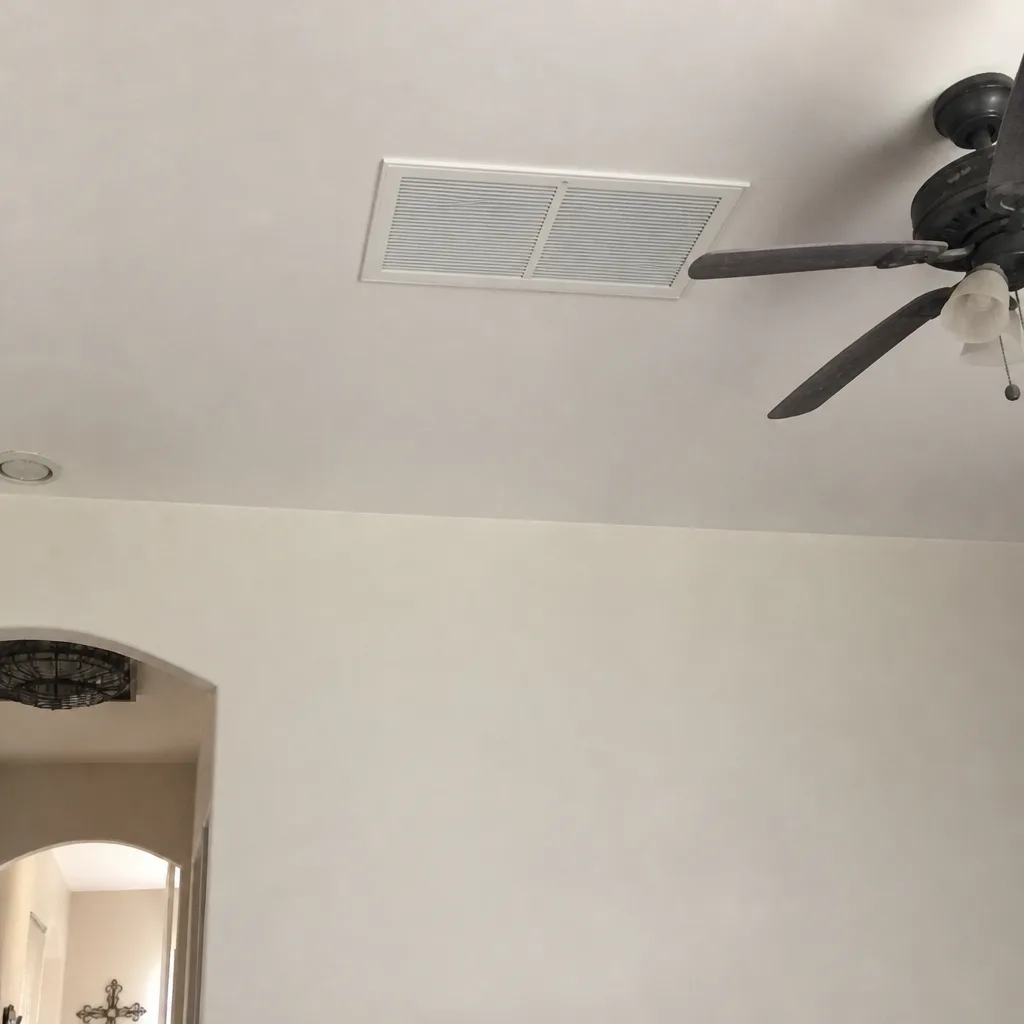
- After photos should correspond to the exact same location. A company that can show before and after of the same section is showing you they measure their own work. Side-by-side images pulled from different houses don’t count.
- Photos of your own ducts should be provided as part of the service. The right sequence is: clean, then photograph, then walk the homeowner through what was found and what was done.
- The company should let you look yourself. If a technician has a camera on the equipment, ask to see the feed before and after. A confident operator has no reason to hide it.
Before-and-after documentation also matters for future work. If a homeowner has a documented baseline of the duct interiors after a cleaning, a subsequent inspection can be compared against it. Without that baseline, a return call in a few years can claim anything either way. Ask the contractor how they record a job and whether they’ll leave you a copy of the photos.
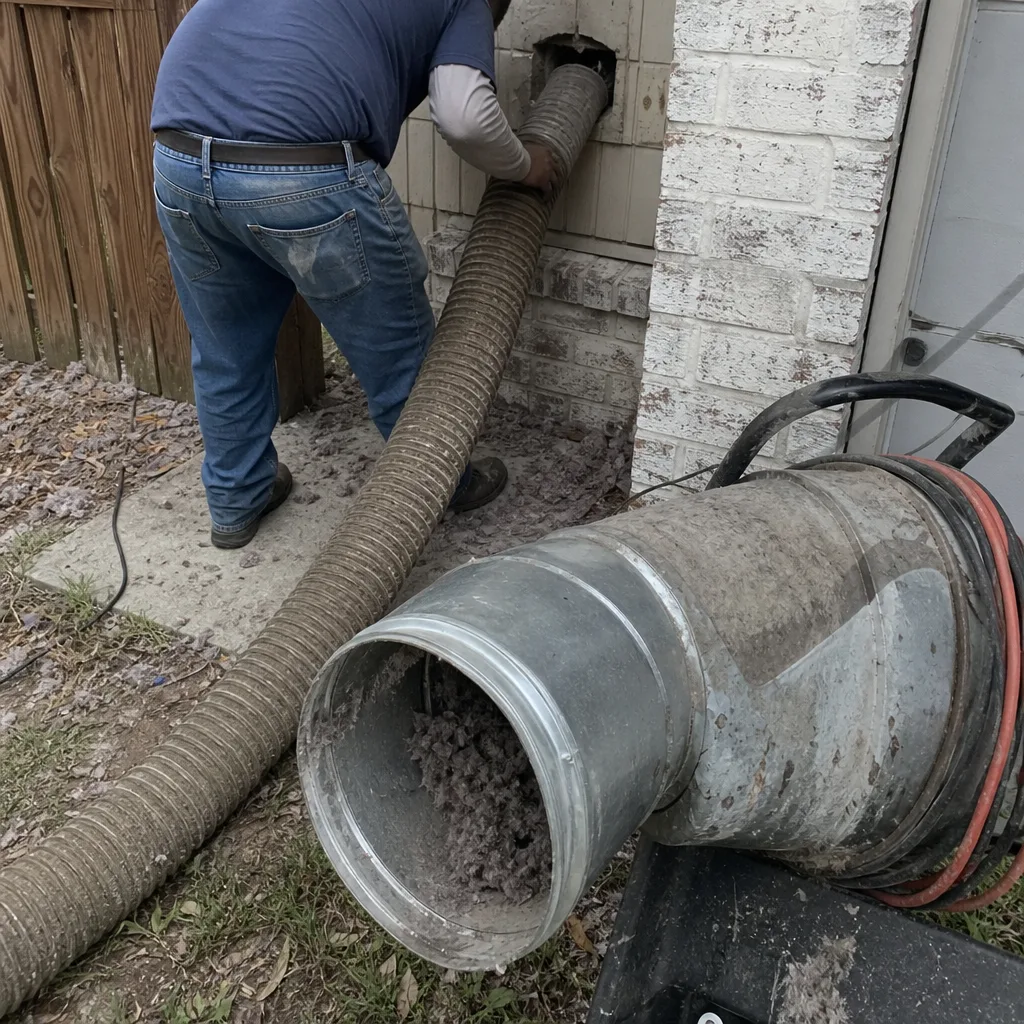
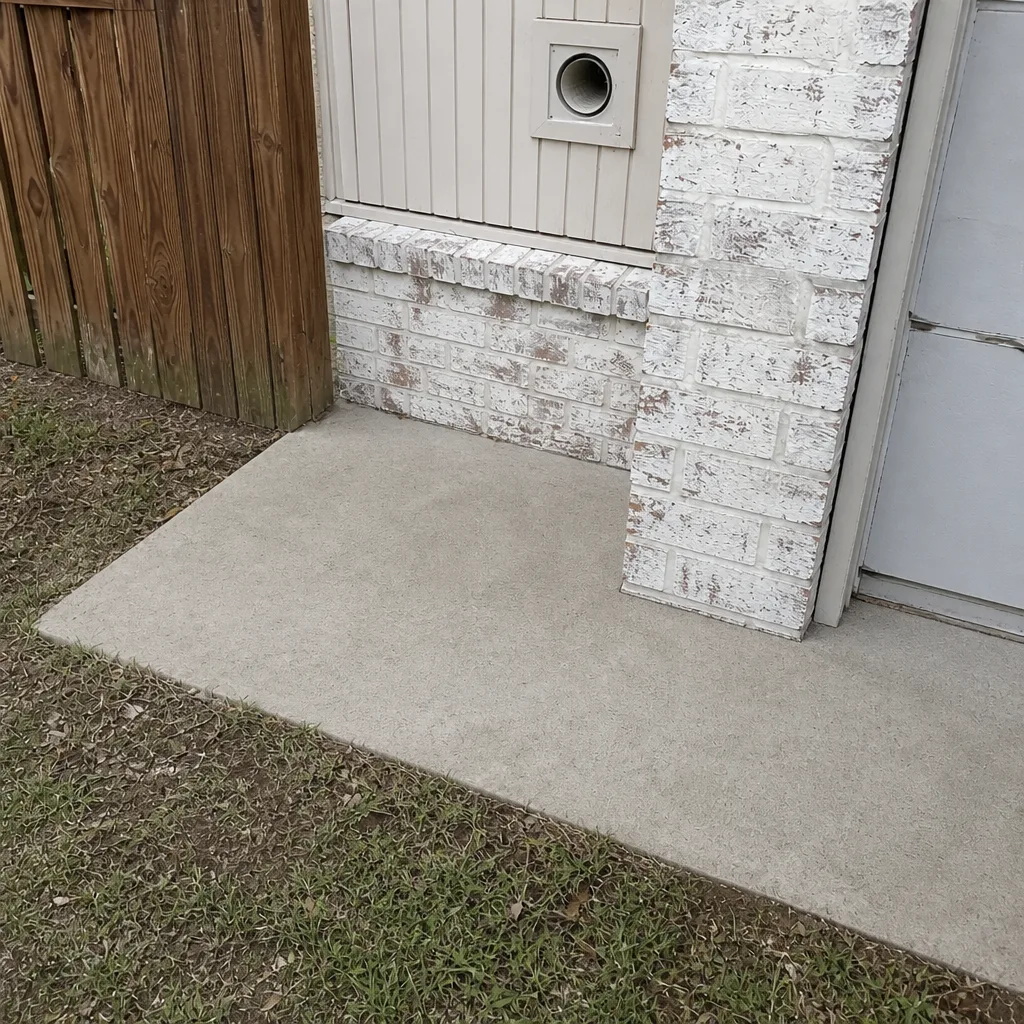
Apply the same standard to dryer vents. A dryer vent cleaning job should come with photos of the lint trap, the vent line interior and the exterior termination point, because a clogged line is a fire hazard, not a cosmetic issue. Any company willing to sell you a cleaning without documentation is selling you their version of the story.
What a Service Guarantee Should Actually Cover
Read the fine print on any guarantee before you commit to a duct cleaning job. Most duct-cleaning “guarantees” cover almost nothing because they’re written to survive a customer complaint, not to solve one. The specifics of what’s covered and what triggers a return visit are what tell you whether the promise means anything.
A useful guarantee in this trade does three things:
- Guarantees the outcome you’re paying for. If it’s a duct cleaning, the guarantee should address visible debris in the trunk and branch ducts after the job, not just “customer satisfaction” in the abstract. If it’s a dryer vent, the guarantee should cover airflow at the termination point.
- Lists what voids it. A guarantee that’s void the moment anything goes wrong is a guarantee that doesn’t apply to you. Look for exclusions that make sense (e.g., damage from work the company didn’t perform) versus exclusions that swallow the whole promise.
- Defines the response. If something wasn’t done right, does the company come back and redo the work, and at whose cost? A written commitment to return and correct the work is the only part of a guarantee that means anything.
Note that no guarantee changes the price. In our experience, the maximum value of a guarantee comes from a company that already knows its work will hold up, so the guarantee is a formality. If a provider is discounting heavily and leading with the guarantee, ask what the guarantee itself costs you and what the fine print says about getting the work corrected.
Get the guarantee in writing. An email or printed document that addresses outcome, exclusions and response time is what you want. A verbal “we guarantee our work” is worth nothing in a dispute.
The Three Services a Complete Duct Provider Offers
A duct cleaning business that only cleans is offering half a service. Ducts that are dirty are usually dirty because something upstream of the cleaning is wrong: a leaking joint, a damaged boot, a bad connection at the supply plenum. Cleaning without inspecting for and repairing that problem means the ducts will be dirty again faster.
A complete duct-system provider in McAllen handles three distinct services:
- Air duct cleaning. Full-system cleaning of supply and return ducts, using contact agitation (Rotobrush) and industrial extraction (Nikro), with containment filtration (Abatement Technologies) running throughout. The cleaning process itself shouldn’t release dust into your living space. That’s what filtration during service protects against.
- Dryer vent cleaning. The dryer vent is a fire-safety system, not part of your heating and cooling airflow. Lint accumulation in the vent line restricts exhaust and raises operating temperature at the dryer. Cleaning the vent is about fire risk and efficiency, and a company that understands the difference will frame it that way.
- Air duct repair. Sealing leaks, repairing damaged sections, reconnecting dislodged supply boots. This is where cleaning and repair meet: the cleaning reveals a problem, and the repair fixes it at the source. A company that only cleans will identify the leak and leave it for you.
Ask any provider you’re screening which of these three they perform. Some clean only. Some clean and repair but not dryer vents. Ask directly. A company that only does one of the three isn’t in the business of a complete duct system, even if their marketing implies otherwise.
When you’re shopping for air duct cleaning, ask about the other two services as part of the same screening call. A company that offers all three with documented equipment and reporting is a different tier than one selling a single service. That difference shows up in how the technician approaches your job.
Dryer Vent Cleaning as a Fire-Safety Standard
Dryer vent cleaning reduces a leading cause of residential fires, and in McAllen that risk is often underestimated because of how much laundry a household runs through in a hot climate. The vent line is a real exhaust system, not a spare lint closet. When lint builds up inside the duct, the dryer runs hotter and exhausts less efficiently, and the fire risk climbs with it.
What a proper dryer vent cleaning job involves:
- Disconnecting the dryer vent from the wall, then cleaning the full length of the vent line from the dryer connection to the exterior termination point.
- Cleaning the lint trap housing and the flexible transition line (if present) with brushes and vacuum extraction.
- Confirming airflow at the exterior vent with the dryer running.
- Visually inspecting the termination point for a missing or damaged backdraft flap, which is a code-relevant fire-safety item most homeowners don’t think to check.
- Documenting before-and-after with photos, since a hidden vent line gives you no other way to know the work was done.
Include the dryer vent on the same schedule you use for duct cleaning, roughly once a year, or more often in a busy household. If your lint trap fills faster than usual after a cleaning, or your dryer takes longer to dry a load, those are signals a vent cleaning is overdue. Your ducts work harder than you think. So does your dryer vent.
Questions to Ask on the Phone Before You Commit
The most useful screening tool for a duct cleaning company is your own phone call. A well-run operation takes ten minutes to answer these, and a poorly run one will change the subject or tell you they’ll “check on that.” Ask these:
- What cleaning equipment do you run? A serious answer names systems. Expect brands like Rotobrush and Nikro if the company is running professional equipment. If the answer is “industrial vacuum,” follow up: “Which brand and CFM?”
- Do you run containment filtration during the job? The right answer is yes, and the specific mention of Abatement Technologies or comparable containment-grade filtration tells you the company thinks of cleaning as a remediation-grade process.
- Can I see before-and-after photos of a recent job? Ask for their own photos, not stock images or website gallery shots from another company.
- Are you NADCA certified? And can you point me to verification?
- Is the technician doing duct repair work licensed for it where required? If repair is in scope, ask for the TDLR record or the licensed professional’s documentation.
- Will you document my own ducts with photos? Before and after, and will I get a copy?
- What’s covered by your guarantee, and can I have it in writing?
- How is the price set? A flat price per system, agreed before work starts, is the answer to want. Any per-vent pricing is a warning sign that the bill can climb once the technician is on-site.
The call itself tells you something the website can’t. A company that answers these questions directly without hedging is worth a site visit. A company that deflects on equipment, certification or guarantee is not.
Common Mistakes to Avoid
- Choosing on price alone. A very low quote is usually recouped through a lighter scope: a smaller vacuum, no agitation, less time in the ducts, or hidden upcharges once the technician is on-site. Ask what’s actually included, not just the number.
- Booking before the technician shows you the equipment. You should see the extraction and filtration units before work begins. If the technician opens a van door and pulls out a portable shop-vac, you’re not getting the service you validated on the phone.
- Accepting a per-vent price without a total. Per-vent pricing means the bill can change based on how many registers the technician counts. Ask for one flat price for the whole system, agreed in writing before any work starts.
- Skipping the before-and-after photo request. If the company has nothing to show and offers to do the work anyway, you have no way to verify the ducts came cleaner. Ask for their own documentation up front, not after the invoice.
- Treating the dryer vent as a separate, optional service. In McAllen, lint accumulation in a vent line is a real fire risk. Asking only about duct cleaning and leaving the dryer vent unchecked leaves half the airflow problem untouched.
- Choosing a national brand over a locally specialized operator because the logo is familiar. A franchise manual built for a colder climate doesn’t account for long conditioning seasons, humid return-air leaks, or the specific HVAC setups common in South Texas homes.
- Not asking for a written guarantee with named exclusions. A verbal “we back our work” is unenforceable. Get the guarantee in writing before the technician starts, and read what voids it.
See the difference
 Before
 After
 Before
 After
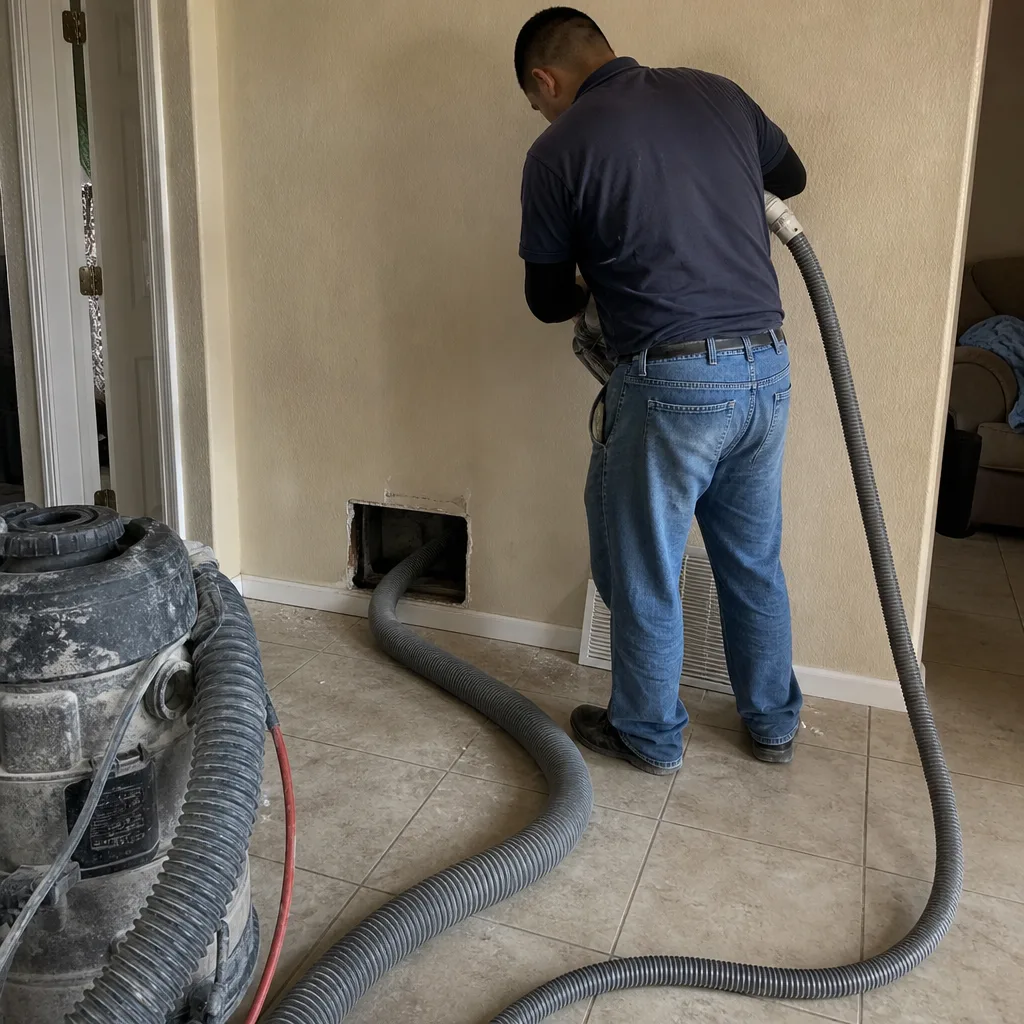 Before
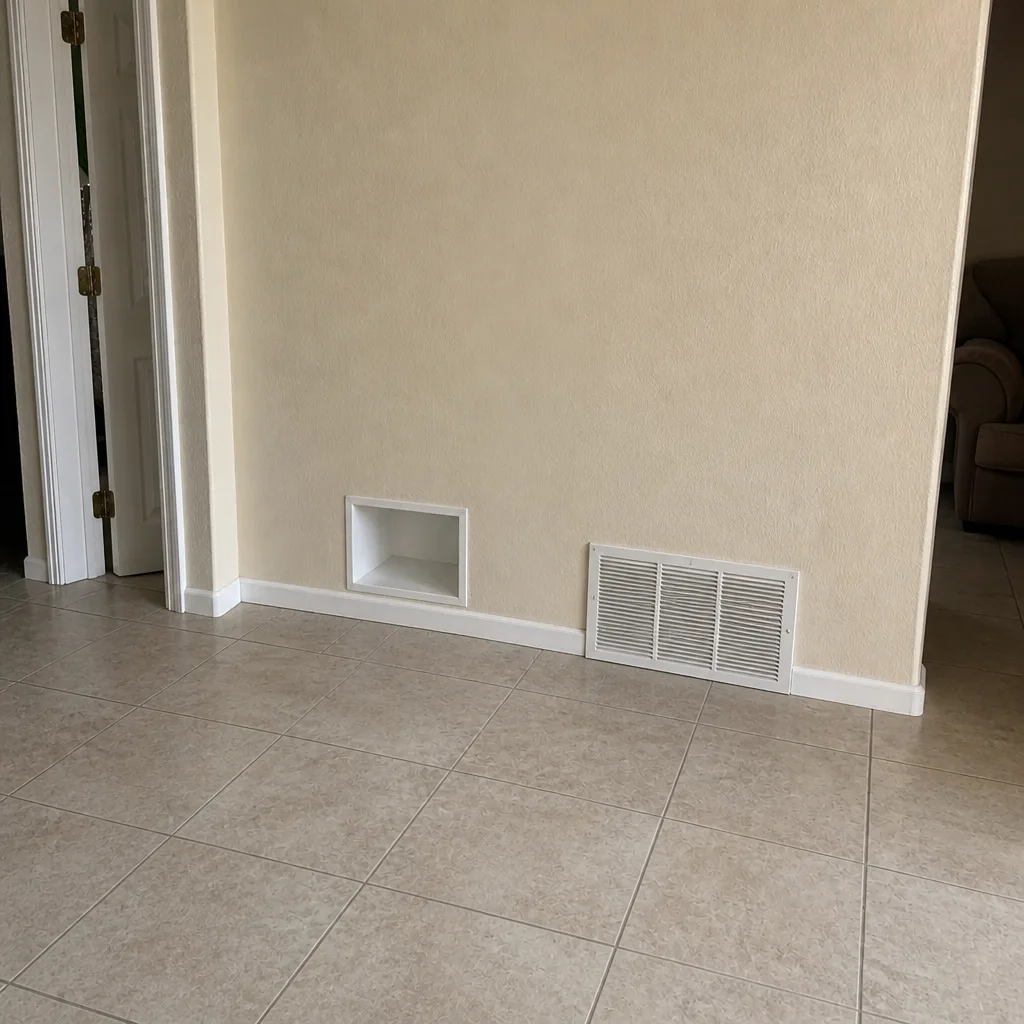 After
When to Call a Professional
Some duct problems are worth investigating yourself. Most aren’t. Call a professional for duct cleaning in McAllen when you notice persistent dust inside the home despite regular cleaning, when family members have respiratory symptoms that worsen in certain rooms, when a room has a musty smell that doesn’t go away after cleaning, when your HVAC system runs noticeably longer than it used to for the same comfort level, or when you’ve never had the ducts cleaned. Call for dryer vent cleaning when clothes take longer to dry than they used to, when the lint trap fills faster than it used to, or when you can’t recall the last time the vent line was cleaned. Call for air duct repair when you notice a gap at a return or supply boot, when a flex duct is sagging or kinked, or when a recent cleaning revealed a leak that was left unaddressed.
Duct Cleaning McAllen offers free estimates in McAllen. Call (888) 971-5813. We answer 24/7. Fast dispatch from 7am to 7pm, Sunday through Friday.
Frequently Asked Questions
Air duct cleaning in McAllen typically costs anywhere from a few hundred dollars to more than a thousand for a whole-home system, depending on square footage, number of zones, accessibility of the ducts, and whether repair or dryer vent service is included. Any per-vent pricing you’re quoted should be translated into a whole-system number before you commit. The estimate is free and the price is set per job by the written estimate, so ask for a flat price for the whole system in writing before work begins. Call (888) 971-5813 for an exact quote, since estimates are free.
Low quotes usually reflect a lighter scope: a smaller vacuum, no contact agitation, no containment filtration during the job, or a shorter time budget. A portable shop-vac-based “cleaning” isn’t the same service as Rotobrush contact cleaning with Nikro extraction and Abatement filtration. Ask what equipment is being used and what’s included in the price before comparing numbers. Call (888) 971-5813 for an itemized, flat-price estimate.
Ask for before-and-after photos of your own ducts, taken from the same location, and ask to see the technician’s camera feed before and after cleaning. The right documentation is the kind you can hold onto and compare against future inspections. Call (888) 971-5813 to book a job with full before-and-after documentation as part of the service.
Most homes in McAllen benefit from a full duct cleaning every one to three years, with annual dryer vent cleaning recommended more often if you run laundry year-round. Homes with pets, allergy sufferers, recent renovations, or chronic dust problems often need it more frequently. The best way to know is a professional inspection, which will show you the actual interior condition of your ducts. Call (888) 971-5813 for an inspection and a free estimate.
NADCA certification is the strongest independent credential in this trade because it’s verifiable through NADCA’s own directory and it requires demonstrated knowledge of proper methods. It is not the only signal, though. Verifiable equipment, insurance certificates and written guarantees matter too. Ask for all of them. Call (888) 971-5813 to discuss our process before you book.
Dryer vent cleaning is a separate service, but it belongs in the same conversation because both are airflow and safety issues. We offer dryer vent cleaning alongside air duct cleaning and air duct repair, so all three can be handled in a single scheduling call. Call (888) 971-5813 for pricing and to book.
The Bottom Line
Choosing the right air duct cleaning brand in McAllen is less about reviews and more about verifiable evidence: equipment you can name and inspect, credentials that hold up when you look them up, and before-and-after documentation that proves the work happened. Ask about Rotobrush and Nikro equipment, containment filtration during service, and written guarantees before you commit. Insist on a flat price per system agreed in writing, not a per-vent quote that can change once the technician is on-site. And don’t skip the dryer vent; it’s a fire-safety issue, not a comfort one. The company that answers all of these clearly is the one worth booking.
Call Duct Cleaning McAllen at (888) 971-5813 for a free estimate and to schedule your duct cleaning, dryer vent cleaning or duct repair. We answer 24/7. Fast dispatch from 7am to 7pm, Sunday through Friday.
Written by the team at Duct Cleaning McAllen.